Mumbai Property Registrations Hit 14-Year High in March 2026 as Metro Expansion and RBI Rate Cuts Drive Premium Housing

Mumbai Property Registrations Hit 14-Year High in March 2026 as Metro Expansion and Rate Cuts Drive Housing Demand
Mumbai’s property market has recorded its strongest March performance in 14 years, with 15,516 property registrations in the month alone contributing to a total of 40,231 registrations in the first quarter of 2026. Stamp duty collections for March reached Rs 1,492 crore as the city’s real estate market continues to benefit from infrastructure expansion, falling interest rates, and sustained demand for premium housing in key micro-markets across the metropolitan region.
The quarter-on-quarter growth of approximately 1 per cent year-on-year may appear modest in headline terms, but it masks a significant shift in the composition of transactions, with premium and ultra-luxury segments showing disproportionate strength while affordable housing faces headwinds from elevated construction costs and limited new supply.
Four Forces Shaping Mumbai’s Property Market
Four macro forces are defining the trajectory of Mumbai’s real estate market as it enters the second quarter of 2026. The Reserve Bank of India’s repo rate, currently at 5.25 per cent following cumulative cuts of 125 basis points, has brought home loan rates down to the 8.3 to 9 per cent range, improving affordability for buyers who were priced out when rates were higher.
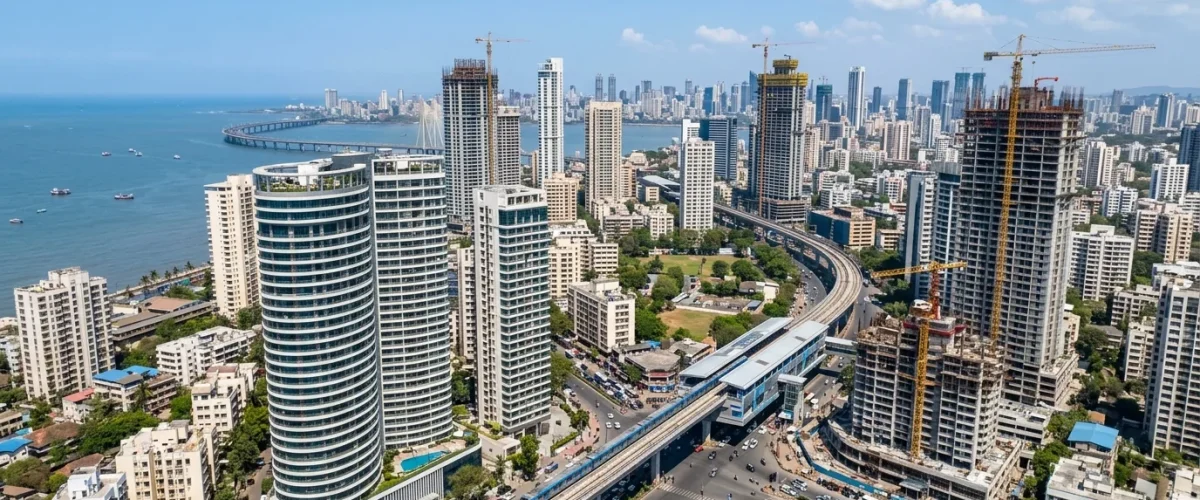
The second force is metro infrastructure expansion, which is fundamentally redrawing the city’s property value map. Metro Line 3, which became fully operational in October 2025, has triggered 10 to 20 per cent price increases in areas near its stations, particularly in previously underserved corridors. Metro Line 9, launched on 3 April 2026, is creating a similar uplift in the Mira Road-Dahisar corridor, where property values are expected to appreciate as connectivity improves commute times.
The third factor is the stability in ready reckoner rates for FY2026-27, with the state government choosing not to increase the official property valuation benchmarks. This decision keeps stamp duty calculations at current levels, avoiding an artificial cost increase that would have dampened buyer sentiment. The fourth force is the broader economic environment, where India’s GDP growth forecast of 6.9 per cent for FY27 and a growing middle class continue to underpin structural demand for housing.
Premium Segment Drives Transaction Value Growth
While overall registration volumes grew modestly, the value of transactions showed stronger growth as buyers increasingly favoured larger units in premium developments. Branded developers including Prestige Estates, Lodha (now Macrotech), DLF, and Godrej Properties reported strong pre-sales in the Mumbai Metropolitan Region, with buyers showing willingness to pay premium prices for properties that offer modern amenities, reputed builder credentials, and proximity to metro connectivity.
Prestige Estates has emerged as the top-performing listed developer nationally, with pre-sales of Rs 18,143.7 crore in the first half of FY26, driven significantly by its Mumbai projects. The company’s success reflects a broader market trend where buyers are gravitating toward established brands with track records of timely delivery, a shift accelerated by high-profile project delays and the RERA regulatory framework that has increased accountability in the sector.
According to industry data from Knight Frank, India’s top 28 listed developers recorded combined sales bookings of nearly Rs 92,500 crore in the first half of the current financial year, with the top five developers contributing approximately 70 per cent of total sales. This concentration suggests that the market is consolidating around larger, better-capitalised players while smaller developers face increasingly difficult operating conditions.
Metro Line 9 Opens New Investment Corridors
The launch of Metro Line 9 on 3 April 2026 has created immediate interest in the Mira Road-Dahisar corridor, which has historically been viewed as a value market serving price-sensitive buyers who commute to central Mumbai for work. The metro connection dramatically reduces commute times and positions the area as a viable alternative to more expensive western suburbs for middle-income buyers.
Property consultants report a 15 to 25 per cent increase in enquiries for residential projects within walking distance of Metro Line 9 stations since the route’s announcement, with some developers revising pricing upward in anticipation of sustained demand growth. The pattern mirrors the impact seen along Metro Line 3, where properties within 500 metres of stations commanded premiums of 10 to 20 per cent over comparable units further away.
The infrastructure-led appreciation story extends beyond Mumbai. Across India’s major urban centres, metro expansion, expressway construction, and airport development are creating new investment corridors that offer entry points at lower prices than established areas while promising appreciation as connectivity improves. The Delhi-Mumbai Expressway, Bengaluru’s Namma Metro expansion, and Hyderabad’s MMTS upgrades are among the projects reshaping property markets outside Mumbai.
National Market Shows Mixed Signals
While Mumbai’s performance is robust, the national picture is more nuanced. India’s overall housing sales slipped approximately 4 per cent in Q1 2026, according to Knight Frank data, with global economic uncertainty particularly affecting buyer confidence in Delhi-NCR and some southern markets. The Strait of Hormuz crisis and its impact on oil prices have added uncertainty to the economic outlook, making some potential buyers adopt a wait-and-watch approach.
Nomura, the Japanese brokerage, maintains a positive outlook on the sector despite near-term challenges, noting that housing demand in India remains structurally strong and that recent stock price weakness in listed developers reflects broader market conditions rather than fundamental deterioration in the real estate business. The brokerage named Prestige Estates as its top pick while also favouring Lodha and Aditya Birla Real Estate.
Bengaluru, India’s technology capital, continues to see strong demand for residential property driven by the IT sector’s hiring recovery and the city’s lifestyle appeal. Hyderabad and Pune are also performing above the national average, benefiting from technology sector growth, relatively affordable pricing compared to Mumbai, and significant infrastructure investment. Chennai’s market has stabilised after a period of adjustment, with selective demand growth in premium projects near the city’s expanding metro and industrial corridors.
Outlook for the Rest of 2026
The RBI’s accommodative monetary policy stance is expected to support continued strength in housing demand through 2026, with further rate cuts possible if inflation remains contained. However, any reversal in rate expectations due to oil price pressures or rupee depreciation could temper buyer enthusiasm, particularly in the affordable and mid-market segments where financing costs are a more significant factor in purchase decisions.
For investors and homebuyers, the current environment offers a window of opportunity as mortgage rates remain relatively low and infrastructure projects create new value zones. However, the shift toward branded developers means that buyers need to exercise greater due diligence when considering projects from lesser-known builders, where the risk of delays and quality issues remains higher than with established corporate players in the market.