Amit Shah Chairs High-Level Security Meeting for Amarnath Yatra 2026 — Multi-Layered Security Plan Activated

Union Home Minister Amit Shah chaired a high-level security review meeting in New Delhi on June 12 to finalise the comprehensive security arrangements for the annual Amarnath Yatra, which is scheduled to begin later this month. The meeting, attended by the National Security Advisor, the Director General of the Central Reserve Police Force (CRPF), senior Army commanders, and the Jammu and Kashmir administration, resulted in the activation of a multi-layered security plan that officials described as the most robust in the pilgrimage’s history.
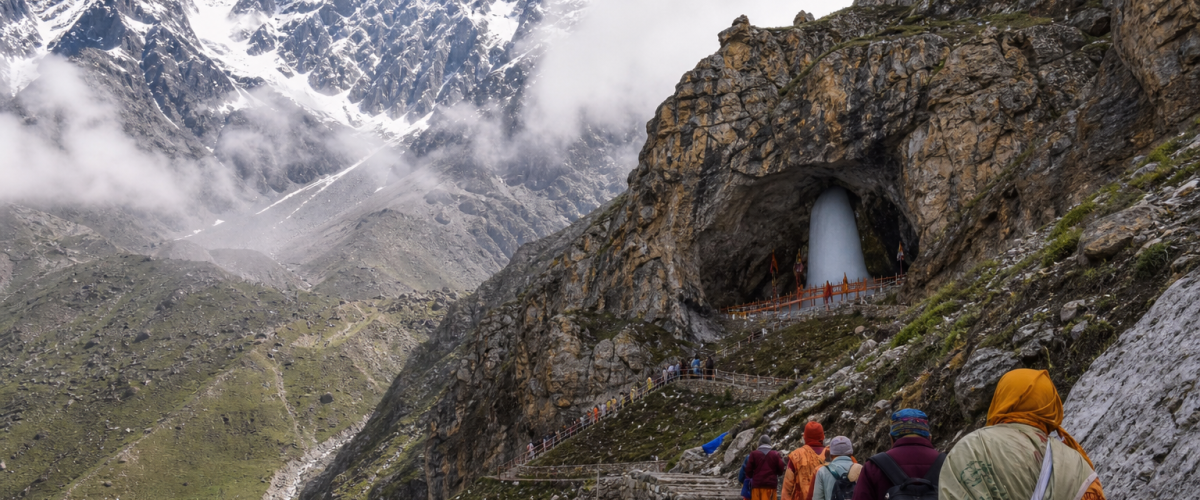
The Amarnath Yatra, one of Hinduism’s most sacred pilgrimages, draws hundreds of thousands of devotees each year to the holy cave shrine at 3,888 metres in the Kashmir Himalayas, where a naturally forming ice lingam is venerated as a manifestation of Lord Shiva. The yatra traverses some of the most challenging and security-sensitive terrain in India, requiring a massive logistical and security operation that spans multiple agencies.
The Security Architecture
The security plan unveiled at the meeting involves the deployment of approximately 50,000 security personnel along the two traditional yatra routes — the 36-kilometre Pahalgam track via Chandanwari and the 14-kilometre Baltal route. The deployment includes CRPF battalions, Border Security Force units, Sashastra Seema Bal personnel, Jammu and Kashmir Police, and Indian Army troops providing area domination in the surrounding mountains.
Key elements of the security plan include round-the-clock surveillance using drones and CCTV cameras along the entire route, dedicated quick reaction teams stationed at regular intervals, anti-terror screening of all pilgrims at base camps, and a real-time communication network linking all security agencies to a central command centre in Srinagar.
Shah specifically directed that the security apparatus focus on three threat vectors: terrorist infiltration attempts from across the Line of Control, which typically increase during the yatra season; lone-wolf attacks by radicalised individuals; and crowd management challenges given the large number of pilgrims moving through narrow mountain paths.
Lessons From Previous Years
The emphasis on security reflects both the inherent challenges of protecting a pilgrimage in a conflict zone and lessons learned from past incidents. The most devastating attack on the Amarnath Yatra occurred in 2017, when seven pilgrims were killed and 19 injured in a terrorist attack on a bus carrying yatris near Anantnag. The incident led to a fundamental overhaul of the security protocols, with subsequent yatras receiving progressively enhanced protection. (Related: BRICS Foreign Ministers Gather in New Delhi as Jai…)
In recent years, the security situation in Jammu and Kashmir has improved significantly, with the number of terrorist incidents declining markedly since the abrogation of Article 370 in August 2019 and the subsequent reorganisation of the former state into two Union Territories. However, security officials caution that the threat is not eliminated and that the yatra — with its symbolic significance and large, vulnerable pilgrim population — remains an attractive target.
The meeting also reviewed the performance of security arrangements during the 2025 yatra, which was completed without any major security incident. Officials noted that the integration of technology — particularly drone surveillance and AI-powered threat detection systems — had been particularly effective and would be expanded this year.
Logistics and Pilgrim Welfare
Beyond security, the meeting addressed the logistical challenges of managing a pilgrimage that can see 15,000-20,000 pilgrims per day at peak periods. The Shri Amarnath Shrine Board (SASB), which administers the yatra, has implemented a mandatory registration and health certificate requirement for all pilgrims. Given the high altitude and physically demanding nature of the trek, pilgrims must obtain a health certificate from approved medical authorities confirming their fitness. (Related: Nipah Virus Returns to Kerala — First Case of 2026…)
Medical facilities along the routes have been enhanced, with fully equipped field hospitals, oxygen stations, and emergency evacuation helicopters positioned at key points. The SASB has also partnered with the National Disaster Response Force (NDRF) to deploy teams along the route in case of natural disasters — an important precaution given the risk of flash floods, landslides, and sudden weather changes in the Himalayan region.
The road infrastructure connecting the base camps to the yatra routes has been upgraded, with the Border Roads Organisation (BRO) completing widening and repair work on critical stretches. Helicopter services between base camps and the cave shrine have been expanded, providing an alternative for pilgrims who are unable to complete the trek on foot or by pony.
The Spiritual Significance
The Amarnath Yatra is not merely a pilgrimage — it is a defining expression of Hindu devotion and India’s cultural heritage. The cave, believed to be where Lord Shiva revealed the secret of immortality to Goddess Parvati, has been a pilgrimage site for centuries. The naturally forming ice lingam, which grows and recedes with the lunar cycle, is considered one of the most sacred symbols in Hinduism.
For the hundreds of thousands of pilgrims who undertake the journey each year, the yatra is a transformative spiritual experience — a test of physical endurance and faith that is rewarded with darshan of the ice lingam. The government’s investment in security and infrastructure is, at its core, about protecting this sacred tradition and ensuring that every pilgrim can complete the journey safely.
Shah, in his closing remarks at the meeting, said: “The Amarnath Yatra is a matter of national pride and spiritual significance. We will ensure that every pilgrim is safe and every arrangement is in place for a smooth and successful yatra. The security of our pilgrims is non-negotiable.”
Also Read
- BRICS Foreign Ministers Gather in New Delhi as Jaishankar Chairs High-Stakes Meeting With Iran Araghchi and Russia Lavrov Amid West Asia Divisions
- Nipah Virus Returns to Kerala — First Case of 2026 Confirmed, State Declares High Alert
- PM Modi Chairs 11th NITI Aayog Governing Council Meeting — Viksit Bharat 2047 Vision Takes Centre Stage
- RBI Holds Repo Rate Unchanged at 5.25 Percent as MPC Unanimously Votes for Neutral Stance in June 2026 Meeting
- India and US Resume High-Level Trade Talks in New Delhi — Interim Bilateral Trade Deal Nearly Finalised Says Piyush Goyal

- Indian Army Gets New Chief as General Dwivedi Hands Over Command Amid Push for Indigenous Defence Tech - July 1, 2026
- Ayodhya Ram Temple Donation Scandal Deepens as Trustees Resign and SIT Arrests Eight - June 29, 2026
- Bengal Seven Weeks On: Modi’s Historic Win and the Questions That Won’t Go Away - June 28, 2026