Half of Urban Indian Parents Say Children Are Addicted to Screens: Inside India’s Growing Digital Wellness Crisis in 2026

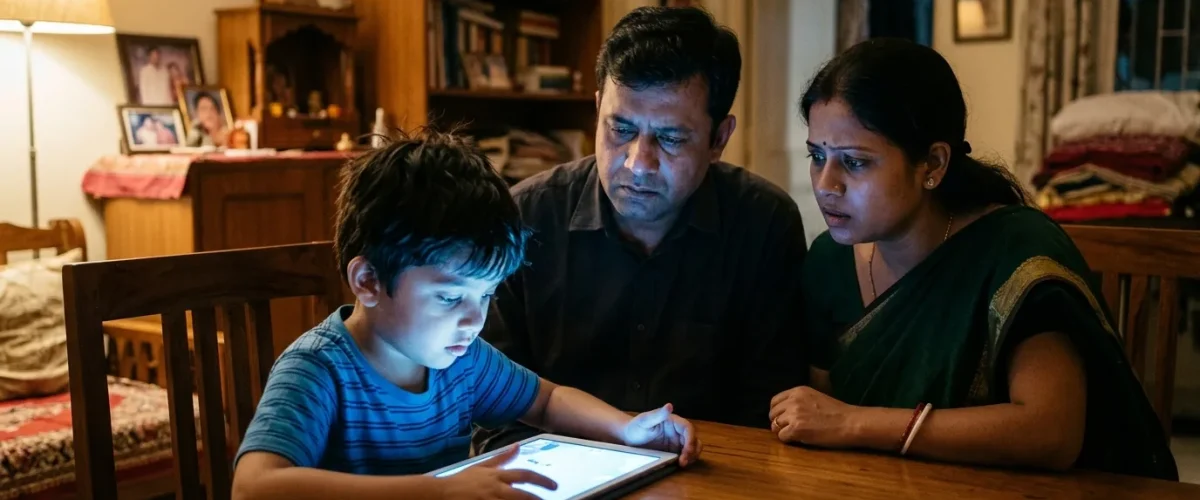
A nationwide survey has revealed that nearly one in two urban Indian parents believes their children are addicted to social media and mobile gaming, spending over three hours daily on screens outside of educational use. The findings, coming just months after the government rolled out the Digital Personal Data Protection (DPDP) Rules 2025, have reignited India’s fiercest debate in years: how to protect children in a digital-first world without stifling the technology that defines modern education and communication.
The Numbers Behind India’s Screen Time Crisis
According to a comprehensive study conducted by a leading market research firm covering 25,000 urban households across 50 Indian cities, the statistics paint a concerning picture:
- 48 per cent of parents said their children aged 6-17 are “addicted” to screens, spending over 3 hours daily on non-educational content
- 62 per cent of children aged 10-17 reported having their own smartphone or tablet
- 71 per cent of parents expressed concern about the content their children consume on YouTube, Instagram, and gaming apps
- 35 per cent of parents admitted they don’t know how to set up parental controls on their children’s devices
- Average daily screen time for Indian children aged 8-15 is 3.4 hours, up from 2.1 hours in 2020
These findings have struck a nerve across Indian society, where smartphone penetration has exploded to over 850 million devices and where affordable data plans (thanks to Jio’s revolution) mean that even low-income households have unlimited internet access. The concern isn’t just about screen time — it’s about what children are consuming on these screens. For those tracking Social Trends, this represents one of the most significant cultural shifts of the decade.
What the DPDP Rules 2025 Actually Do
The Digital Personal Data Protection Rules 2025, notified by the Ministry of Electronics and IT, introduced several provisions specifically targeting children’s data and online safety:
- Verifiable parental consent required before any platform can process data of users under 18
- Age verification mechanisms mandated for social media platforms, with companies required to implement “appropriate technical measures”
- Prohibition on targeted advertising to children based on behavioural tracking
- Restrictions on algorithmic recommendation of potentially harmful content to minor users
- Data minimisation requirements — platforms can only collect the minimum data necessary for providing services to minors
However, implementation has been inconsistent. Many parents report that their children simply use their parents’ accounts or lie about their age during sign-up. Major platforms like Instagram, YouTube, and gaming apps have implemented basic age gates, but critics argue these are easily bypassed. As discussed in Indian Fashion Trends 2026: Pre-Draped Sarees, Indo-Western Fusion, and the Rise o…, the gap between policy and practice remains wide.
The Mental Health Dimension
Paediatricians and child psychologists across India are reporting a surge in screen-related health issues among children:
Dr. Shekhar Kashyap, a child psychiatrist based in New Delhi, has noted a 40 per cent increase in consultations related to digital addiction, anxiety, and sleep disorders among children aged 8-16 over the past two years. “The brain of a 10-year-old is not equipped to handle the dopamine cycles created by social media algorithms and mobile gaming reward systems,” he warns.
The Indian Academy of Pediatrics (IAP) has issued updated guidelines recommending:
- Zero screen time for children under 2 years
- Maximum 1 hour per day for children aged 2-5
- Maximum 2 hours of recreational screen time for children aged 6-17
- No screens during meals or in the hour before bedtime
Schools and the Digital Dilemma
Indian schools are increasingly caught between two imperatives: preparing students for a digital future and protecting them from digital overexposure. Many elite urban schools now issue tablets pre-loaded with educational content while blocking access to social media and gaming apps. Some state governments have experimented with “phone-free school” policies, banning smartphones on campus entirely.
The irony, however, is that many children’s screen time is driven by educational platforms themselves. Apps like PhysicsWallah, Vedantu, and Allen Digital require sustained screen engagement, blurring the line between productive and harmful screen time. This is a trend that intersects with Enter New Worlds with the 10 Best Indian Novels in complex ways.
Global Comparisons: What Other Countries Are Doing
India is not alone in grappling with this issue. Australia has passed legislation banning children under 16 from social media platforms. France requires parental consent for children under 15. China limits minors to three hours of gaming per week and has implemented real-name verification for all social media accounts.
India’s approach, through the DPDP Rules, sits somewhere between the permissive US model and the restrictive Chinese model. Critics argue that India should be more aggressive, while the tech industry warns that heavy-handed regulation could push children to unregulated platforms and the dark web.
The Path Forward: Parents, Platforms, and Policy
Experts suggest a three-pronged approach:
For Parents: Digital literacy programmes need to be as much for parents as for children. Many parents struggle with setting up parental controls, monitoring app usage, or having productive conversations about online safety. Schools and community organisations are beginning to offer workshops on digital parenting — a trend that Beginner Cute Simple Mehndi Designs For Front Hand has highlighted.
For Platforms: Companies must move beyond checkbox compliance and invest in genuine safety measures. AI-powered content moderation, age-appropriate design frameworks, and meaningful parental dashboards should be standard — not afterthoughts. India’s massive user base gives it leverage to demand better practices from global tech companies.
For Policymakers: The DPDP Rules are a starting point, not the finish line. Regular audits of platform compliance, penalties for violations, and investment in digital literacy infrastructure across Culture & Lifestyle will be essential in the years ahead.
As India navigates this digital wellness crisis, the stakes could not be higher. The generation growing up on smartphones today will shape the country’s future — and ensuring they have a healthy relationship with technology is not just a parenting challenge but a national priority.
Follow DailyTips.in for ongoing coverage of India’s social trends, digital policy, and cultural shifts.