Nepal PM Balen Shah Tells Parliament Both Countries Have Encroached on Each Other’s Territory — Opposition Erupts Over Lipulekh Remark

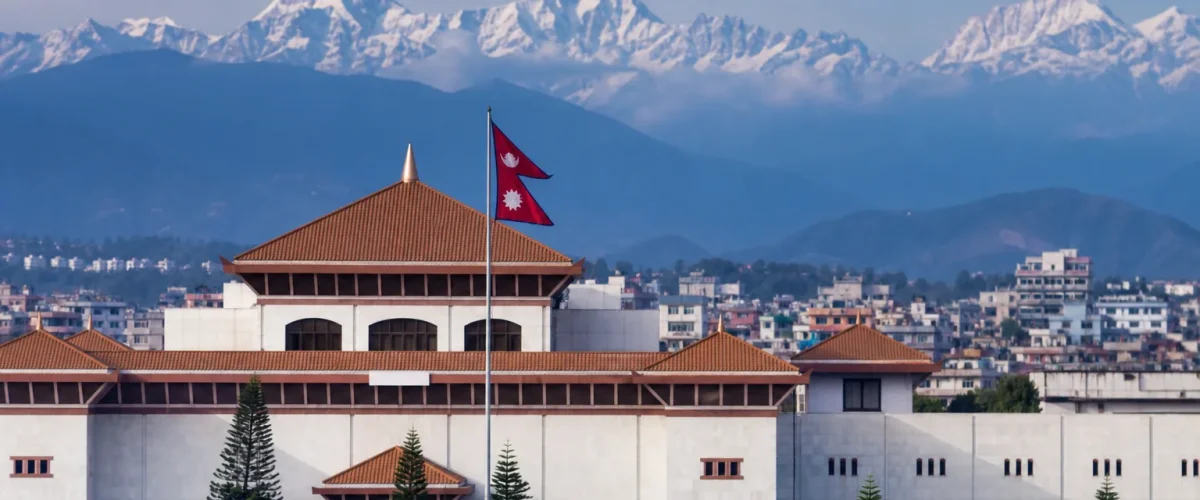
Nepal’s youngest-ever Prime Minister, Balendra “Balen” Shah, ignited a political firestorm on Sunday when he told Parliament that both India and Nepal have encroached upon each other’s territory — a remark that drew immediate opposition protests in Kathmandu and reignited the long-simmering Lipulekh-Kalapani border dispute between the two South Asian neighbours.
Speaking during his first address to the House of Representatives since taking office earlier this year, the 35-year-old former mayor of Kathmandu acknowledged that the border issue involving Lipulekh, Limpiyadhura, and Kalapani remains one of the most sensitive irritants in India-Nepal bilateral relations. But it was his assertion that Nepal, too, has encroached on Indian territory that shocked observers on both sides of the border.
What Balen Shah Actually Said
“You will be surprised to know a fact that I have learnt recently, only after becoming Prime Minister. India has not only encroached Nepali territory, but Nepal has also encroached Indian territory in many places,” Shah told lawmakers. “Now both countries should study the facts and sit together as friends and resolve the issue.”
The remark was clearly intended as a conciliatory gesture — an acknowledgement that the border dispute has complexities on both sides, and that resolution requires mutual goodwill rather than unilateral assertions. But in Nepal’s charged political environment, where any suggestion of yielding territorial claims is viewed as treasonous, the response was swift and hostile.
Opposition leaders from the Nepali Congress, CPN-UML, and the Maoist Centre all condemned Shah’s statement. Sher Bahadur Deuba, the Nepali Congress president and former Prime Minister, called the remark “an insult to national sovereignty” and demanded that Shah retract his statement and apologise to the nation. CPN-UML leader KP Sharma Oli went further, describing the comment as “the most irresponsible statement ever made by a Nepali head of government on the border issue.”
The Foreign Ministry’s Damage Control
Hours after Shah’s parliamentary address, Nepal’s Foreign Ministry issued a clarification that attempted to reinterpret the Prime Minister’s words without directly contradicting them. The ministry statement said that Shah’s reference to Nepal “encroaching” Indian territory pertained to no-man’s land and instances of cross-border occupation between the two countries — a phenomenon common along the 1,770-kilometre open border where communities on both sides have historically used land without regard to the exact boundary line.
“What the Prime Minister said about Indian land lying on the Nepali side is related to cross-border occupation that occurs due to the open nature of the border. It does not imply any concession of Nepal’s sovereign territorial claims,” the statement read.
The clarification did little to quell the domestic backlash. Social media in Nepal erupted with criticism of Shah, with the hashtag #BalenSoldOut trending on X (formerly Twitter) in Kathmandu. Student unions affiliated with opposition parties announced protests outside the Singha Durbar government complex, while a coalition of Madhesi parties demanded an emergency session of Parliament to debate the PM’s remarks.
The Lipulekh-Kalapani Dispute — Background
The border dispute centres on approximately 335 square kilometres of territory in the northwestern corner of Nepal, where the boundaries of Nepal, India, and China converge. The area includes Lipulekh Pass (a high-altitude trade and pilgrimage route), Kalapani (a strategic location where Indian troops have been stationed since the 1962 Sino-Indian War), and Limpiyadhura (the source of the Mahakali River, which Nepal claims as its western boundary with India).
Nepal’s position, formalised in a revised political map published in 2020, is that all three areas are Nepali sovereign territory. India’s position is that the areas are Indian, with the boundary following the Kali River rather than its source at Limpiyadhura. The dispute has never been resolved through bilateral negotiation, and India’s construction of a road through Lipulekh in 2020 — connecting Dharchula in Uttarakhand to the Chinese border — triggered the sharpest deterioration in India-Nepal relations in decades.
Why This Matters for India-Nepal Relations
Shah’s remark, whatever its intention, has introduced a new dimension into the border discourse. By publicly acknowledging that Nepal may have occupied some Indian territory, he has provided India with a talking point that could be used to argue for a more comprehensive boundary settlement — one that involves adjustments on both sides rather than Nepal’s maximalist demand for the return of all claimed territory.
India’s External Affairs Ministry has not formally responded to Shah’s statement, but diplomatic sources in New Delhi describe the remark as “noteworthy” and “reflective of a more mature approach to bilateral issues.” India’s diplomatic engagement with Myanmar’s military leader and the recent Quad foreign ministers meeting in New Delhi suggest that the Modi government is actively managing its neighbourhood relationships, and Shah’s conciliatory approach could create space for a breakthrough.
The domestic political cost for Shah, however, could be significant. Nepal’s political parties have historically used the border issue as a tool for domestic mobilisation, and any leader perceived as soft on territorial claims faces severe electoral consequences. Shah’s unconventional political career — he rose to prominence as an independent candidate who won Kathmandu’s mayoral race on a platform of anti-corruption and urban governance — gives him a certain immunity from party politics, but even that has limits.
With India’s heightened security concerns along its borders, the trajectory of the India-Nepal relationship carries implications beyond bilateral diplomacy. How Shah navigates the backlash from his parliamentary remarks will reveal much about whether Nepal’s youngest leader has the political skill to match his evident candour.