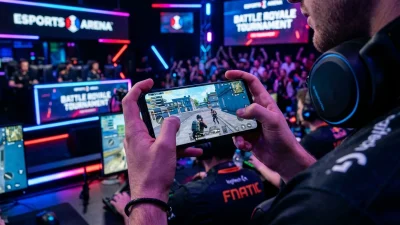
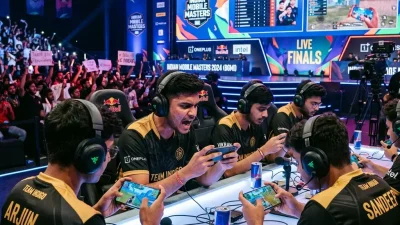
Free Fire MAX vs BGMI in 2026: How Garena’s Comeback Is Reshaping India’s ₹25,000 Crore Mobile Gaming Market

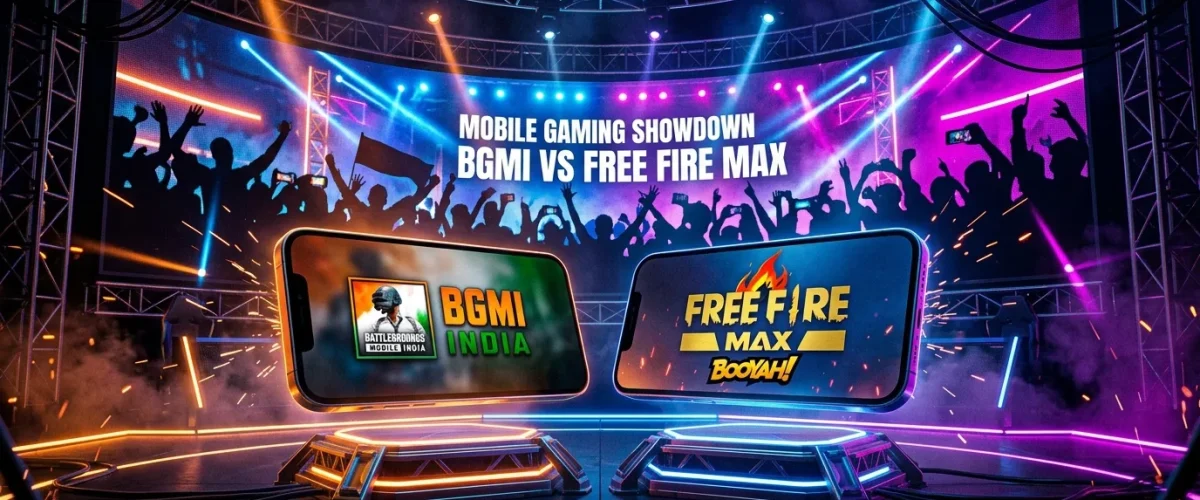
India’s mobile gaming landscape is undergoing its biggest shake-up in years. After BGMI (Battlegrounds Mobile India) dominated the Indian mobile gaming ecosystem unchallenged since its 2021 relaunch, Garena’s Free Fire MAX has staged an aggressive comeback in 2026 — and the numbers suggest it’s no longer just a challenger but a genuine co-leader in a market now valued at over ₹25,000 crore ($3 billion). The battle between these two titles is reshaping everything from brand sponsorships and esports investment to how India’s 500 million mobile gamers consume competitive content.
For Mobile Gaming enthusiasts, the Free Fire MAX vs BGMI rivalry is the most consequential showdown since PUBG Mobile’s ban and subsequent return as BGMI in 2021.
The Numbers: Free Fire MAX’s Explosive Growth
Free Fire MAX’s resurgence in India has been nothing short of dramatic. According to data from Sensor Tower and industry sources compiled in April 2026, Free Fire MAX now commands approximately 4.3 lakh (430,000) monthly active players in India — significantly lower than BGMI’s estimated 50 million monthly active users, but the growth trajectory is what matters. Free Fire MAX’s daily active players have grown 85 percent year-over-year, compared to BGMI’s relatively flat 5 percent growth over the same period.
More importantly, Free Fire MAX has captured a demographic that BGMI struggles to reach: players on budget smartphones with 2-3 GB RAM. Free Fire MAX’s lighter system requirements (1.5 GB RAM minimum vs BGMI’s 2 GB) make it accessible to an estimated 200 million additional potential players in India’s tier-2 and tier-3 cities — the fastest-growing segment of India’s mobile internet user base. Life After the Fantasy Sports Ban: How India’s Gaming Landscape I
Brand Money Shifts: OnePlus, Poco, and the Sponsorship War
The clearest indicator of Free Fire MAX’s rising clout is the shift in brand sponsorship patterns. In 2024, BGMI commanded an estimated 80 percent of India’s mobile gaming sponsorship revenue. By April 2026, that share has dropped to approximately 60 percent, with Free Fire MAX capturing most of the difference.
OnePlus, which was previously an exclusive BGMI sponsor, signed a dual-platform deal in March 2026 that includes Free Fire MAX creator sponsorships. Poco has gone further, making Free Fire MAX its primary gaming partner for the Poco X7 Pro launch campaign. Even India’s largest gaming peripheral brand, Ant Esports, has added Free Fire MAX tournaments to its 2026 calendar alongside the traditional BGMI events.
“The brands follow the eyeballs,” said Rushindra Sinha, CEO of Global Esports, one of India’s top esports organizations. “Free Fire MAX’s audience is younger, more engaged on short-form content, and — critically — more diverse geographically. For brands targeting tier-2 India, it’s becoming the better platform.” For Gaming, this shift in sponsorship dynamics is transforming the business model of Indian esports.
Esports Ecosystem: BGIS vs Free Fire India Cup
The esports rivalry between the two titles has intensified dramatically. BGMI’s flagship tournament — the Battlegrounds Mobile India Series (BGIS) 2026 — concluded its grand finals in March with a ₹4 crore prize pool, drawing a peak viewership of 5.7 lakh (570,000) concurrent viewers on YouTube and Loco. It remains India’s most-watched mobile esports event.
However, Free Fire MAX’s India Cup 2026, organized by Garena in partnership with Esports Federation of India (ESFI), offered a ₹2.5 crore prize pool — its largest ever — and attracted 3.2 lakh peak concurrent viewers, a 120 percent increase from the 2025 edition. The gap is narrowing, and Garena has announced plans for a year-round competitive circuit in India with combined prize pools exceeding ₹10 crore for 2026. As highlighted in BGIS 2026 Grand Finals Crown Champions With Rs 4 Crore Prize Pool, the esports ecosystem is becoming a major driver of India’s gaming industry growth.
Content Creator Economy: The Real Battleground
Perhaps the most significant battlefield in the Free Fire MAX vs BGMI war is the content creator economy. BGMI has historically dominated India’s gaming content scene, with top creators like Jonathan Gaming, Scout, and Mortal commanding millions of followers and lucrative brand deals. But Free Fire MAX has cultivated its own creator ecosystem, particularly on shorter-form platforms like Instagram Reels and YouTube Shorts.
Free Fire MAX’s creator-first strategy — including direct revenue sharing programs, sponsored in-game events tied to creator content, and a dedicated “Creator Academy” launched in February 2026 — has attracted mid-tier creators (100K-1M followers) who were previously BGMI-focused. These creators are finding that Free Fire MAX content generates 30-40 percent more engagement per view on short-form platforms, partly because the game’s faster-paced, more accessible gameplay translates better to the 15-60 second format that dominates mobile content consumption.
BGMI’s Response: Krafton Fights Back
Krafton, BGMI’s developer, is not ceding ground without a fight. The company’s BGMI 4.3 update, released in April 2026, introduced several features designed to retain its user base and attract new players. These include a redesigned tutorial system aimed at reducing the learning curve for new players, a “BGMI Lite Mode” that reduces system requirements to compete with Free Fire MAX on budget devices, enhanced anti-cheat systems that Krafton claims have reduced cheating incidents by 70 percent, and new India-specific content including Holi-themed maps and Bollywood collaboration skins. Related industry trends: GPU Wars, Gaming Laptops, and the Hardware Hunger: What’s Driving
Krafton has also increased its India investment, with plans to open a dedicated India game development studio in Bengaluru by Q3 2026. The studio will focus on creating India-specific content for BGMI and developing new mobile gaming titles tailored to Indian preferences.
The Market: Where India’s Mobile Gaming Is Heading
The Free Fire MAX vs BGMI rivalry, while dramatic, is ultimately a positive development for India’s gaming ecosystem. Competition drives innovation, increases prize pools, attracts brand investment, and — most importantly — expands the total addressable market.
According to a Lumikai Fund report released in April 2026, India’s mobile gaming market is projected to reach ₹33,000 crore ($4 billion) by 2028, growing at a compound annual growth rate of 20 percent. The report identifies battle royale games (led by BGMI and Free Fire MAX) as the single largest revenue category, accounting for approximately 35 percent of total mobile gaming revenue in India.
For India’s 500 million mobile gamers, the message is clear: the era of one-title dominance is over. The future belongs to the platform that can best serve India’s diverse, price-sensitive, and increasingly demanding gaming audience — and that race is far from decided.

- Fentanyl Vaccine Breakthrough: Scripps Research Develops Shot That Blocks Deadly Overdoses Before They Reach the Brain - June 13, 2026
- Nipah Virus Returns to Kerala — First Case of 2026 Confirmed, State Declares High Alert - June 12, 2026
- Jill Biden Reveals She Wanted to Keep PM Modi’s 7.5-Carat Diamond Gift but Returned It After State Department Valued It at $20,000 - June 8, 2026