India to Send Bengal Tigers to Cambodia in First Ever Cross-Border Tiger Translocation Under 2022 Bilateral Agreement

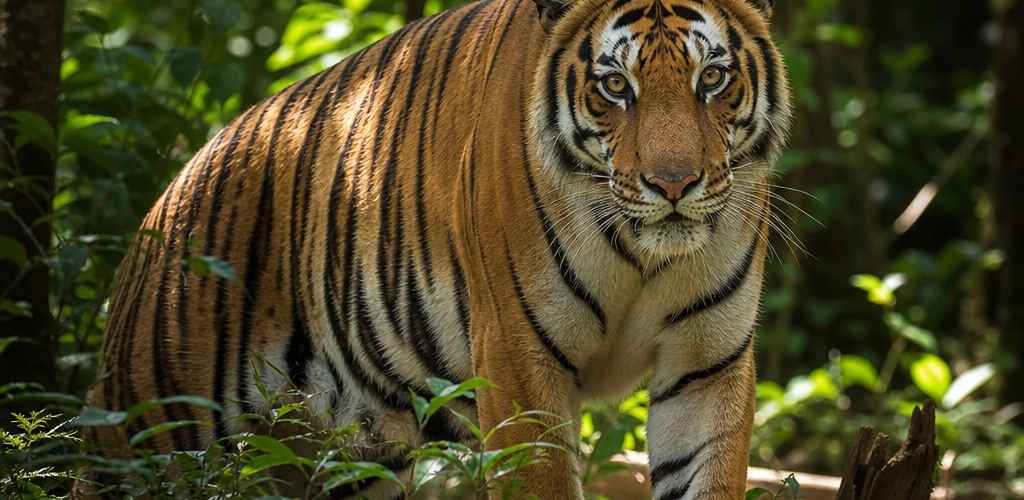
India is preparing to send a small founder population of Bengal tigers to Cambodia’s Cardamom Mountains in what will be the first cross-border tiger translocation in history. The initiative, rooted in a 2022 bilateral agreement between India and Cambodia, aims to reintroduce tigers to a country where the local population has been extinct for over a decade — but the ambitious plan has sparked significant debate among conservation scientists about ecological readiness, governance, and community impact.
Cambodia approved a national Tiger Action Plan in 2016, laying the groundwork for reintroduction. The 2022 agreement with India formalised the commitment, with India pledging to gift Cambodia a small group of Bengal tigers to establish a breeding population in the dense tropical forests of the Cardamom range.
The Science and the Scepticism
Tiger translocation is one of the most complex operations in wildlife conservation. Moving apex predators from one ecosystem to another involves far more than the physical logistics of capture, transport, and release. The receiving habitat must have sufficient prey density, territorial space, and protection from human conflict to sustain a viable population.
This is where sceptics have raised concerns. The Cardamom Mountains, while vast and densely forested, present ecological conditions that differ significantly from the Indian habitats where Bengal tigers have evolved. Prey species composition varies, and conservation biologists have warned that prey density in parts of the Cardamom range may be too low to support tigers in the long term.
“Translocating tigers is not like moving chess pieces on a board,” said Dr. Ullas Karanth, one of India’s most respected tiger biologists. “These are territorial animals with specific prey requirements. The prey base in the Cardamom forests needs to be rigorously assessed before any translocation proceeds. If there isn’t enough food, the tigers will either die or come into conflict with human settlements.”
The Community Question
Perhaps the most troubling aspect of the plan is the apparent lack of community consultation. Residents of rural villages near the planned tiger release area have reported that they have not been adequately informed about the programme. These communities rely on the forests for their livelihoods — gathering non-timber forest products, practising small-scale agriculture, and grazing livestock in areas that overlap with proposed tiger habitat.
Also read: World Environment Day 2026 and India’s climate action commitments
The introduction of apex predators into landscapes where local communities have no experience living alongside large carnivores creates a human-wildlife conflict risk that conservation planners must address proactively. India’s own experience with tiger conservation offers cautionary lessons — communities living near tiger reserves in central and southern India frequently report livestock losses and, in tragic cases, human casualties.
“You cannot introduce tigers into a landscape and then figure out the community piece later,” said Prerna Singh Bindra, a wildlife conservationist and author. “The people who live in and around these forests must be partners in the process, not afterthoughts. India learned this the hard way over decades of conservation work.”
India’s Role and Responsibilities
India, which hosts approximately 75% of the world’s wild tiger population — an estimated 3,682 tigers according to the latest census — is uniquely positioned to support global tiger conservation efforts. The country’s Project Tiger programme, launched in 1973, is widely regarded as one of the most successful large-carnivore conservation programmes in history.
The decision to “gift” tigers to Cambodia reflects India’s growing role as a conservation leader on the global stage. However, conservation experts note that gifting animals carries responsibilities beyond the physical transfer. India must ensure that Cambodia’s institutional capacity — anti-poaching infrastructure, habitat management, and community engagement programmes — is robust enough to protect the translocated animals.
The exact number of tigers to be sent remains unclear, with the Tiger Action Plan referencing “four to six” animals in the initial founder population. Establishing a self-sustaining population from such a small genetic base is itself a significant challenge, requiring careful management to avoid inbreeding and genetic drift.
Precedents and Parallels
While this will be the first international tiger translocation, India has conducted successful within-country translocations. Tigers have been moved to repopulate reserves where local populations had declined, with Panna Tiger Reserve in Madhya Pradesh being the most celebrated success story — the reserve’s tiger population was rebuilt entirely through translocation after poaching had driven the local population to extinction in 2009.
Also read: the El Niño-driven monsoon challenges threatening Indian ecosystems
However, those domestic translocations involved moving tigers within similar ecological zones and under a single national management framework. The Cambodia project introduces cross-border governance challenges, different legal frameworks, and a receiving habitat that has been without tigers for so long that the ecosystem dynamics have fundamentally shifted.
As the first tigers prepare for their journey from India to the Cardamom Mountains, the conservation community watches with a mixture of hope and apprehension. If successful, the programme could establish a model for tiger reintroduction across Southeast Asia, where tiger populations have collapsed across their historical range. If it fails, it risks becoming a cautionary tale about the limits of good intentions without rigorous ecological preparation.
A Model for Global Tiger Recovery?
The stakes extend beyond Cambodia. If the translocation succeeds in establishing a self-sustaining tiger population in the Cardamom Mountains, it could serve as a template for similar efforts across Southeast Asia, where tigers have been functionally extinct in countries like Vietnam, Laos, and much of Myanmar. The demonstration effect of a successful cross-border translocation could catalyse conservation investment and political will across the region.
India’s own tiger numbers provide both the genetic reservoir and the political confidence for such initiatives. With over 3,600 wild tigers, India has proven that large-scale conservation can succeed when backed by political commitment, adequate funding, and community engagement. Sharing that success with neighbouring countries reflects a maturation of India’s conservation philosophy — from national preservation to regional recovery.
Also read: global wildfire records in 2026
However, conservation scientists caution against rushing the timeline. The preparations for the Panna Tiger Reserve restoration, which is considered India’s most successful domestic translocation, took over two years of intensive habitat assessment, prey monitoring, and community preparation before the first tiger was released. The Cambodia project must invest similar time and rigour if it hopes to achieve comparable results.
As the world marks the midpoint of the UN Decade on Ecosystem Restoration, the India-Cambodia tiger initiative represents both the promise and the peril of ambitious conservation projects. Done right, it could be a landmark achievement in global wildlife recovery. Done hastily, it risks becoming a political gesture that costs animals their lives without delivering lasting conservation outcomes.