Southwest Monsoon Set for Early Arrival as IMD Confirms Onset Likely Over Andaman and Nicobar Islands by End of This Week


The India Meteorological Department (IMD) announced on Monday, 12 May 2026, that conditions are becoming favourable for the onset of the southwest monsoon over parts of the south Bay of Bengal, the Andaman Sea, and the Andaman and Nicobar Islands by the end of this week. The announcement, made through an official press release, signals a potentially earlier-than-normal start to India’s most critical weather phenomenon — the monsoon system that delivers roughly 70 per cent of the country’s annual rainfall and sustains agriculture, water reserves, and the broader economy.
The normal onset date for the southwest monsoon over the Andaman and Nicobar Islands is 22 May, meaning that an arrival by the end of this week (around 16–17 May) would represent an advance of approximately five to six days. While an early arrival at the Andaman Islands does not automatically guarantee an early arrival at the Indian mainland — the monsoon’s progression from the Andaman Sea to the Kerala coast takes an additional two to three weeks — it is generally considered a positive indicator for the overall monsoon timeline.
What’s Driving the Early Onset?
The IMD’s assessment is based on several meteorological parameters that are aligning favourably. Sea surface temperatures (SSTs) in the southern Bay of Bengal and the Andaman Sea are running warmer than the long-term average, providing the heat energy needed to fuel the monsoon’s convective systems. The cross-equatorial flow — the movement of moist air from the Southern Hemisphere into the Northern Hemisphere — has strengthened in recent days, indicating that the monsoon circulation is building momentum.
Additionally, the IMD noted favourable conditions in the atmosphere’s upper levels, including the positioning of the subtropical jet stream and the development of the monsoon trough over the Bay of Bengal. These atmospheric patterns, combined with the warm SSTs, create the conditions necessary for the sustained heavy rainfall that characterises the monsoon’s onset.
Global weather models, including the European Centre for Medium-Range Weather Forecasts (ECMWF) model and the American GFS model, have been showing signals of an early monsoon onset over the Andaman region for the past week, lending confidence to the IMD’s forecast.
Significance for the Indian Mainland
While the Andaman onset is the first technical milestone in the monsoon’s journey, it is the arrival at the Kerala coast — traditionally around 1 June — that marks the beginning of the monsoon’s impact on the Indian agricultural economy. The IMD’s earlier seasonal forecast had predicted that the monsoon would reach Kerala “around its normal onset date,” though some global weather models had hinted at a slightly early arrival.
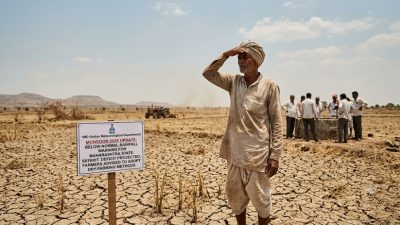
An early monsoon onset would be welcome news for Indian farmers who are already dealing with the effects of an extended heatwave that has seen temperatures soar past 47°C in parts of Maharashtra, Rajasthan, Gujarat, and Madhya Pradesh. Water reservoir levels across central and western India have fallen below their 10-year averages, and an early monsoon could help replenish these reserves and provide relief from the extreme heat.
The monsoon’s performance is particularly critical this year given the ongoing global energy crisis. Agriculture depends heavily on monsoon rainfall for the kharif (summer) cropping season, which produces rice, pulses, oilseeds, and other staple crops. A good monsoon would help keep food prices stable, easing inflationary pressures that have been compounded by elevated fuel costs.
ENSO and IOD Factors
The 2026 monsoon season is being shaped by the current state of the El Niño-Southern Oscillation (ENSO) and the Indian Ocean Dipole (IOD) — two large-scale climate patterns that significantly influence Indian monsoon rainfall. As of May 2026, ENSO conditions are in a neutral state, meaning that neither El Niño nor La Niña conditions are prevailing. This is generally associated with near-normal monsoon performance for India.
The IOD, which measures the difference in sea surface temperatures between the western and eastern tropical Indian Ocean, is currently showing a weakly positive tendency. A positive IOD is typically associated with enhanced monsoon rainfall over India, as it supports moisture transport from the Indian Ocean into the subcontinent. If the positive IOD develops further during the monsoon season, it could boost rainfall — potentially offsetting any deficiencies caused by other atmospheric factors.
IMD’s Seasonal Forecast
The IMD’s long-range forecast for the 2026 southwest monsoon season, released in April, predicted that India would receive “normal to above-normal” rainfall during the June–September period. The forecast specified rainfall of approximately 96–104 per cent of the Long Period Average (LPA), with the quantitative prediction expected to be refined in late May when additional data from pre-monsoon atmospheric conditions becomes available.
However, the earlier heatwave forecast from the IMD had also warned of potential “below-normal” monsoon rainfall in some regions, creating uncertainty about the distribution of rainfall even if the overall quantum is adequate. India’s monsoon is notoriously variable, with some regions receiving excessive rainfall and flooding while others remain dry — a pattern that has become more pronounced in recent years, likely influenced by climate change.
Climate Change and Monsoon Variability
Climate scientists have observed that the Indian monsoon system is undergoing structural changes due to global warming. Research published by the Potsdam Institute for Climate Impact Research and the Indian Institute of Tropical Meteorology has shown that monsoon rainfall is becoming more variable — with more extreme rainfall events during shorter periods interspersed with longer dry spells. This “feast or famine” pattern is particularly challenging for agriculture and water management.
The 2026 monsoon arrives in a global context of elevated temperatures, with 2025 and early 2026 ranking among the warmest years on record. Higher global temperatures increase the atmosphere’s capacity to hold moisture, potentially leading to more intense rainfall events when the monsoon does arrive. However, warming also affects atmospheric circulation patterns in ways that can delay or disrupt the monsoon’s normal progression.
What to Watch For
In the coming days, meteorologists will be monitoring several key indicators to track the monsoon’s progression. The onset over the Andaman Islands is expected to be accompanied by sustained heavy rainfall — typically 60–80 mm per day over multiple days — and a shift in wind patterns from northwesterly to southwesterly across the Andaman Sea.
Following the Andaman onset, the monsoon typically takes two to three weeks to cross the Bay of Bengal and make landfall on the Kerala coast. The IMD will issue regular updates as the monsoon advances, and its pace across the Bay of Bengal will be closely watched by agricultural planners, water resource managers, and weather forecasters across the country.
For the millions of Indian farmers who depend on the monsoon for their livelihoods, the news of an early onset at the Andaman Islands offers a glimmer of optimism. But as any monsoon veteran knows, the real test comes when the rains reach the mainland — and whether they arrive in the right quantities, at the right time, and in the right places to sustain the country’s food security and economic well-being.