NASA Unveils Moon Base Strategy Under Artemis Program With Industry Partners as Agency Targets Sustained Lunar Presence by End of Decade

NASA Announces Plans for a Permanent Moon Base
The United States space agency NASA has announced a comprehensive strategy for establishing a permanent Moon Base at the lunar South Pole, marking the most ambitious step yet in the Artemis program that aims to return humans to the Moon and eventually send them to Mars. The announcement, made through the agency’s official channels, sets the stage for a major news conference scheduled for 26 May 2026 at NASA Headquarters in Washington, where agency leaders will discuss progress on the Moon Base program, reveal new industry partners and outline detailed mission plans.
The Moon Base program represents a significant escalation of NASA’s lunar ambitions. While the Artemis program has always included plans for sustained human presence on the Moon, the specific infrastructure and timeline details announced this week go far beyond the initial scope of short-duration surface visits that characterised earlier Artemis mission profiles. NASA Administrator Jared Isaacman, who was confirmed in the role earlier this year, has made the Moon Base a centrepiece of his vision for the agency.
What the Moon Base Will Look Like
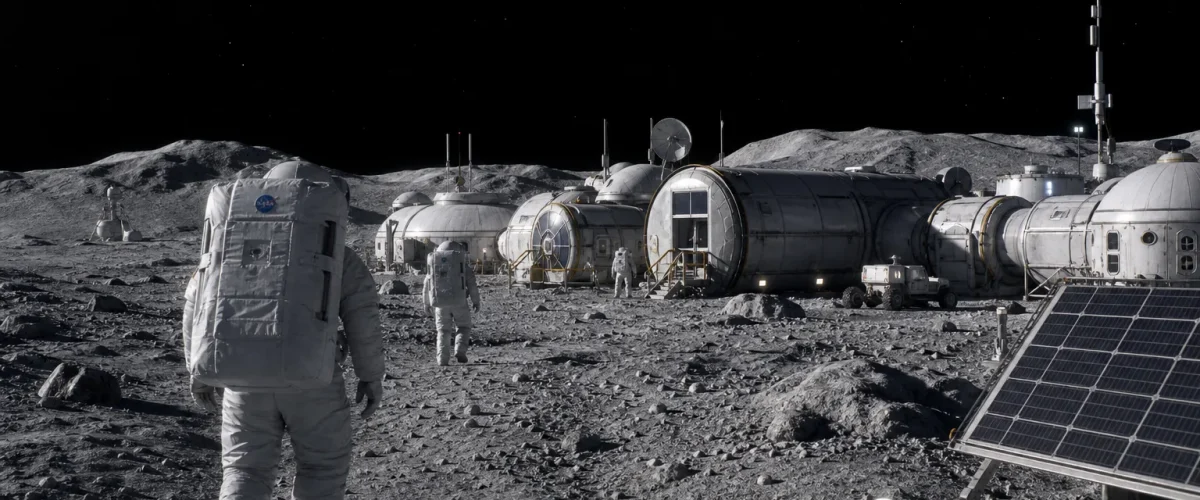
According to preliminary details released ahead of the news conference, the Moon Base is envisioned as a lunar exploration and infrastructure initiative designed to enable sustained human presence and expanded scientific and commercial activity at the lunar South Pole. The South Pole was chosen for its unique advantages, including permanently shadowed craters that contain water ice, which can be converted into drinking water, breathable oxygen and rocket propellant.
The base will be constructed in phases, beginning with robotic precursor missions that will survey the landing site, test construction techniques and deploy initial infrastructure. These robotic missions will work alongside astronauts during subsequent crewed visits to build habitation modules, power systems and communication arrays. The modular design allows the base to grow incrementally, with each mission adding new capabilities.
Key participants in the upcoming news conference include NASA Administrator Jared Isaacman, Lori Glaze, the acting associate administrator for the Exploration Systems Development Mission Directorate, and Carlos García-Galán, the program executive for Moon Base. The involvement of senior leadership signals the priority that NASA places on this initiative within its broader exploration portfolio.
Industry Partners and Commercial Involvement
One of the most anticipated aspects of the 26 May news conference is the announcement of new industry partners who will contribute to the Moon Base program. NASA has increasingly relied on public-private partnerships to achieve its exploration goals, a model that has proven enormously successful with SpaceX’s role in crew and cargo transportation to the International Space Station.
The recent SpaceX IPO filing revealed the depth of the company’s involvement with NASA, including the Starship lunar lander that is central to Artemis crewed missions. Other companies expected to play significant roles in the Moon Base include Blue Origin, which has its own lunar lander programme; Northrop Grumman, which is building habitation elements; and several smaller companies specialising in lunar surface operations, power systems and communications technology.
The commercial dimension of the Moon Base is particularly noteworthy. NASA’s strategy explicitly includes provisions for commercial activity on the lunar surface, recognising that sustained presence will require economic justification beyond pure scientific research. Potential commercial activities include lunar resource extraction, manufacturing in the lunar environment, tourism and the provision of services to other space agencies and private entities.
Scientific Objectives and Mars Preparation
The Moon Base’s scientific agenda is extensive. Researchers plan to study the lunar geology and regolith in unprecedented detail, investigate the water ice deposits at the South Pole, conduct astronomical observations that benefit from the Moon’s lack of atmosphere and radio interference, and perform biological experiments to understand how organisms respond to the lunar environment over extended periods.
Perhaps most importantly, the Moon Base will serve as a testing ground for technologies and operational procedures needed for future Mars missions. Living and working on the Moon for extended periods will provide invaluable data on life support systems, habitat maintenance, radiation protection and the psychological effects of long-duration stays in isolated, confined environments. NASA has explicitly stated that the Moon Base is a stepping stone to Mars, not an end in itself.
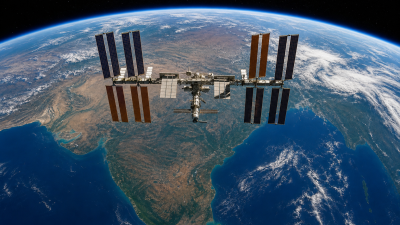
This connection to Mars exploration aligns with the broader strategic direction set by President Trump’s National Space Policy, which prioritises American leadership in space and calls for a return to the Moon before the end of the president’s term, the establishment of a Moon Base and the laying of groundwork for eventual human missions to Mars. The ongoing ISS operations continue to provide a foundation of experience in long-duration spaceflight.
International Cooperation and the Artemis Accords
The Moon Base program is being developed within the framework of the Artemis Accords, a set of bilateral agreements between the United States and partner nations that establish principles for the peaceful and responsible exploration of the Moon. Over 50 countries have now signed the Accords, creating a broad international coalition that supports the legal and operational framework for lunar activities.
India, through the Indian Space Research Organisation, has expressed interest in contributing to Artemis program activities, though the specific nature and extent of India’s participation remain under discussion. The ISRO’s growing capabilities in satellite technology and space operations position India as a potentially valuable partner in the lunar infrastructure build-out.
The European Space Agency, the Japan Aerospace Exploration Agency and the Canadian Space Agency are all expected to contribute modules, instruments or operational support to the Moon Base. This international dimension not only distributes the cost and technical burden but also strengthens the political durability of the program across changes in government.
Timeline and Next Steps
While specific timelines will be announced at the 26 May news conference, informed observers expect NASA to outline a phased approach spanning the late 2020s through the mid-2030s. Initial robotic missions could begin as early as 2027 or 2028, with the first crewed construction missions potentially taking place around 2029 or 2030. A permanently crewed base capable of supporting four to six astronauts for extended stays is expected to be operational by the early to mid-2030s.
The budget implications are substantial. The Moon Base program will require sustained congressional funding well beyond the current NASA budget, and the agency will need to make a compelling case for the economic and strategic returns of lunar infrastructure investment. The growing competition from China’s own lunar program, which has announced plans for a crewed lunar landing before 2030, provides a geopolitical argument for maintaining American leadership on the Moon.
As NASA prepares for its 26 May announcement, the space community worldwide is watching closely. The Moon Base represents not just a technical challenge but a civilisational ambition — the first permanent human habitation beyond Earth. If successful, it will mark a turning point in the history of exploration and set the stage for the even greater challenge of reaching Mars.
Explore more: Science & Space | Research