China Approves World First Commercial Brain-Computer Interface — NEO Chip Beats Neuralink to Market

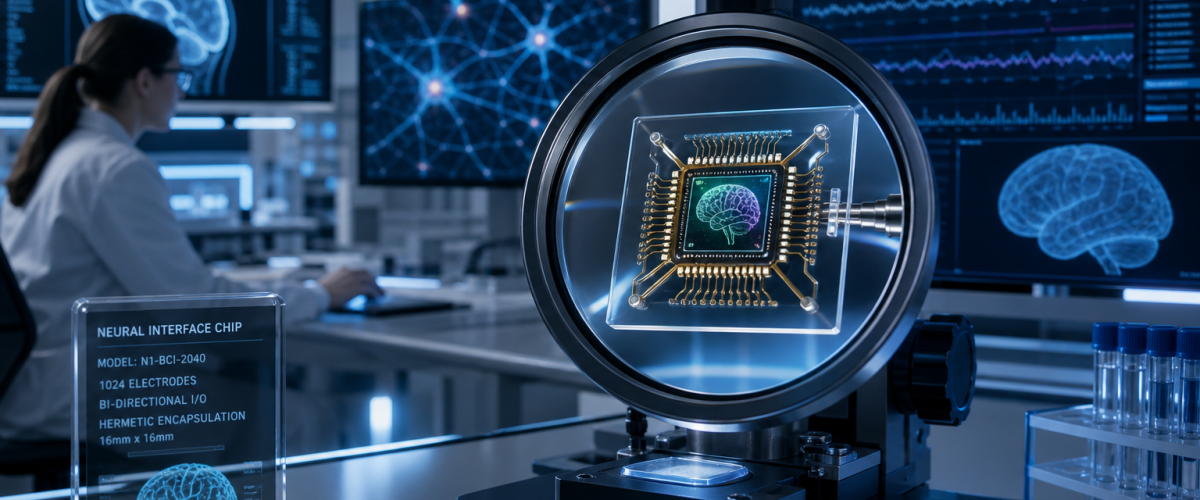
China has become the first country in the world to approve a brain-computer interface (BCI) for commercial sale, marking a historic milestone in neurotechnology that has significant implications for medical science, the technology industry, and the global race to connect human brains with computers. The device, called NEO, was developed by Shanghai-based Neuracle Medical Technology and received approval from China’s national drug and medical device regulator, beating Elon Musk’s Neuralink and other Western competitors to the commercial market.
The approval, which was granted on March 13, 2026, represents a watershed moment in the long-running competition to bring brain-computer interfaces from the laboratory to the clinic. While companies like Neuralink have generated enormous media attention through high-profile demonstrations and celebrity backing, it is a relatively unknown Chinese startup that has achieved the regulatory milestone of bringing a BCI product to paying customers.
How NEO Works
NEO is designed specifically for people living with partial paralysis resulting from spinal cord injuries in the cervical (neck) region. The device is surgically implanted inside the skull, positioned directly above the brain’s primary sensorimotor cortex — the region responsible for planning and executing voluntary movements.
The implant detects electrical signals generated by the brain when the user intends to perform hand movements. These signals are transmitted wirelessly to an external computer, which decodes them in real-time and translates them into commands for a robotic glove worn by the user. The result is that a person with paralysed hands can grasp objects, eat, drink, and perform daily tasks by thinking about the movements — with the robotic glove executing the actions their own hands cannot.
Eligible users must be between 18 and 60 years old with partial paralysis but who retain some ability to move their upper arms. A preprint study published by Neuracle’s research team reported that a patient with quadriplegia successfully used the device at home for nine months, performing tasks including moving objects, eating, and drinking — demonstrating both the device’s efficacy and its suitability for long-term home use.
NEO vs Neuralink: The Comparison
The inevitable comparison between NEO and Neuralink highlights different approaches to the BCI challenge. Neuralink, founded by Elon Musk in 2016, has pursued a more ambitious and technically challenging approach, developing a device with thousands of ultra-thin electrode threads that are inserted directly into the brain tissue using a custom-built surgical robot.
Related: NEET UG 2026 Paper Leak: Congress Launches Nationwide Protest Campaign From Rajasthan
Neuralink’s approach potentially offers higher resolution brain signal recording, which could eventually enable more sophisticated applications including full limb control, communication for locked-in patients, and even brain-to-brain communication. However, the invasiveness of the procedure and the regulatory complexity of inserting electrodes into brain tissue have slowed its path to commercial approval.
NEO’s approach is less invasive — it sits inside the skull but above the brain surface, rather than penetrating brain tissue — which likely contributed to its faster regulatory approval. This trade-off means NEO may have lower signal resolution than deep-implant systems, but it reduces surgical risks and may be more suitable for broader clinical deployment.
Implications for the Global BCI Race
China’s first-mover advantage in BCI commercialisation sends a powerful signal about the country’s neurotechnology ambitions and its regulatory capacity for approving advanced medical devices. The approval reflects years of sustained investment in neuroscience research, medical device innovation, and regulatory infrastructure.
For the broader BCI industry, the NEO approval provides validation that brain-computer interfaces can meet the safety and efficacy standards required for commercial deployment. This could accelerate regulatory pathways in other countries, including the United States and Europe, by providing a precedent and a body of real-world evidence about BCI performance and safety.
The implications extend beyond medicine. Brain-computer interfaces are widely expected to eventually find applications in gaming, communication, education, and military contexts. The company or country that establishes early dominance in BCI technology could gain significant advantages in these downstream markets.
Ethical and Societal Questions
The commercialisation of brain-computer interfaces raises profound ethical questions that society is only beginning to grapple with. Issues of mental privacy, cognitive liberty, and the potential for misuse of brain data are at the forefront of bioethics discussions. Who owns the neural data generated by a BCI device? Can it be subpoenaed by law enforcement? Could it be used for surveillance or manipulation?
For now, these questions remain largely theoretical. NEO’s approved use case — helping paralysed patients regain hand function — is clearly beneficial and relatively straightforward ethically. But as BCI technology evolves and its applications expand, the governance frameworks developed today will shape how brain-computer interfaces interact with human autonomy, privacy, and identity for decades to come.
Also Read
- China and Iran Hold Diplomatic Talks to Discuss Reopening Strait of Hormuz as Global Oil Supply Crisis Deepens
- Indian Startups Raise $228 Million in Third Week of March 2026: Neo and Atlys Lead a Resurgent Funding Cycle
- Lakmé Fashion Week 2026: Designers Push Boundaries with Sustainability, Technology, and Bold New Aesthetics
- The Rise of AI-Powered Wearables in India: How Smart Rings, Health Trackers, and AR Glasses Are Reshaping Personal Technology
- Trump Announces Iran Peace Deal for Sunday — Hormuz Strait to Reopen as War Nears End