India’s Social Media Habits Are Shifting: Why Short Video and AI Companions Are Replacing Traditional Feeds

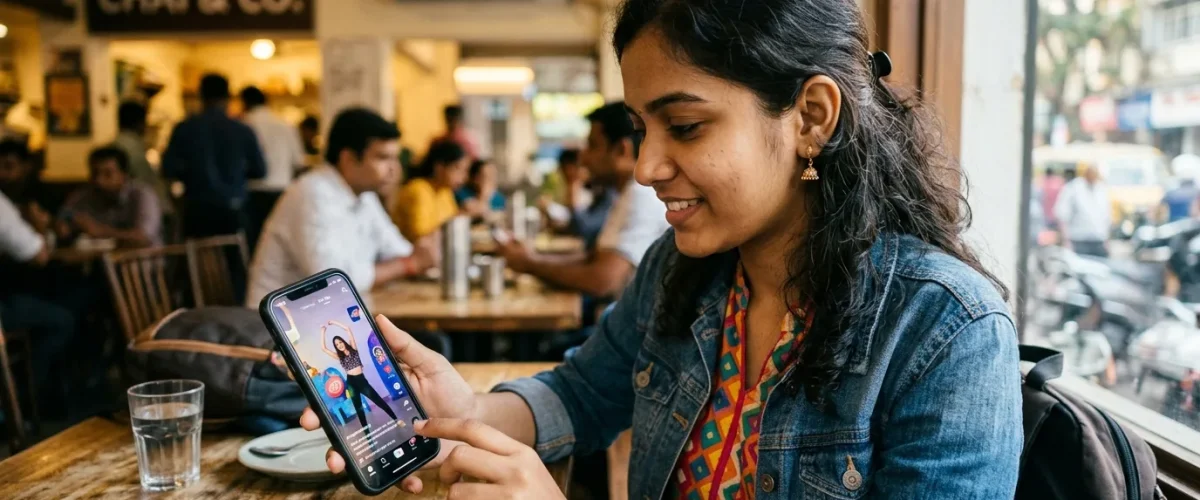
India’s social media landscape in 2026 looks fundamentally different from even two years ago. Traditional text and image feeds are losing ground to short video content and, more surprisingly, to AI companion chatbots that are becoming a significant part of how young Indians interact with technology. The shift reflects deeper changes in attention patterns, content creation economics, and the emotional needs that digital platforms are increasingly designed to fulfil.
India Social Media Trends 2026: Short Video Dominates Everything
Short-form video — content lasting between 15 seconds and three minutes — now accounts for over 60 per cent of total social media consumption time in India. Instagram Reels, YouTube Shorts, and domestic platforms such as Moj and Josh have created an ecosystem where video is not just a content format but the default mode of communication, discovery, and entertainment for users under 35.
The numbers are staggering. YouTube Shorts alone generates over 70 billion daily views globally, with India as the largest single market. Instagram reports that Reels account for more than half of all time spent on the platform in India, up from approximately 30 per cent in 2024. For creators, the algorithm-driven discovery model of short video offers visibility that is impossible to achieve through static posts or long-form content.
The economic implications are significant. India’s creator economy — individuals who earn income through content creation — is estimated at 80 million people, with short video creators forming the fastest-growing segment. Brand advertising budgets have shifted accordingly, with over 40 per cent of influencer marketing spend now allocated to short video campaigns. The broader cultural shifts driven by digital platforms are reshaping everything from fashion to political discourse.
AI Companions: The Unexpected Social Media Trend
Perhaps the most unexpected digital trend of 2026 is the rapid adoption of AI companion chatbots among Indian users. Applications such as Character.AI, Replika, and Meta’s AI personas have gained millions of Indian users who engage in daily conversations with AI characters — fictional personas, celebrity avatars, and personalised companions designed to provide emotional support, entertainment, and social interaction.
Meta’s integration of AI personas directly into Instagram and WhatsApp has been particularly impactful. Users can now interact with AI characters created by celebrities and influencers, ask them questions, seek advice, or simply chat. While the interactions are clearly labelled as AI-generated, the engagement metrics suggest that users find genuine value in these conversations.
The psychological dimensions are complex. Mental health professionals express concern that AI companions could substitute for genuine human relationships, particularly among socially isolated individuals. Proponents argue that AI companions provide a safe space for emotional expression and can serve as a bridge to human connection rather than a replacement for it. In India, where mental health stigma remains a barrier to seeking professional help, AI companions that can recognise and respond to emotional distress may serve a genuine interim function.
The Digital Detox Movement Gains Mainstream Traction
Paradoxically, the intensification of digital engagement has fuelled a growing counter-movement. Digital detox — deliberately reducing screen time and social media usage — has moved from wellness influencer rhetoric to mainstream practice. App usage data shows that screen time management tools are among the most downloaded utility apps in India in 2026.
Corporate wellness programmes are incorporating digital boundaries, with several major Indian IT companies introducing “no notification” hours during the workday. Schools in urban India are implementing stricter phone policies, with some states considering legislation to ban smartphone use during school hours.
The detox movement reflects genuine health concerns. Research from NIMHANS (National Institute of Mental Health and Neuro Sciences) Bengaluru has documented increased rates of anxiety, sleep disruption, and attention difficulties among Indian adolescents with more than four hours of daily social media use. The growing wellness awareness across Indian society extends to digital consumption habits.
Creator Economy: Professionalism and Burnout
India’s creator economy is professionalising rapidly. What began as casual content creation has evolved into a structured industry with talent management agencies, production studios, brand collaboration platforms, and specialised legal and financial services. Top creators earn upwards of Rs 50 lakh monthly from a combination of brand deals, platform revenue sharing, merchandise, and subscription content.
However, the pressure to maintain algorithmic visibility is creating burnout across the creator community. The short video format rewards consistency — creators who post daily receive preferential algorithmic treatment. The result is a production treadmill that demands constant ideation, filming, editing, and engagement. Creator mental health has become an industry topic, with agencies beginning to offer wellness support as part of management contracts.
The economics are also increasingly unequal. While top-tier creators thrive, the vast majority of India’s 80 million content creators earn modest or negligible income. Platform revenue sharing models such as YouTube’s Partner Programme and Instagram’s bonus schemes distribute the majority of rewards to a small percentage of high-performing accounts.
Regional Language Content: The Real Growth Story
The most significant structural trend in Indian social media is the explosion of regional language content. Hindi, Tamil, Telugu, Bengali, Marathi, and other Indian language content now accounts for over 65 per cent of social media consumption in India, up from approximately 45 per cent in 2022. The shift reflects the entry of millions of non-English-speaking users into the digital ecosystem via affordable smartphones and cheap data.
Platforms have responded with improved language support, including AI-powered translation and transcription tools that make content accessible across language barriers. YouTube’s auto-translate captions, available in 15 Indian languages, have enabled creators to reach audiences beyond their linguistic community for the first time.
For brands, the regional language trend demands localisation strategies that go beyond simple translation. Cultural nuances, regional humour, and local reference points determine whether content resonates authentically or feels generic. Companies that invest in genuinely regional content strategies are seeing significantly higher engagement rates than those applying a one-size-fits-all approach.
What Comes Next: Regulation and Platform Evolution
The Indian government is preparing updated social media regulations that would require platforms to implement stronger content moderation, age verification for users under 18, and transparency about algorithmic recommendation systems. The AI-powered content systems that drive social media are increasingly subject to regulatory scrutiny worldwide.
For Indian users, 2026 represents a year of transition. The platforms they use, the content formats they consume, and the digital experiences they value are all evolving rapidly. Short video and AI companions may be today’s headlines, but the underlying trend is a fundamental restructuring of how a billion-plus population connects, communicates, and spends its digital time. The implications — cultural, economic, and psychological — will unfold for years to come.