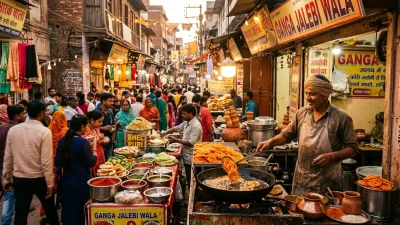
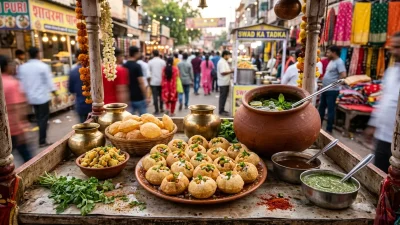
Street Food Revolution: How India’s Chaat and Momos Vendors Are Going Digital in 2026

India’s street food economy — a vast, vibrant, and largely informal sector that feeds hundreds of millions of people daily — is undergoing its most significant transformation in 2026. From chaat carts in Delhi’s Chandni Chowk to momos stalls in Kolkata’s Park Street, vendors are adopting digital payment systems, registering with food safety authorities, and partnering with delivery platforms to reach customers beyond their physical locations. The revolution is preserving what makes Indian street food extraordinary while addressing the hygiene, accessibility, and economic challenges that have limited its growth.
India Street Food 2026: The Digital Transformation
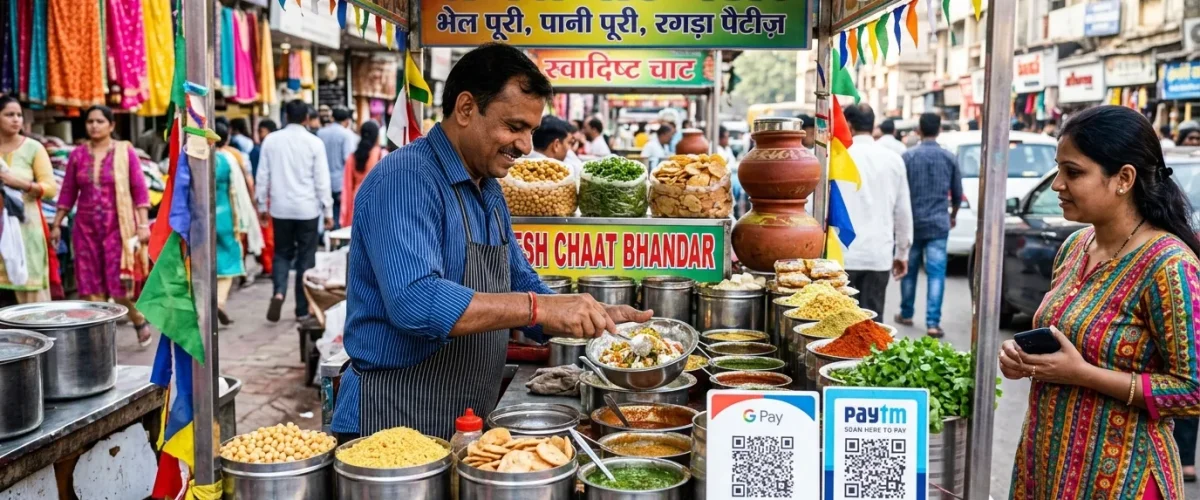
The most visible change is the near-universal adoption of digital payments. QR code-based UPI payments have become standard at street food stalls across urban India. A 2026 survey by the National Restaurant Association of India (NRAI) found that over 75 per cent of urban street food vendors accept digital payments, up from approximately 30 per cent in 2022. The shift was accelerated by customer preference — younger consumers often carry no cash — and by vendor recognition that digital payments reduce the risks associated with cash handling.
The digital adoption extends beyond payments. Vendors are using WhatsApp Business to build customer lists, announce daily specials, and take advance orders. Instagram and YouTube have turned charismatic street food vendors into micro-celebrities, with some of Delhi’s and Mumbai’s best-known stalls gaining hundreds of thousands of followers. The UPI payment revolution has been particularly transformative for small vendors who previously had no access to formal financial services.
For vendors, digital visibility translates directly into revenue. A pani puri stall that goes viral on Instagram can see customer queues triple overnight. A momos vendor who maintains a WhatsApp order list can prepare ingredients more efficiently, reducing waste and improving margins. The economic logic of digital adoption is compelling even for vendors with minimal technical literacy.
FSSAI Hygiene Push: Formalising the Informal Sector
The Food Safety and Standards Authority of India (FSSAI) has intensified its campaign to register and certify street food vendors. The Clean Street Food Hub programme, which awards hygiene ratings to clusters of vendors who meet food safety standards, has expanded to over 200 locations across 50 cities in 2026.
The certification process requires vendors to demonstrate safe food handling practices, clean preparation surfaces, potable water use, personal hygiene compliance, and proper waste disposal. Vendors who achieve certification receive an FSSAI-branded display certificate that signals food safety to customers. The programme provides training and support rather than simply imposing penalties, recognising that most vendors want to operate hygienically but may lack knowledge of formal standards.
Consumer response has been positive. Certified food hubs report increased footfall and higher average spending, as health-conscious customers — particularly families with children — feel more confident purchasing street food from certified vendors. The food industry’s evolving standards are being embraced by vendors who see certification as a competitive advantage.
Delivery Platforms: Street Food Enters the App Economy
Swiggy and Zomato have both launched dedicated street food categories that feature curated vendor listings, real-time availability tracking, and delivery from locations that were previously accessible only by walking to the stall. Swiggy’s “Street Bites” and Zomato’s “Local Legends” programmes onboard vendors with simplified registration processes and reduced commission structures designed for the street food price point.
The model works differently from standard restaurant delivery. Orders are typically smaller — Rs 100-200 versus Rs 300-500 for restaurant orders — and delivery radius is limited to 2-3 kilometres to maintain food quality. Packaging has been adapted for street food formats: leak-proof containers for chaat, insulated bags for momos, and ventilated packaging for fried items that would otherwise become soggy.
The economics are being tested. Delivery costs on a Rs 150 order can erode the vendor’s already thin margin. Both platforms are subsidising delivery fees during the initial phase to build customer habits, betting that street food delivery will become a high-frequency, loyalty-building use case. If the model works, it could be transformative — giving vendors access to thousands of potential customers within their delivery zone.
Regional Specialties Go National: From Litti Chokha to Misal Pav
One of the most exciting developments in India’s street food scene is the national spread of regional specialties. Dishes that were previously available only in their home regions are now found in food courts, dedicated stalls, and delivery menus across India. Bihar’s litti chokha, Maharashtra’s misal pav, Lucknow’s tunday kebab, Kolkata’s kathi rolls, and Hyderabad’s double ka meetha are gaining nationwide audiences.
Social media and food tourism are the primary drivers. YouTube food channels — particularly those that combine travel and culinary exploration — have introduced millions of viewers to dishes they may never have encountered. When a food vlogger with 10 million subscribers profiles a litti chokha stall in Patna, the video generates interest that translates into demand in cities where the dish is unfamiliar.
Entrepreneurs are responding by opening dedicated regional street food outlets in metropolitan cities. Chains such as Wow! Momo have demonstrated that a single street food item — momos — can sustain a national quick-service restaurant brand. Newer entrants are attempting similar models with pav bhaji, dosa, and chaat formats. The rich diversity of Indian culinary traditions provides an almost inexhaustible supply of products for this kind of entrepreneurial adaptation.
The Economics of Street Food: Survival and Aspiration
India’s street food economy employs an estimated 10 million vendors and generates annual revenue exceeding Rs 50,000 crore. For vendors, the economics are characterised by low capital requirements, high ingredient costs as a percentage of revenue, and intense competition. A typical urban chaat vendor earning Rs 30,000-50,000 monthly works 12-14 hour days, six or seven days a week.
Digital tools are improving these economics at the margin. Digital payments reduce cash leakage. WhatsApp ordering reduces food waste through better demand prediction. Delivery platform partnerships extend the customer base. FSSAI certification allows modest price increases that health-conscious customers are willing to pay.
Microfinance and small business lending platforms have begun targeting street food vendors with working capital loans of Rs 50,000-2 lakh, enabling investment in improved equipment, better ingredient sourcing, and expanded capacity. The formalisation of street food vending — with registered business licences, GST compliance, and bank accounts — unlocks financial services that were previously inaccessible. The culinary entrepreneurship in Indian street food is creating pathways from subsistence vending to genuine small business ownership.
The Future of Indian Street Food
India’s street food revolution in 2026 is not about replacing tradition with technology — it is about using technology to sustain, scale, and improve a food culture that is one of the country’s greatest cultural assets. The pani puri that a vendor serves in 2026 tastes the same as it did in 1996. What has changed is how customers find the vendor, how they pay, how the vendor manages inventory, and how regulators ensure the food is safe.
The challenge ahead is ensuring that formalisation and digital adoption do not price out the smallest vendors or homogenise the extraordinary diversity that makes Indian street food unique. The best outcome is one where technology serves the vendor and the customer without erasing the spontaneity, creativity, and human warmth that make eating at a street stall fundamentally different from ordering from a restaurant. India’s street food has survived centuries of change. With the right balance of innovation and preservation, it will survive the digital age too.

- Fentanyl Vaccine Breakthrough: Scripps Research Develops Shot That Blocks Deadly Overdoses Before They Reach the Brain - June 13, 2026
- Nipah Virus Returns to Kerala — First Case of 2026 Confirmed, State Declares High Alert - June 12, 2026
- Jill Biden Reveals She Wanted to Keep PM Modi’s 7.5-Carat Diamond Gift but Returned It After State Department Valued It at $20,000 - June 8, 2026