ISRO Gaganyaan Crew Module Completes Final Abort Test as India Counts Down to First Crewed Space Mission

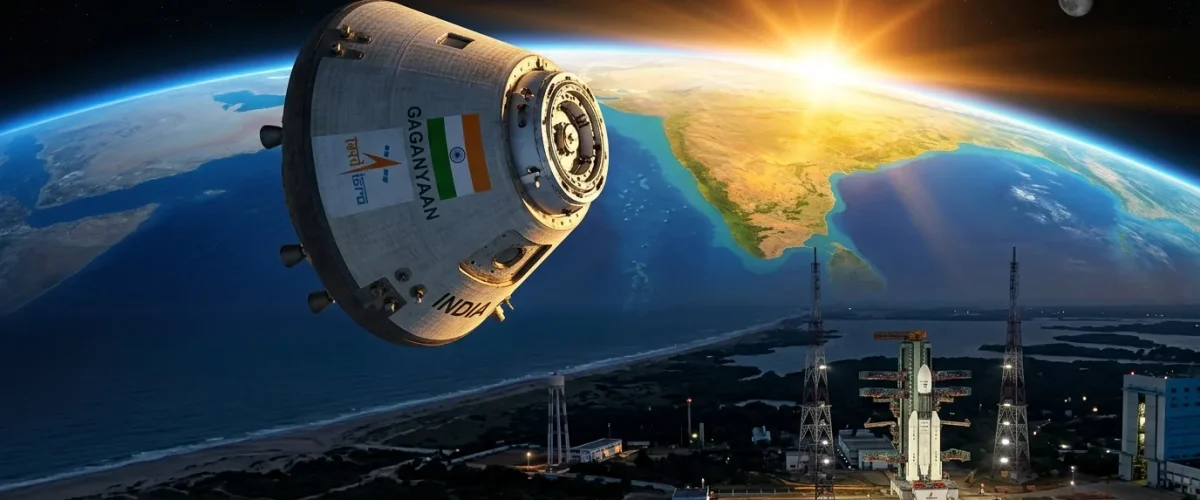
Gaganyaan Clears Its Most Critical Safety Milestone
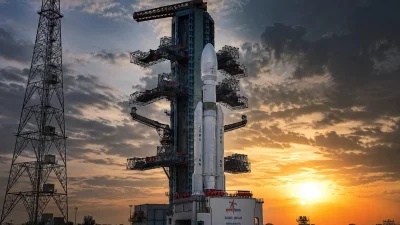
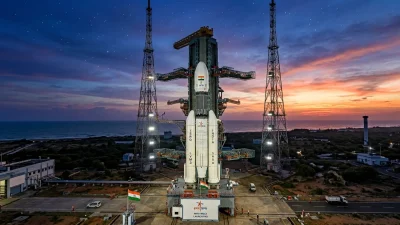
The Indian Space Research Organisation achieved a landmark on 28 March 2026 when the Gaganyaan crew module successfully completed its final pad abort test at the Satish Dhawan Space Centre in Sriharikota. The test, designated TV-D4, simulated an emergency scenario during the initial seconds of launch, with the crew escape system propelling the capsule away from the launch vehicle and executing a safe splashdown in the Bay of Bengal within minutes.
ISRO Chairman S. Somanath confirmed at a post-test briefing that all parameters — from escape motor ignition to parachute deployment and capsule recovery — fell within acceptable margins. “This was the final piece in the abort test series. Gaganyaan is now cleared for its uncrewed orbital flight, which we are targeting for July 2026,” he said.
What the TV-D4 Test Proved
The pad abort test is widely regarded as the most demanding safety validation for any crewed spacecraft programme. Unlike high-altitude abort tests, which benefit from aerodynamic forces at speed, a pad abort occurs at zero velocity, requiring the escape motors to generate sufficient thrust to pull the 8.2-tonne crew module clear of a potentially exploding rocket within milliseconds.
During TV-D4, the crew escape system’s solid-fuel motors fired for 5.6 seconds, accelerating the module to a peak altitude of 2.7 kilometres before the parachute sequence initiated. The capsule touched down in the sea approximately 2.9 kilometres from the launch pad, where the Indian Navy’s recovery vessel INS Shakti retrieved it within 40 minutes. Onboard sensors and a humanoid test dummy — nicknamed “Vyommitra 2.0” — recorded g-forces, temperature fluctuations and vibration data that engineers will analyse over the coming weeks.
The success builds on ISRO’s broader technology development efforts, including the AI-powered technology innovations that now underpin much of the mission planning and telemetry analysis pipeline.
The Path to India’s First Astronauts in Space
Gaganyaan, India’s most ambitious space programme to date, aims to send three Indian astronauts — known as “gaganauts” — into low Earth orbit for a three-day mission. The four pilot candidates, all Indian Air Force officers, have been training at the Yuri Gagarin Cosmonaut Training Centre in Russia and at ISRO’s own Astronaut Training Facility in Bengaluru since 2020.
The programme timeline, revised multiple times due to the COVID-19 pandemic and technical delays, now envisages three key milestones. First, an uncrewed orbital mission (G1) in July 2026 will test the spacecraft’s life support, thermal protection and re-entry systems in actual space conditions. Second, a semi-crewed mission carrying Vyommitra, ISRO’s humanoid robot, is planned for early 2027. If both missions succeed, the first crewed flight (H1) could launch as early as mid-2027.
The total programme cost stands at approximately Rs 12,700 crore, making it one of the most cost-effective crewed space programmes in history. By comparison, NASA’s Commercial Crew Programme allocated over USD 8 billion to SpaceX and Boeing for similar capabilities.
Indigenous Technologies Powering Gaganyaan
One of the programme’s most significant achievements is the degree of indigenous technology development it has spurred. The CE-20 cryogenic upper-stage engine, which will power the GSLV Mk III launch vehicle carrying Gaganyaan, is entirely designed and manufactured in India. The crew module’s thermal protection system, which must withstand temperatures exceeding 1,600 degrees Celsius during re-entry, uses a silica tile design developed by ISRO’s Vikram Sarabhai Space Centre in Thiruvananthapuram.
The Environmental Control and Life Support System (ECLSS), responsible for maintaining breathable air, temperature and humidity inside the capsule, has been tested for over 5,000 hours in ground-based chambers. ISRO engineers have developed a novel CO2 scrubbing system that is lighter and more energy-efficient than comparable systems used on the International Space Station.
The programme has also driven innovation in cutting-edge tech and gadgets, with ISRO’s supply chain involving over 500 Indian companies, including startups developing lightweight composite materials and radiation-hardened electronics.
Gaganyaan’s Broader Impact on India’s Space Economy
Beyond the mission itself, Gaganyaan is catalysing India’s emerging space economy. The Indian Space Policy 2023, which opened the sector to private participation, has attracted over 200 registered space startups, many of whom are developing technologies initially conceived for Gaganyaan. Agnikul Cosmos, Skyroot Aerospace and Pixxel are among the companies that have leveraged ISRO’s technology transfer programme to build commercial products.
The medical research component of Gaganyaan is also significant. ISRO’s partnership with AIIMS Delhi, formalised through a landmark MoU signed in 2025, focuses on space medicine research that has terrestrial applications in telemedicine, bone density loss and psychological resilience. ISRO-AIIMS space medicine partnership is expected to produce publishable research outputs even before the crewed mission launches.
International Context: India Joins an Exclusive Club
If successful, Gaganyaan will make India the fourth country to independently send humans into space, after Russia, the United States and China. The geopolitical significance is considerable. India has deliberately positioned Gaganyaan as a demonstration of self-reliance, or “Aatmanirbharta,” in space technology, even while maintaining cooperative relationships with NASA, ESA and Roscosmos.
ISRO’s SpaDeX satellite docking mission, successfully completed in January 2026, was a critical precursor to Gaganyaan, demonstrating the orbital rendezvous capabilities that India’s SpaDeX docking mission would need for future space station operations. India has expressed interest in contributing a module to the proposed Lunar Gateway and is developing its own Bharatiya Antariksh Station, a small modular space station targeted for 2035.
What Comes Next
With TV-D4 in the books, ISRO’s immediate focus shifts to preparing the GSLV Mk III vehicle for the G1 uncrewed orbital flight. Integration of the launch vehicle with the crew module is expected to begin at Sriharikota in May, with a launch window in the third week of July 2026.
For the Indian public, Gaganyaan has become more than a space programme — it is a source of national pride on par with the Mars Orbiter Mission of 2014 and the Chandrayaan-3 moon landing. Schools across the country watched the TV-D4 test via ISRO’s live webcast, which drew over 15 million concurrent viewers.
As Somanath put it: “Gaganyaan is not just about sending Indians to space. It is about proving that India can achieve anything it sets its mind to.” The countdown, it seems, has truly begun.