Hantavirus Outbreak on MV Hondius Cruise Ship Kills 3 Passengers as WHO Monitors 6 Confirmed Cases and Global Alarm Grows

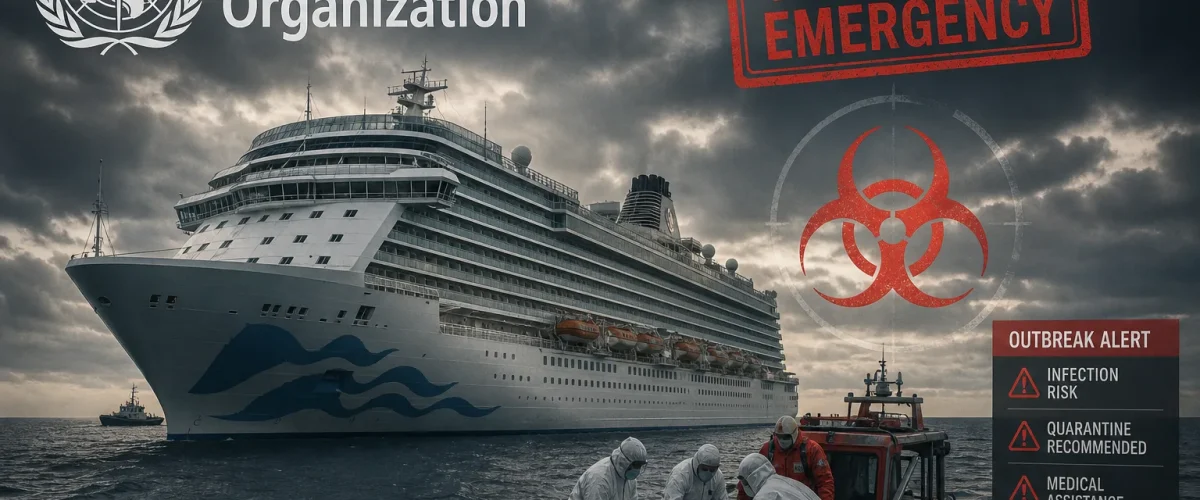
A deadly hantavirus outbreak linked to the Dutch-flagged cruise ship MV Hondius has killed three passengers and infected at least six others, triggering a coordinated global health response and raising fears of a potential wider spread. The World Health Organization confirmed on 09 May 2026 that it is closely monitoring the situation, with WHO Director-General Tedros Adhanom Ghebreyesus traveling to Tenerife in Spain’s Canary Islands to personally coordinate the evacuation of remaining passengers.
The outbreak, first reported to the WHO on 02 May, represents one of the most significant hantavirus clusters ever detected outside endemic regions. As of Saturday morning, eight people have fallen ill aboard the ship — six confirmed cases and two suspected — with illness characterised by fever, gastrointestinal symptoms, rapid progression to pneumonia, acute respiratory distress syndrome, and shock. Three passengers have died, one remains critically ill in intensive care, and three others are reporting mild symptoms.
How the Outbreak Unfolded
The MV Hondius, carrying 147 passengers and crew, departed from Ushuaia, Argentina, on 01 April 2026 for an expedition cruise across the South Atlantic. The ship’s itinerary included stops at mainland Antarctica, South Georgia Island, Nightingale Island, Tristan da Cunha, and the British overseas territory of Saint Helena — remote and ecologically diverse regions where passengers likely encountered wildlife and environments that may have harboured the virus.
The first cases emerged between 06 and 28 April, with passengers developing severe respiratory symptoms during the voyage. Laboratory testing conducted in South Africa on 02 May confirmed hantavirus infection in one critically ill patient. By 04 May, the WHO had received formal notification from the United Kingdom’s IHR Focal Point about the cluster, and the international response was activated.
The ship is currently anchored off the Canary Islands, where Spanish health authorities are working alongside the WHO to manage the safe disembarkation and medical evaluation of all passengers and crew. The process is expected to take several days given the need for individual screening, environmental decontamination, and contact tracing.
American Passengers to Be Quarantined in Nebraska
US President Donald Trump confirmed on Friday that his administration is “closely monitoring” the hantavirus situation. According to media reports citing officials from the US Centres for Disease Control and Prevention, American passengers from the MV Hondius will be quarantined at a facility in Nebraska upon their return to the United States. The CDC has activated its Emergency Operations Centre to coordinate the domestic response.
The WHO has issued notifications to 12 countries whose citizens disembarked at various ports during the voyage, including the United Kingdom, the United States, Canada, Germany, Singapore, and Australia. Each country has been asked to implement surveillance measures for returning travelers and provide medical follow-up for anyone who was aboard the ship.
What Is Hantavirus and How Does It Spread?
Hantaviruses are a family of viruses spread primarily by rodents through their urine, droppings, or saliva. Humans typically become infected when they breathe in air contaminated with the virus — for example, when cleaning or entering enclosed spaces where rodents have been active. The disease can also be transmitted through direct contact with rodent materials or, rarely, through rodent bites.
The specific strain involved in the MV Hondius outbreak has not yet been publicly identified, but investigators are focusing on Andes virus and Sin Nombre virus — the two hantavirus strains most commonly associated with hantavirus pulmonary syndrome (HPS) in the Americas. HPS has a case fatality rate of approximately 36 percent, making it one of the most lethal viral diseases when contracted.
Importantly, the WHO has sought to dispel comparisons between the hantavirus outbreak and COVID-19. “Hantavirus does not spread easily from person to person in most cases,” a WHO spokesperson said. “The risk to the general public remains very low. This is a contained cluster linked to a specific environmental exposure, not a pandemic-type pathogen.” However, Andes virus — if confirmed — is one of the few hantavirus strains known to transmit between humans, which would complicate the public health picture.
Argentina Pushes Back on Origin Theory
Officials in Argentina’s Tierra del Fuego province, where the cruise departed from Ushuaia, have strongly denied that the outbreak originated in their region. Provincial health authorities are pushing for investigations into other Argentine provinces that passengers may have visited before boarding, as well as the ship’s remote port calls in the South Atlantic. The source of exposure remains under active investigation, with research teams examining environmental samples from multiple locations along the route.
Passengers Describe Fear and Uncertainty
Some passengers still aboard the MV Hondius have spoken to media about the harrowing experience of being trapped on a ship with a deadly disease outbreak. “We have been at sea for weeks, watching people get sick around us,” one British passenger told the BBC. “The crew has been wonderful, but there is a real fear about what awaits us when we get back home — quarantine, medical tests, the stigma.”
The WHO has stressed that health emergencies driven by environmental and ecological factors are becoming more frequent globally, underscoring the need for robust surveillance systems on commercial vessels. The organisation is expected to release updated guidance on health protocols for cruise ships in the coming weeks.
Implications for the Global Cruise Industry
The MV Hondius outbreak comes at a time when the expedition cruise industry has been booming, with growing demand for voyages to Antarctica, the Arctic, and other remote destinations. The incident is likely to prompt a review of health screening and environmental risk assessment protocols for expedition vessels that visit ecologically sensitive and potentially hazardous regions.
Cruise industry associations have already begun issuing statements emphasising their commitment to passenger safety. The International Association of Antarctica Tour Operators, which oversees many expedition cruises to the southern hemisphere, said it is “cooperating fully” with health authorities and reviewing its biosecurity guidelines.
As the WHO-led evacuation process unfolds in the Canary Islands over the coming days, the world will be watching closely. The hantavirus outbreak on the MV Hondius is a sobering reminder that even in an age of modern medicine and global surveillance, nature’s pathogens can still emerge in unexpected places and catch the world off guard.

- Fentanyl Vaccine Breakthrough: Scripps Research Develops Shot That Blocks Deadly Overdoses Before They Reach the Brain - June 13, 2026
- Nipah Virus Returns to Kerala — First Case of 2026 Confirmed, State Declares High Alert - June 12, 2026
- Jill Biden Reveals She Wanted to Keep PM Modi’s 7.5-Carat Diamond Gift but Returned It After State Department Valued It at $20,000 - June 8, 2026