Norovirus Outbreak Sickens 115 Passengers and Crew on Caribbean Princess Cruise Ship as CDC Launches Investigation

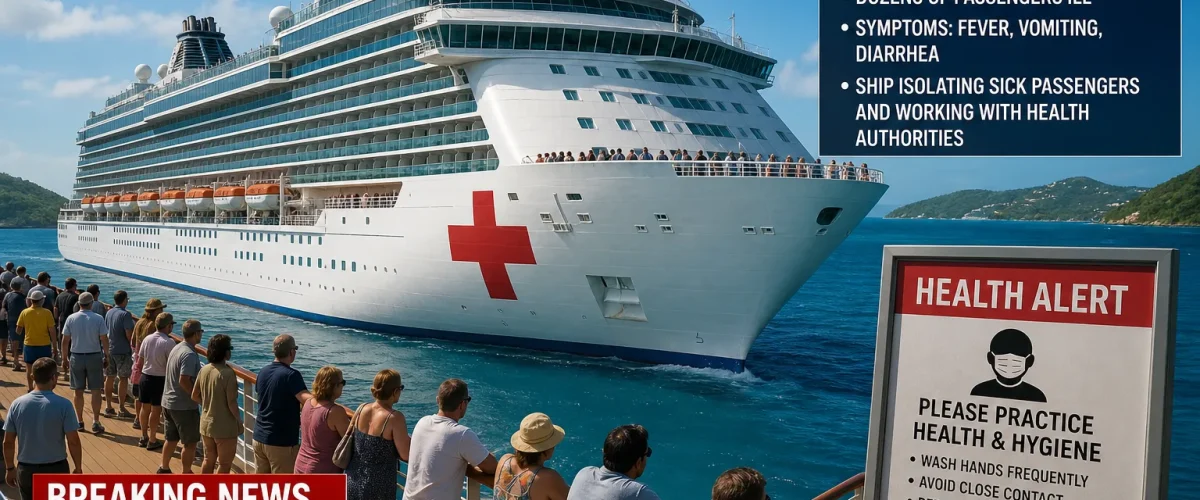
A major norovirus outbreak has struck the Caribbean Princess cruise ship, sickening more than 115 people during a two-week Caribbean voyage, according to the Centers for Disease Control and Prevention (CDC). The outbreak, reported to the agency on Thursday, has affected 102 passengers and 13 crew members aboard the Princess Cruises vessel, which is carrying a total of 3,116 passengers and 1,131 crew.
The ship, currently navigating the northwest Atlantic Ocean en route to Puerto Plata in the Dominican Republic, is scheduled to complete its April 28 to May 11 voyage at Port Canaveral, Florida. The outbreak has drawn heightened attention coming just days after global alarm over the deadly hantavirus outbreak on the MV Hondius cruise ship that killed three passengers, raising fresh questions about disease control in the cruise industry.
Symptoms and Response Measures
Passengers and crew affected by the outbreak have reported symptoms consistent with acute gastroenteritis, including sudden vomiting, watery diarrhoea, and stomach cramps. Norovirus, the most common cause of acute gastroenteritis worldwide, is highly contagious and spreads rapidly in confined environments such as cruise ships, nursing homes, and schools.
Princess Cruises confirmed the outbreak in a statement, describing the illnesses as “mild gastrointestinal” cases and detailing the response measures implemented aboard the ship:
- Increased cleaning and disinfection protocols across all public areas, dining venues, and staterooms
- Isolation of affected individuals in their cabins with room service provided at no additional charge
- Collection of stool specimens for laboratory testing and pathogen confirmation
- Enhanced hand sanitiser stations placed at additional locations throughout the ship
- Modified food service protocols with crew members serving food at buffet stations rather than allowing self-service
“We can confirm that a limited number of individuals reported mild gastrointestinal illness during the April 28 Caribbean Princess voyage from Port Everglades,” Princess Cruises said. “We quickly activated our comprehensive outbreak response protocols and have been working closely with the CDC’s Vessel Sanitation Program throughout.”
How Norovirus Spreads on Ships
Norovirus is caused by a group of related viruses that are remarkably resilient. The virus can survive on surfaces for days or even weeks, is resistant to many common disinfectants, and requires only a very small number of viral particles — as few as 18 particles — to cause infection. These characteristics make it exceptionally well-suited to spread in the closed environments of cruise ships, where thousands of people share dining facilities, entertainment venues, and common spaces.
Transmission occurs through multiple pathways: direct contact with an infected person, consumption of contaminated food or water, or contact with contaminated surfaces. A single infected food handler can trigger widespread outbreaks, as can contamination of shared facilities such as bathroom door handles, elevator buttons, and railings.
Dr. Anjan Debnath, an infectious disease specialist at the University of California San Diego, explained: “Cruise ships are essentially floating cities with very high population density. When a highly contagious pathogen like norovirus is introduced, the conditions for rapid spread are almost ideal. The key to containment is early detection and aggressive isolation, which appears to be what the ship is implementing.”
CDC’s Vessel Sanitation Program
The CDC’s Vessel Sanitation Program (VSP) is responsible for monitoring and investigating gastrointestinal illness outbreaks on cruise ships operating in US waters. Under VSP protocols, cruise lines are required to report any voyage where more than 2 per cent of passengers or crew report gastrointestinal symptoms. With 115 cases among approximately 4,247 total people aboard, the Caribbean Princess outbreak represents roughly 2.7 per cent of the ship’s population — above the reporting threshold.
The CDC has dispatched investigators to meet the ship when it arrives at Port Canaveral on May 11 to conduct environmental assessments, review medical logs, and collect additional samples. The investigation will focus on identifying the source of the outbreak — whether it was introduced by a passenger who boarded while infected, a food contamination event, or an environmental source.
Back-to-Back Cruise Health Scares
The Caribbean Princess outbreak comes at a particularly sensitive time for the global cruise industry, which is still managing the fallout from the hantavirus outbreak on the MV Hondius Antarctic expedition vessel. That outbreak, which killed three passengers including what authorities believe was “Patient Zero” Leo Schilperoord, prompted the World Health Organization to issue monitoring alerts and sparked a wave of media coverage questioning the safety of cruise travel.
While norovirus and hantavirus are fundamentally different pathogens — norovirus causes short-lived gastrointestinal illness, while hantavirus can cause severe and potentially fatal respiratory disease — the back-to-back outbreaks have created what industry analysts describe as a “perception crisis” for cruise lines.
Shares of major cruise companies, including Carnival Corporation (which owns Princess Cruises), Royal Caribbean Group, and Norwegian Cruise Line Holdings, have all declined in recent sessions amid the health concerns. Carnival’s stock fell approximately 3 per cent on Friday, though analysts note that the long-term impact of norovirus outbreaks on cruise bookings has historically been limited.
What Passengers Should Know
Health experts emphasise that norovirus, while extremely unpleasant, is typically a self-limiting illness that resolves within one to three days without specific treatment. The primary risk is dehydration, particularly for elderly passengers or those with underlying health conditions.
Passengers on the Caribbean Princess and future cruise travellers are advised to take the following precautions:
- Wash hands frequently with soap and water for at least 20 seconds (hand sanitiser alone is not fully effective against norovirus)
- Avoid touching common surfaces and use tissues or elbows to open doors
- Report symptoms immediately to the ship’s medical centre
- Stay hydrated with water and electrolyte solutions if symptoms develop
- Avoid self-service buffets during an active outbreak
The CDC publishes regular inspection scores and outbreak reports for all cruise ships operating in US waters, providing transparency that allows consumers to make informed decisions about cruise travel. Previous norovirus outbreaks on Princess Cruises vessels have resulted in enhanced inspection protocols and, in some cases, extended deep-cleaning layovers between voyages.
As the Caribbean Princess approaches its final port, the immediate concern is ensuring that all affected passengers receive appropriate medical attention and that public health protocols prevent further spread. For the broader cruise industry, the incident underscores the ongoing challenge of managing infectious disease risks in what is, by definition, one of the most densely populated environments humans voluntarily inhabit.

- Fentanyl Vaccine Breakthrough: Scripps Research Develops Shot That Blocks Deadly Overdoses Before They Reach the Brain - June 13, 2026
- Nipah Virus Returns to Kerala — First Case of 2026 Confirmed, State Declares High Alert - June 12, 2026
- Jill Biden Reveals She Wanted to Keep PM Modi’s 7.5-Carat Diamond Gift but Returned It After State Department Valued It at $20,000 - June 8, 2026