BRICS Foreign Ministers Gather in New Delhi as Jaishankar Chairs High-Stakes Meeting With Iran Araghchi and Russia Lavrov Amid West Asia Divisions

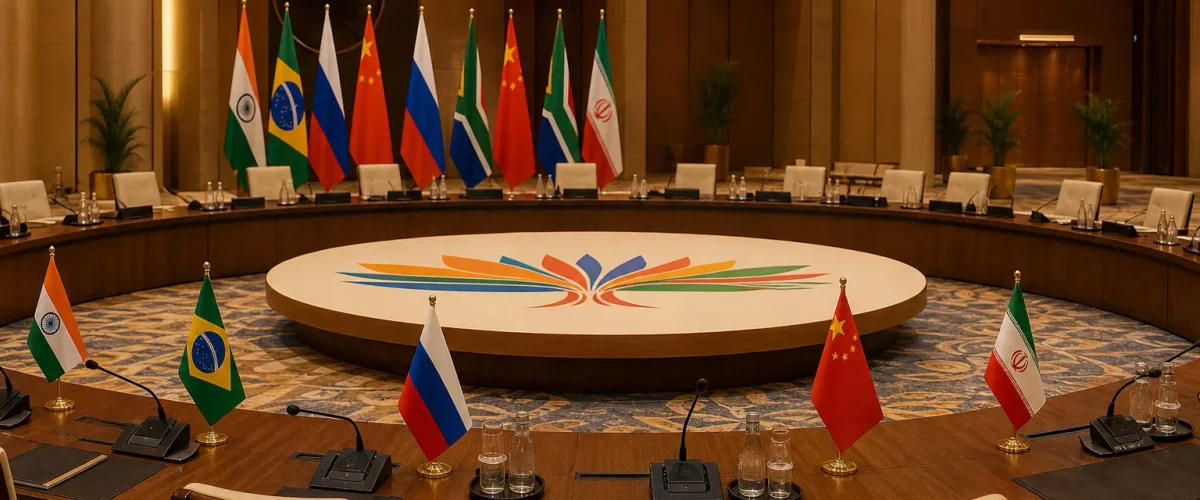
External Affairs Minister S. Jaishankar on Thursday, 14 May 2026, opened the two-day BRICS Foreign Ministers meeting in New Delhi, bringing together senior diplomats from the bloc’s member and partner nations at a moment when deep divisions over the West Asia conflict threaten to test the grouping’s ability to maintain consensus and project a unified voice on the world stage. The meeting, held at the Bharat Mandapam convention centre, is being attended by foreign ministers and senior representatives from all BRICS member countries, with notable presences including Iranian Foreign Minister Seyed Abbas Araghchi and Russian Foreign Minister Sergey Lavrov.
The gathering takes place against the dramatic backdrop of two competing diplomatic events: while Jaishankar hosts the BRICS session in Delhi, US President Donald Trump is simultaneously holding a high-stakes summit with Chinese President Xi Jinping in Beijing. Chinese Foreign Minister Wang Yi has skipped the Delhi meeting due to the scheduling overlap with the Trump-Xi summit, sending a senior deputy in his place — a decision that underscores the diplomatic juggling act facing major powers as multiple crises converge.
Iran’s Araghchi Makes Historic Delhi Visit
Perhaps the most diplomatically significant participation at the Delhi meeting is that of Iran’s Foreign Minister Araghchi, whose presence represents Tehran’s first high-level engagement with India since the eruption of the US-Iran war in late February. Araghchi arrived in Delhi on Wednesday aboard a special flight, and his visit has been closely watched by diplomatic observers as a signal of Iran’s determination to maintain its international engagement despite the ongoing military conflict.
On the sidelines of the BRICS session, Jaishankar held bilateral talks with Araghchi, during which the two ministers discussed a range of issues including the disruption of LPG supplies through the Strait of Hormuz — a matter of direct concern to India, which depends on Gulf imports for a significant portion of its cooking gas and crude oil requirements. India has been particularly affected by the disruption in energy supplies, with LPG prices surging and inflation climbing to 3.8 per cent in April.
Araghchi has urged India and BRICS collectively to issue a joint statement condemning US-Israeli actions in the West Asia conflict — a request that puts India in a delicate diplomatic position, given New Delhi’s close ties with both the United States and Israel. India has so far adopted a balanced approach, calling for de-escalation and diplomacy while avoiding direct criticism of either side, a stance that has drawn both praise for its pragmatism and criticism for its perceived lack of moral clarity.
Jaishankar Calls for Deeper BRICS Cooperation
In his opening address, Jaishankar called for deeper cooperation within BRICS, saying the grouping has “an increasingly important role to play as geopolitical tensions, economic uncertainty and supply-chain disruptions reshape the global landscape.” He emphasised that BRICS, which now includes nine member nations after the 2024 expansion that brought in Egypt, Ethiopia, Iran, Saudi Arabia and the UAE, represents over 40 per cent of the world’s population and approximately 35 per cent of global GDP — making it a significant counterweight to Western-led institutions.
“In a more fragmented world, BRICS must step up,” Jaishankar said. “Our collective voice carries weight, and we must use it responsibly to advocate for multilateralism, dialogue and rules-based international order.” The remarks were interpreted as a signal that India intends to use the BRICS platform to advance its own diplomatic priorities, including reform of the United Nations Security Council, greater representation for developing nations in global financial institutions, and a more equitable distribution of resources in the global economy.
Russia’s Lavrov Pushes for BRICS Unity
Russian Foreign Minister Sergey Lavrov, who confirmed his participation well in advance, used the platform to push for greater BRICS unity on issues ranging from the US-China trade tensions to the ongoing Russia-Ukraine situation. Lavrov reiterated Moscow’s position that the BRICS bloc should serve as an alternative to what he described as “Western unilateralism and coercive diplomacy,” and called for the development of BRICS-specific financial mechanisms, including an expansion of the New Development Bank’s lending capacity and the wider adoption of local currencies in intra-BRICS trade.
The Russia-Ukraine ceasefire, which was announced earlier this month but has come under severe strain with both sides trading blame for weekend violations, was also expected to feature in Lavrov’s bilateral discussions with Jaishankar. India, which has maintained diplomatic contacts with both Moscow and Kyiv throughout the conflict, has been pushing for a sustainable peace process and has offered to host future rounds of negotiations.
West Asia Divisions Pose Biggest Challenge
The most challenging aspect of the Delhi meeting is the deep division within BRICS over the West Asia conflict. Iran, a BRICS member since 2024, is at war with the United States and is seeking solidarity from the bloc. Saudi Arabia and the UAE, also new BRICS members, have been directly affected by the conflict — with Iran conducting missile strikes against UAE energy infrastructure in recent weeks. Russia has maintained a complex relationship with all parties, while China has positioned itself as a potential mediator without making firm commitments.
India, as the meeting’s host and chair, faces the delicate task of navigating these competing interests while keeping the BRICS agenda on track. Diplomats involved in the preparatory meetings said the draft communiqué has been the subject of intense negotiations, with member states differing on the language to be used regarding the West Asia conflict, the role of the UN Security Council, and the question of sanctions relief for Iran. A final communiqué is expected to be issued at the conclusion of the meeting on 15 May, though the extent to which it addresses the economic impact of the West Asia crisis on global markets remains to be seen.
The Delhi meeting also provides India with an opportunity to showcase its diplomatic convening power and strengthen its claim to a permanent seat on an expanded UN Security Council — a long-standing Indian aspiration that has gained renewed momentum as BRICS countries collectively push for reform of the international governance architecture. Whether the meeting produces substantive outcomes or merely reaffirms existing positions, its significance as a demonstration of India’s growing diplomatic influence in a rapidly changing global order is beyond question.