Amul and Mother Dairy Hike Milk Prices by Rs 2 Per Litre Across India Effective May 14 as Rising Input Costs Squeeze Dairy Sector and Household Budgets

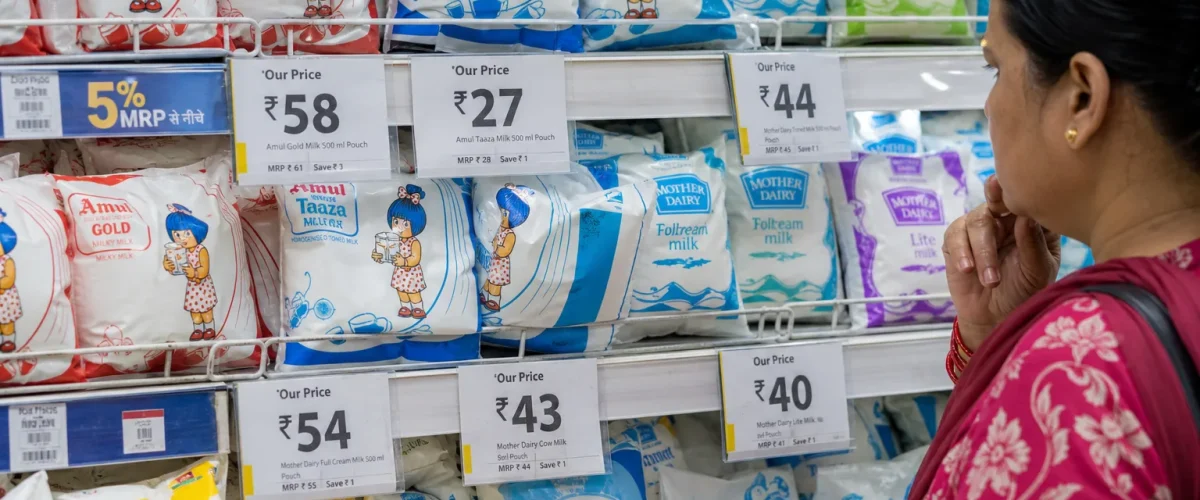
India’s two largest dairy brands — Amul and Mother Dairy — have raised milk prices by Rs 2 per litre across all major variants effective Wednesday, 14 May 2026, delivering the second consecutive annual price increase that will squeeze already stretched household budgets at a time when fuel costs, food inflation and the broader cost of living are rising due to the global energy crisis. The hike for 500 ml packs is Rs 1 across most variants.
The Gujarat Cooperative Milk Marketing Federation (GCMMF), which markets products under the Amul brand, said in a statement that it has “increased the prices of fresh pouch milk by Rs 2 per litre in major milk selling variants/packs across India effective from May 14.” Mother Dairy followed with an identical increase across Delhi-NCR, Uttar Pradesh, Haryana and Uttarakhand markets, saying the revision was “necessitated in view of the sustained increase in farmer procurement prices, of around 6 per cent over the past one year.”
Revised Prices: What You’ll Pay Now
Under the new pricing, Amul Gold (Full Cream) — one of the most widely consumed milk variants in India — will now cost Rs 70 per litre, up from Rs 68. Amul Taaza (Toned Milk) rises to Rs 57 per litre from Rs 55, while Amul Cow Milk increases to Rs 60 per litre. Amul Buffalo Milk, the most expensive variant, has seen the steepest increase at Rs 4 per litre, rising to Rs 80. Amul Slim and Trim (Double Toned) moves to Rs 52 per litre, and T-Special to Rs 66 per litre.
For 500 ml packs, the increases are more modest: Amul Taaza rises from Rs 28 to Rs 29, Gold from Rs 34 to Rs 35, Cow Milk from Rs 29 to Rs 30, and Buffalo Milk from Rs 38 to Rs 39. Shakti Milk (500 ml) will now cost Rs 32, while Slim and Trim and T-Special 500 ml packs are priced at Rs 26 and Rs 33 respectively.
Mother Dairy’s revised prices are similar: Bulk Vended Milk (Token Milk) rises from Rs 56 to Rs 58 per litre, Full Cream Milk and Pro Milk from Rs 70 to Rs 72, Toned Milk from Rs 58 to Rs 60, Double Toned Milk (Live Lite) from Rs 52 to Rs 54, and Cow Milk from Rs 60 to Rs 62 per litre.
Why Milk Prices Are Rising
Both Amul and Mother Dairy have cited rising procurement and operational costs as the primary drivers of the price increase. The cost of cattle feed — which accounts for approximately 60 to 70 per cent of dairy farming expenses — has risen significantly over the past year due to higher grain prices, fertiliser costs and transportation charges linked to the global energy crisis. Feed costs alone have increased by an estimated 8-10 per cent year-on-year, according to dairy industry associations.
GCMMF said it has increased milk procurement prices paid to farmers by Rs 30 per kilogram of fat — a 3.7 per cent increase from May 2025 — to ensure fair compensation and encourage continued milk production. Amul’s cooperative model typically ensures that 75-80 per cent of consumer milk prices are passed on to the approximately 36 lakh dairy farmer families across its network, meaning the price increase is directly linked to farmer welfare.
“This price hike is being done due to an increase in the input costs of production of milk to our 36 lakh milk producers,” GCMMF’s statement said. Mother Dairy similarly stated that “nearly 75-80 per cent of its milk sales realisation goes towards farmers and milk procurement, thereby supporting their livelihoods while ensuring consistent availability of quality milk for consumers.”
Impact on Household Budgets
For the average Indian household that consumes 2-3 litres of milk per day, the Rs 2 per litre increase translates to an additional Rs 120-180 per month, or Rs 1,440-2,160 per year. While this may seem modest in isolation, it comes on top of a series of cost increases that have cumulatively eroded household purchasing power over the past year.
The milk price hike arrives just one day before the government announced a Rs 3 per litre increase in petrol and diesel prices — the first fuel revision in four years. Combined with rising LPG costs, higher vegetable prices due to pre-monsoon weather disruptions, and the recent gold import duty hike, the cumulative impact on household budgets is substantial, particularly for lower and middle-income families.
The timing is especially challenging for families with school-age children, for whom milk is a nutritional staple. Child nutrition experts have warned that sustained price increases in essential food items like milk could lead to dietary cutbacks among economically vulnerable families, potentially affecting children’s growth and development. “Milk is not a discretionary purchase for most Indian families — it’s an essential source of protein and calcium, especially for children,” said Dr Priya Shetty, a nutritionist at AIIMS Delhi. “Price increases need to be balanced with measures to protect access for the most vulnerable.”
Industry Context: Amul Controls 38-40% of Organised Market
With Amul controlling approximately 38-40 per cent of India’s organised milk market and Mother Dairy holding a significant share in North India, the synchronised price increase from both brands effectively sets the benchmark for the entire dairy sector. Smaller regional dairies and private dairy companies are expected to follow with similar price adjustments in the coming weeks, creating a nationwide price reset that will affect consumers across all income levels.
The previous milk price revision was implemented on 1 May 2025, when both Amul and Mother Dairy raised prices by Rs 2 per litre — the same quantum as the current increase. Before that, Amul had implemented a Rs 2-3 per litre increase in June 2024, making this the third consecutive year of annual milk price hikes. Over this period, the cumulative increase in Amul Gold’s price has been approximately Rs 6-7 per litre, or roughly 10 per cent — broadly in line with general food inflation but significantly above overall CPI inflation.
The Farmer’s Perspective
While consumers bear the burden of higher milk prices, the increase is necessary to sustain India’s dairy farming economy. India is the world’s largest milk producer, with annual production exceeding 230 million tonnes, but the sector faces structural challenges including rising input costs, water scarcity in key dairy regions, and the need to improve cattle health and productivity.
The 3.7 per cent increase in procurement prices to farmers — equivalent to Rs 30 per kg of fat — helps offset the rising costs of cattle feed, veterinary care, and transportation that dairy farmers face. For the millions of small and marginal farmers who depend on dairy as a primary or supplementary income source, the procurement price increase provides essential financial support.
“Our cooperative model ensures that the benefits of any consumer price increase are passed directly to the farmer,” GCMMF said. “Without periodic price adjustments, the viability of dairy farming would be threatened, which would ultimately reduce milk supply and harm consumers through shortages rather than price increases.” As India’s economy navigates the challenges of rising global energy costs and domestic inflation, the dairy price hike represents one more pressure point in the complex balancing act between farmer welfare, consumer affordability and food security.

- Fentanyl Vaccine Breakthrough: Scripps Research Develops Shot That Blocks Deadly Overdoses Before They Reach the Brain - June 13, 2026
- Nipah Virus Returns to Kerala — First Case of 2026 Confirmed, State Declares High Alert - June 12, 2026
- Jill Biden Reveals She Wanted to Keep PM Modi’s 7.5-Carat Diamond Gift but Returned It After State Department Valued It at $20,000 - June 8, 2026