Russia Launches Largest Nuclear Military Exercises in Years Mobilizing 65000 Troops and 200 Missile Launchers as NATO Tensions Escalate

Russia Mobilizes 65,000 Troops in Unannounced Nuclear Drill
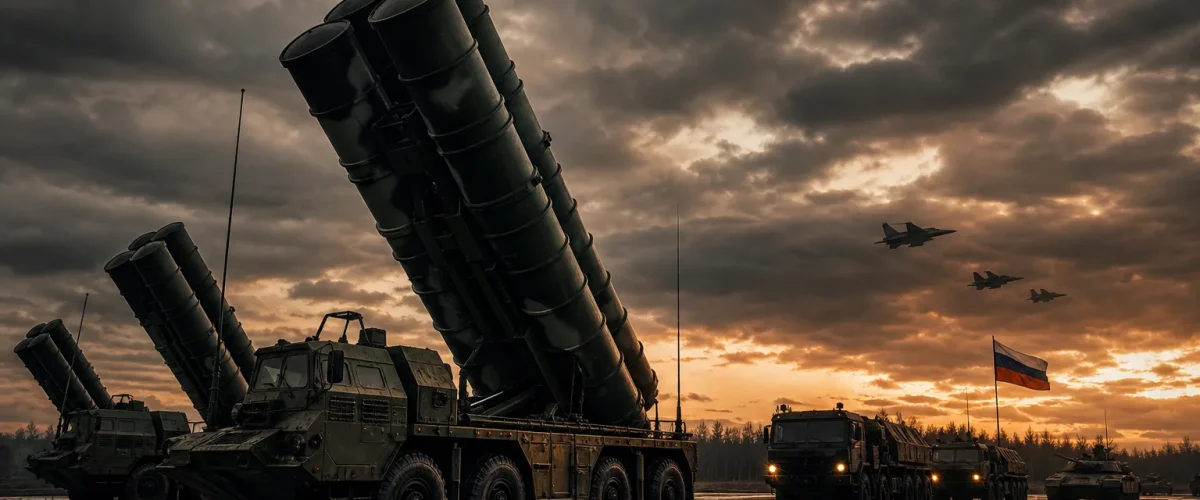
Russia launched its most extensive nuclear military exercises in years on 19 May 2026, mobilizing nearly 65,000 troops, over 200 missile launchers, 140 aircraft, 73 surface vessels, and 13 submarines, including eight strategic nuclear submarines, in a three-day drill that has sent alarm through NATO capitals and raised global tensions to levels not seen since the early phases of the Ukraine conflict. The Russian Defence Ministry announced the manoeuvres without prior public notice, framing them as a rehearsal for the preparation and use of nuclear forces in the event of a threat of aggression.
The exercises involved the Strategic Missile Forces, the Northern and Pacific Fleets, the Long-Range Aviation Command, and units from the Leningrad and Central Military Districts. Live launches of ballistic and cruise missiles at test ranges inside Russia were planned as part of the drills, adding a kinetic dimension that goes beyond the simulated scenarios of routine exercises. The scope and scale of the operation exceed anything Russia has undertaken in recent years, including the annual Grom strategic exercises that are typically held in October.
The timing of the drills has drawn particular scrutiny from Western intelligence agencies and defence analysts. Russia had not previously announced nuclear exercises for May, and the decision to stage an unannounced drill in the middle of the month breaks with established patterns. The last time Moscow staged a surprise nuclear exercise was in the summer of 2024, when it focused on non-strategic or tactical nuclear weapons, apparently timed to coincide with Western debates over supplying long-range missiles to Ukraine.
Belarus Connection Raises NATO Alarm
One of the most concerning aspects of the exercises is the involvement of Belarusian territory and military assets. Reports from multiple defence sources indicate that Russian nuclear warheads have been delivered to launch sites in Belarus, a development that represents a significant escalation of Russia’s nuclear posture in Europe. Belarus, which shares borders with NATO members Poland, Lithuania, and Latvia, agreed to host Russian tactical nuclear weapons in 2023, but the operational deployment of warheads and launchers during military exercises adds a new dimension of risk.
NATO officials have responded to the exercises with a combination of measured public statements and behind-the-scenes military adjustments. The alliance’s Supreme Allied Commander Europe has reportedly placed NATO’s nuclear deterrent forces on heightened readiness, and several member states have increased air patrols over their eastern borders. The Baltic states, which feel most directly threatened by Russian military activity in Belarus, have called for an emergency session of the NATO Military Committee to discuss the alliance’s response.
The Belarusian government, led by President Alexander Lukashenko, has maintained that the hosting of Russian nuclear weapons is a defensive measure designed to deter Western aggression. However, Western governments view the deployment as part of a broader Russian strategy to use nuclear coercion as a tool of political and military influence, particularly in the context of the ongoing conflict in Ukraine and the broader confrontation between Russia and the West.
Analysts Assess Russia’s Strategic Intentions
Defence analysts at the Institute for the Study of War and other research organisations have assessed that the current drills are designed to serve multiple strategic objectives simultaneously. First and foremost, they demonstrate Russia’s nuclear readiness to an international audience, signalling that Moscow retains the capability and willingness to employ its nuclear arsenal if it perceives an existential threat. This demonstration effect is aimed at both Western decision-makers and domestic audiences.
Second, the exercises are widely interpreted as an attempt to influence NATO decision-making on several pending issues, including the provision of additional military support to Ukraine, the possible expansion of NATO’s force posture in Eastern Europe, and discussions about Ukraine’s potential path to NATO membership. By staging dramatic nuclear exercises at a politically sensitive moment, Russia seeks to inject caution into Western deliberations and reinforce the perception that escalation carries catastrophic risks.
Third, analysts note that the exercises serve to mask potential weaknesses in Russia’s conventional military forces, which have been severely tested by the prolonged conflict in Ukraine. By emphasising its nuclear capabilities, Russia compensates for the degradation of its conventional military strength and ensures that its deterrent remains credible even as its ground forces face mounting challenges. The exercises also provide practical training value for Russia’s strategic forces, testing command and control systems, communication networks, and launch procedures under realistic conditions.
Global Nuclear Tensions at Highest Point in Decades
The Russian exercises come at a time when global nuclear tensions are arguably at their highest point since the end of the Cold War. The US-Iran confrontation in West Asia, which includes concerns about Iran’s nuclear programme, has added another dimension to the global nuclear landscape. China’s ongoing expansion of its nuclear arsenal, North Korea’s continued missile development programme, and India and Pakistan’s nuclear postures all contribute to an increasingly complex and dangerous nuclear environment.
The Bulletin of the Atomic Scientists, which maintains the symbolic Doomsday Clock, has set the clock at its closest point to midnight in its history, reflecting the organisation’s assessment that the risk of nuclear catastrophe has never been higher. Arms control frameworks that were built over decades of careful diplomacy have been progressively dismantled, with the collapse of the Intermediate-Range Nuclear Forces Treaty, the uncertain future of the New START agreement, and the absence of any meaningful nuclear dialogue between the major powers.
Russia’s nuclear arsenal remains the world’s largest, with the Federation of American Scientists estimating a total active stockpile of approximately 4,400 warheads. The country’s strategic triad of land-based intercontinental ballistic missiles, submarine-launched ballistic missiles, and air-launched cruise missiles provides a redundant and survivable nuclear deterrent that can withstand a first strike and deliver devastating retaliation. The current exercises appear designed to demonstrate all three legs of this triad simultaneously.
Implications for India and the Indo-Pacific
While the immediate focus of Russia’s nuclear exercises is on the European theatre and the NATO relationship, the implications extend to India and the broader Indo-Pacific region. India maintains a significant defence relationship with Russia, purchasing military hardware including the S-400 air defence system, and the two countries participate in regular bilateral and multilateral military exercises. However, Russia’s increasingly aggressive nuclear posture creates diplomatic complications for India, which has sought to maintain a balanced position between Russia and the West.
India’s own nuclear doctrine, which is based on credible minimum deterrence and a no-first-use policy, stands in contrast to Russia’s more flexible nuclear posture that explicitly allows for the first use of nuclear weapons in response to an existential threat to the state. The divergence in nuclear doctrines, combined with the growing instability of the global nuclear order, reinforces the importance of India’s ongoing modernisation of its own nuclear deterrent and delivery systems.
The exercises also have implications for global commodity markets that directly affect India. Any escalation of tensions between Russia and NATO could disrupt energy supplies, trigger risk-off sentiment in financial markets, and drive up commodity prices at a time when the Indian economy is already navigating challenges from the West Asia crisis and rupee depreciation. India’s diplomatic and security establishment will be monitoring the situation closely, calibrating its response to protect its strategic interests while maintaining its traditionally independent foreign policy stance.
The Path Ahead
The Russian nuclear exercises are scheduled to conclude after three days, but their impact on the global security landscape will reverberate far longer. The immediate question is whether the exercises lead to any change in NATO’s own nuclear posture or force deployment decisions that could further escalate the cycle of military signalling and counter-signalling that has characterised the Russia-NATO relationship since 2022.
Diplomatic channels remain open but strained. The United Nations Secretary-General has called for restraint and urged all nuclear-armed states to recommit to disarmament and arms control negotiations. However, the political will required to rebuild the collapsing nuclear governance architecture appears absent among the major powers, each of which is investing heavily in modernising and expanding its nuclear capabilities. In this environment, exercises like Russia’s latest serve as a sobering reminder that the spectre of nuclear conflict, which many hoped had receded with the end of the Cold War, remains very much a present and growing danger.
Related Stories on DailyTips
- SRH Beat RCB by 55 Runs in IPL 2026 Match 67 but Joy for Bengaluru as They Seal First Place in Points Table
- Election Commission Announces Rajya Sabha Polls for 24 Seats Across 10 States on June 18 2026
- Venezuela Overtakes Saudi Arabia and US to Become India Third Largest Crude Oil Supplier in May 2026 Amid West Asia Crisis
Explore more: International | India

- India’s Startup Funding Crosses $7.2 Billion in H1 2026 - July 1, 2026
- After Ireland Shock, India’s T20I Side Faces Bigger Test - July 1, 2026
- Ireland Stun World Champions India 2-0 in Belfast, Sooryavanshi Debate Rages On - June 29, 2026