Petrol Diesel Prices Hiked for Third Time in 9 Days — Cumulative Rise Crosses ₹5 per Litre

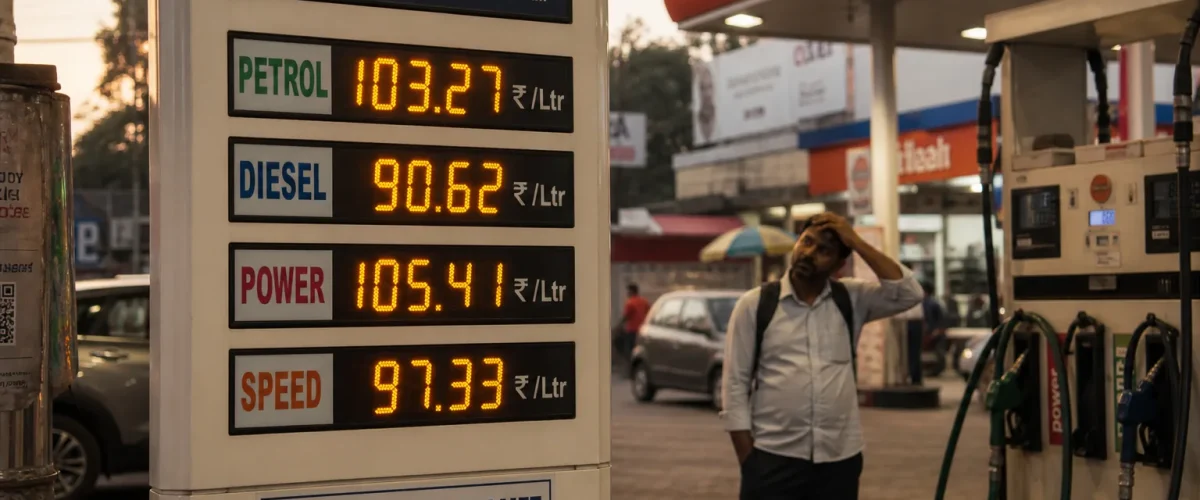
Indian consumers are feeling the pinch as petrol and diesel prices have been hiked for the third time in just nine days, taking the cumulative increase to approximately ₹4.74–4.82 per litre since May 15, 2026. The latest revision, announced on May 23, comes after a 76-day price freeze that had shielded domestic consumers from the full impact of soaring global crude oil prices driven by the ongoing US-Iran conflict.
The Three Rounds of Hikes
Oil marketing companies (OMCs) — Indian Oil Corporation (IOC), Bharat Petroleum (BPCL), and Hindustan Petroleum (HPCL) — have implemented price revisions in three phases:
| Date | Petrol Hike (₹/litre) | Diesel Hike (₹/litre) |
|---|---|---|
| May 15 | +₹1.50 | +₹1.50 |
| May 19 | +₹1.62 | +₹1.64 |
| May 23 | +₹1.62 | +₹1.68 |
| Total | +₹4.74 | +₹4.82 |
In Delhi, petrol now costs approximately ₹102.39 per litre and diesel stands at ₹95.52 per litre. In Mumbai, which levies higher state taxes, petrol has crossed ₹110 per litre — a psychologically significant threshold that has drawn sharp criticism from opposition parties and consumer groups.
Why Now? The Iran War’s Cascading Impact
The primary driver behind these hikes is the ongoing military conflict in the Persian Gulf. The closure of the Strait of Hormuz — through which roughly 20% of global oil passes — has disrupted supply chains and pushed Brent crude above $105 per barrel, up from approximately $78 per barrel in January 2026.
For India, which imports over 85% of its crude oil, the impact has been severe. OMCs were reportedly absorbing losses of nearly ₹1,000 crore per day during the 76-day freeze, making the price correction inevitable. The government has argued that the adjustment is modest compared to what market fundamentals would dictate.
Government’s Defence
Government sources have pushed back against criticism, presenting comparative data showing India’s fuel price increases are far lower than other major economies:
- India: ~5% increase
- Pakistan: 54.9% increase
- United States: 44.5% increase
- United Kingdom: 19.2% increase
“India is the only major economy that has managed to keep retail fuel prices under tight control during two consecutive global disruptions — the Russia-Ukraine conflict and now the West Asia crisis,” a senior petroleum ministry official told reporters on condition of anonymity.
The government also highlighted that excise duty on fuel was cut during the Russia-Ukraine crisis and has not been fully restored, providing continued relief. Additionally, the push for ethanol blending — now at 18% for petrol — has partially offset crude import dependency.
Impact on Inflation and Transport Costs
The ripple effects of fuel price hikes extend far beyond the pump. Economists estimate that every ₹1 increase in diesel prices adds approximately 0.15 percentage points to wholesale price inflation due to its impact on transportation and logistics.
The CNG (compressed natural gas) prices have also been revised upward, hitting auto-rickshaw drivers and cab operators in cities like Delhi, Mumbai, and Pune. Industry bodies like AIMTC (All India Motor Transport Congress) have warned of a potential 8–12% increase in freight charges if diesel prices continue rising.
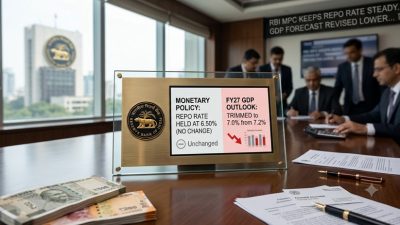
For consumers, the impact is already visible — from higher vegetable prices in mandis to increased ride-hailing fares in metro cities. The RBI, which recently kept the repo rate unchanged at 5.25%, may now face additional inflationary pressure that complicates its monetary easing trajectory.
What Lies Ahead
Market analysts suggest that further hikes are likely if the Iran truce negotiations fail and crude prices remain elevated. However, if the draft US-Iran deal materialises and the Strait of Hormuz reopens for commercial shipping, oil prices could correct by $15–20 per barrel, potentially allowing OMCs to pause or even roll back some increases.
For now, the government faces a delicate balancing act: protecting OMCs from unsustainable losses while preventing a full pass-through that could trigger broader inflationary pressures. With state elections in several states in the coming months, the political calculus of fuel pricing will remain as volatile as the crude oil markets themselves.
Read more Economy and Business news on Daily Tips.
Related Articles
- Venezuela Overtakes Saudi Arabia and US to Become India Third Largest Crude Oil Supplier in May 2026 Amid West Asia Crisis
- India Electricity Demand Hits All-Time Record as Severe Heatwave Pushes Delhi to 43 Degrees Celsius and Power Grid Faces Unprecedented Strain
- RBI Keeps Repo Rate Unchanged at 5.25 Percent as Monetary Policy Committee Projects GDP Growth at 6.9 Percent Amid Global Uncertainty

- Fentanyl Vaccine Breakthrough: Scripps Research Develops Shot That Blocks Deadly Overdoses Before They Reach the Brain - June 13, 2026
- Nipah Virus Returns to Kerala — First Case of 2026 Confirmed, State Declares High Alert - June 12, 2026
- Jill Biden Reveals She Wanted to Keep PM Modi’s 7.5-Carat Diamond Gift but Returned It After State Department Valued It at $20,000 - June 8, 2026