Chennai Super Kings Exit IPL 2026 for Third Consecutive Year — What Went Wrong for the Five-Time Champions

Three Years in the Wilderness — CSK’s Unprecedented Playoff Drought
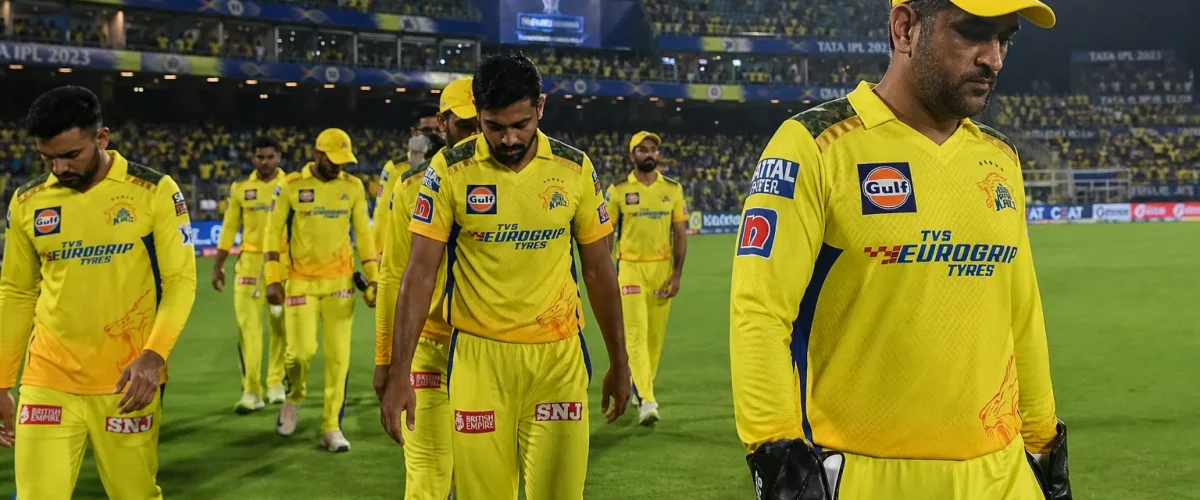
Chennai Super Kings, the most consistent franchise in Indian Premier League history with five title victories, officially exited IPL 2026 after suffering a humiliating 89-run defeat to Gujarat Titans at the Narendra Modi Stadium in Ahmedabad on 21 May. The loss sealed what has become an unthinkable reality for the yellow army: three consecutive seasons without reaching the playoffs, the longest barren stretch in the franchise’s 17-year existence. For a team that reached the final in eleven of its first fourteen IPL seasons, the current crisis represents a fundamental structural problem that goes beyond individual performances or bad luck.
The numbers tell a stark story. CSK finished the 2026 league stage with just 12 points from 14 matches, winning only six games. Their net run rate of minus 0.462 was among the worst in the competition, reflecting not just defeats but the margins by which they lost. The 89-run capitulation against Gujarat Titans, in which they were bowled out for 140 chasing 229, was emblematic of a campaign characterised by brittle batting, toothless bowling in the death overs and questionable tactical decisions.
Batting Collapses and the Middle-Order Problem
CSK’s batting unit, traditionally the backbone of the franchise’s success, was the primary source of their struggles in 2026. Captain Ruturaj Gaikwad, despite finishing with 423 runs at a respectable average of 32, failed to convert starts into match-defining innings at crucial junctures. His strike rate of 124 in the powerplay was well below the tournament average, putting pressure on the middle order from the outset in several key matches.
The middle-order composition was perhaps the most debated aspect of CSK’s campaign. The decision to persist with an ageing core that included players past their prime drew criticism from analysts and fans alike throughout the season. The franchise’s reluctance to blood younger talent from their squad, despite the evident decline in the performance of several senior players, suggested a conservative mindset that sits at odds with the aggressive, results-driven approach that modern T20 cricket demands.
The overseas batting slots were another area of concern. CSK’s international recruits failed to deliver the explosive innings that characterise the contributions of top overseas batsmen at other franchises. While Gujarat Titans had Shubman Gill anchoring their innings and teams like RCB benefited from the match-winning ability of players like Virat Kohli, CSK’s foreign batsmen averaged just 22 with a collective strike rate of 118, both figures significantly below what is required at the business end of the tournament.
Bowling Woes and Death Over Hemorrhaging
If the batting was inconsistent, the bowling was outright deficient, particularly in the death overs that so often decide T20 matches. CSK conceded an average of 54 runs in overs 16 to 20 across the tournament, the highest among all ten franchises. This inability to close out innings meant that even competitive totals were frequently surpassed by opposition teams who could accelerate with confidence against CSK’s death bowling options.
The absence of a world-class fast bowler was keenly felt. While other teams deployed the likes of Jofra Archer, Kagiso Rabada and Trent Boult to devastating effect in the powerplay and at the death, CSK lacked a bowler capable of consistently generating pace above 145 kilometres per hour or executing yorkers under pressure. Their bowling attack, heavy on spin and medium pace, was effective on certain surfaces but badly exposed on flat, batting-friendly wickets.
The Post-Dhoni Transition Challenge
Underlying all the tactical and personnel issues is the broader challenge of the post-MS Dhoni transition. Dhoni’s retirement after the 2023 season left an enormous void not just in terms of his wicketkeeping, batting and on-field captaincy but also in the intangible qualities of leadership, calmness under pressure and tactical acumen that he brought to the franchise for over fifteen years.
Gaikwad, a talented young batsman, has struggled to fill that void as captain. His field placements and bowling changes have drawn criticism, and the body language of the team under his leadership has lacked the steely determination that characterised CSK under Dhoni. The franchise’s coaching and management staff have also faced questions about whether the team’s strategic direction is keeping pace with the evolution of T20 cricket across the IPL.
The comparison with other franchises that have successfully navigated generational transitions is instructive. RCB’s resurgence under new leadership, GT’s consistency since their inaugural season, and the emergence of young teams like Punjab Kings as competitive forces all demonstrate that age and experience alone are insufficient. What matters is the willingness to make tough decisions, invest in emerging talent and adapt tactical approaches to the changing dynamics of the game.
What Needs to Change Before IPL 2027
For CSK to arrest their decline and return to the playoffs in 2027, wholesale changes appear necessary. The mega auction that precedes each new cycle will provide an opportunity to rebuild the squad around a core of dynamic, younger players. However, the franchise’s historical preference for experience over youth, and for loyalty over ruthless performance-based selection, suggests that such a transformation will require a fundamental shift in organisational philosophy.
The coaching staff also faces scrutiny. While head coach Stephen Fleming has been a loyal servant of the franchise, the results of the past three seasons suggest that fresh tactical perspectives may be needed. Several franchises have benefited from bringing in specialist coaches for batting, bowling, fielding and data analytics, and CSK’s coaching structure may need to be augmented or refreshed to remain competitive.
For the millions of CSK fans who have known nothing but success for most of the franchise’s existence, the current drought is a painful but perhaps necessary experience. Every great sporting dynasty eventually faces a period of renewal, and how Chennai Super Kings navigate this challenge will determine whether the yellow era has merely paused or has definitively ended.
Explore more: Cricket | Sports
Related Articles
- IPL 2026 Super Sunday — Last Playoff Spot Up for Grabs
- SRH Beat RCB by 55 Runs — RCB Seal First Place
- India vs Afghanistan Cricket Tour June 2026
- Rajasthan Royals Beat Mumbai Indians by 30 Runs to Qualify for IPL 2026 Playoffs