SpaceX Starship V3 Completes Key Test Objectives Before Exploding in Indian Ocean — Mock Starlink Satellites Deployed Successfully

Starship V3 Achieves Most Objectives in Latest Test Flight
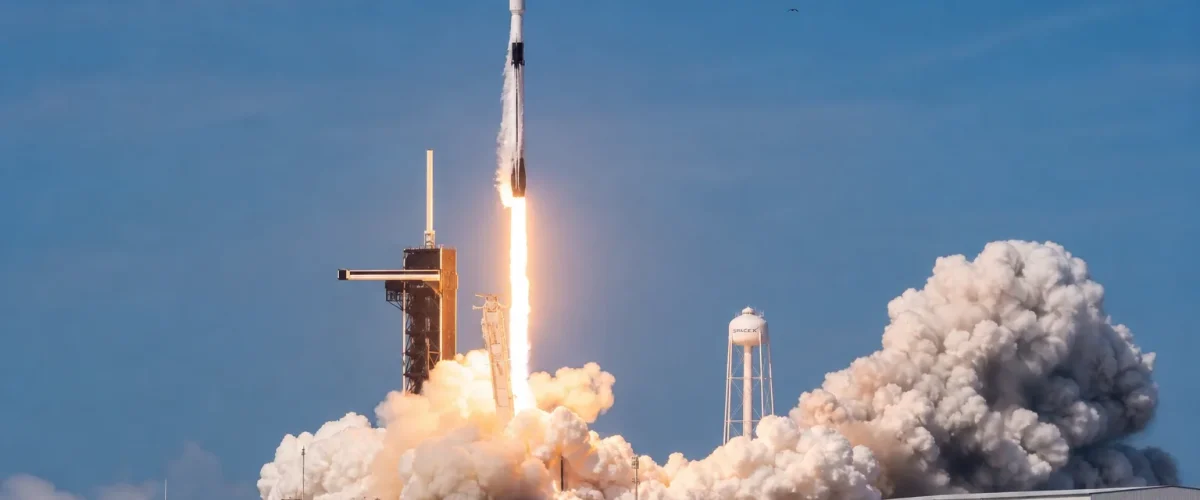
SpaceX launched its upgraded Starship V3 rocket from the Starbase facility in Boca Chica, Texas, on Friday, 23 May 2026, in the latest test of the world’s largest and most powerful launch system. The roughly hour-long flight achieved most of its key mission objectives, including the first-ever deployment of mock Starlink satellites from the Starship’s payload bay, before the spacecraft exploded in the Indian Ocean shortly after completing a planned splashdown. SpaceX said the explosion was an anticipated outcome consistent with the test parameters.
The launch, which was delayed by one day due to a hydraulic issue at the launch tower, attracted widespread attention from space enthusiasts and industry observers. Crowds gathered at viewing sites near Starbase cheered as the 121-metre-tall rocket lifted off with a thunderous roar, its 33 Raptor engines generating approximately 74 meganewtons of thrust at full throttle, making it the most powerful rocket ever flown by a significant margin.
What Is Starship V3?
Starship V3 represents a significant upgrade over the previous Starship variants that SpaceX has tested over the past three years. The vehicle features a redesigned payload fairing with an enlarged cargo bay capable of accommodating the next generation of Starlink internet satellites, which are substantially larger and more capable than the current generation launched on Falcon 9 rockets. The Super Heavy booster has been upgraded with improved engine gimballing systems and a new thermal protection scheme designed to enable booster catch-and-reuse operations.
The complete Starship system, comprising the Super Heavy first-stage booster and the Starship upper stage, stands 121 metres tall when fully stacked, making it taller than the Statue of Liberty. When fully fuelled, it weighs approximately 5,000 metric tonnes and is designed to place up to 150 tonnes of payload into low Earth orbit, a capacity that dwarfs every other launch vehicle currently in operation or development worldwide.
SpaceX has positioned Starship as the cornerstone of its long-term ambitions, including the deployment of the next-generation Starlink constellation, the launch of NASA’s Human Landing System for the Artemis lunar programme, and ultimately, the transportation of humans and cargo to Mars. Each test flight incrementally advances the vehicle towards operational readiness, with SpaceX founder Elon Musk maintaining that Starship will achieve fully reusable operational status by 2027.
Mission Timeline and Key Achievements
Friday’s test flight followed a carefully choreographed sequence designed to validate multiple new capabilities. At T plus 2 minutes and 40 seconds, the Super Heavy booster separated from the Starship upper stage and began its return trajectory towards the launch site. However, one of the booster’s 33 Raptor engines experienced an anomaly during the boostback burn, prompting an automatic abort of the booster catch attempt. The booster was instead directed to a soft landing in the Gulf of Mexico, which it completed successfully despite the engine issue.
The Starship upper stage continued its ascent into a low Earth orbit insertion trajectory, reaching an altitude of approximately 250 kilometres. The deployment of ten mock Starlink V3 satellites from the payload bay was executed flawlessly at T plus 15 minutes, marking the first time any Starship variant has demonstrated satellite deployment capability. While the mock satellites were inert and not designed for orbital operations, the successful release validated the mechanical systems that will be used for operational Starlink launches.
During the orbital phase, two of the six vacuum-optimised Raptor engines on the upper stage failed to reignite for the deorbit burn, necessitating an extended coast phase while mission controllers recalculated the trajectory using the remaining four engines. The deorbit burn was eventually completed successfully, albeit with reduced precision that affected the planned splashdown coordinates in the Indian Ocean.
The Indian Ocean Splashdown and Explosion
Video footage from cameras mounted on the Starship showed the spacecraft descending through the atmosphere over the Indian Ocean, its heat shield tiles glowing orange as the vehicle decelerated from orbital velocity. The spacecraft performed a belly-flop manoeuvre followed by a flip to vertical orientation in the final seconds before splashdown, a technique that SpaceX has refined over multiple test flights.
The vehicle touched down in the designated splashdown zone in the Indian Ocean and briefly floated upright before exploding several seconds later. SpaceX’s webcast commentary team described the explosion as a planned outcome, noting that the vehicle was not equipped with the full set of systems required for post-splashdown structural integrity. The primary objective of the descent phase was to validate the thermal protection system and the flip-and-land manoeuvre, both of which were achieved successfully before the explosion occurred.
Implications for NASA’s Artemis Programme
Each Starship test flight has direct implications for NASA’s Artemis programme, which has selected a modified version of the Starship upper stage as the Human Landing System for returning astronauts to the lunar surface. NASA Administrator Bill Nelson issued a statement following Friday’s test, praising the progress while noting that significant additional testing would be required before the vehicle could be certified for crewed missions.
The successful satellite deployment demonstration was viewed as particularly significant because it validates Starship’s utility as a commercial launch vehicle, not just a technology demonstrator. SpaceX has hundreds of Starlink satellites awaiting launch and has indicated that transitioning Starlink launches from Falcon 9 to Starship would dramatically reduce per-satellite launch costs while enabling the deployment of much larger, more capable satellites.
The engine failures experienced during the mission, while not mission-critical, highlighted the ongoing reliability challenges that SpaceX must address before Starship can be considered operationally mature. The Raptor engine programme has been one of the most ambitious engine development efforts in spaceflight history, pushing the boundaries of full-flow staged-combustion cycle technology, and achieving the extreme reliability needed for crewed missions remains a work in progress.
For the global space industry, Starship’s continued progress represents both an opportunity and a disruption. If SpaceX achieves its goal of full reusability at the scale Starship enables, launch costs could fall by an order of magnitude, opening entirely new possibilities for space-based infrastructure, science and commerce. Friday’s test, despite its imperfections, moved that vision measurably closer to reality.
Explore more: Science & Space | Tech
Related Articles
- NASA Unveils Moon Base Strategy Under Artemis Program
- India Tests Vayu Astra-1 Loitering Munition at Pokhran
- Trump Scraps AI Executive Order After David Sacks Concerns

- India’s Startup Funding Crosses $7.2 Billion in H1 2026 - July 1, 2026
- After Ireland Shock, India’s T20I Side Faces Bigger Test - July 1, 2026
- Ireland Stun World Champions India 2-0 in Belfast, Sooryavanshi Debate Rages On - June 29, 2026