Trump Scraps AI Executive Order at Last Minute After David Sacks Raises Concerns About Hurting US Tech Dominance

Last-Minute Phone Call From David Sacks Derails AI Executive Order
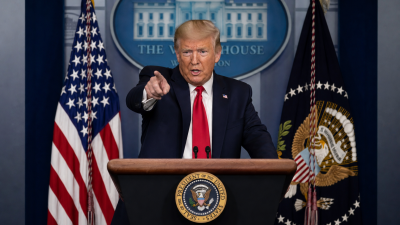
President Donald Trump abruptly scrapped a planned artificial intelligence executive order on 21 May 2026 after his AI and crypto advisor David Sacks raised eleventh-hour objections, catching White House staff off guard and throwing months of interagency policy work into disarray. The incident reveals the extraordinary influence that Silicon Valley figures wield within the current administration and the continuing tension between those who advocate AI governance frameworks and those who fear any form of regulation could undermine American technological supremacy.
According to multiple reports from Politico and other Washington outlets, the executive order had been in development for weeks, with input from multiple federal agencies, industry stakeholders, and White House policy staff. Sacks had participated in a review of the order earlier in the week, and senior officials believed he was generally supportive of its contents. However, on the evening before the planned signing, Sacks began raising concerns about specific provisions in the order.
The next morning, Sacks called President Trump directly, without informing his own White House staff, to express his objections. The call apparently persuaded Trump to shelve the order entirely. When asked about the decision by reporters on Thursday morning, Trump said plainly that he did not like certain aspects of the order and did not want to do anything that could impede America’s lead in AI technology over China and other competitors.
What the Executive Order Would Have Done
While the full text of the scrapped executive order has not been made public, officials familiar with its contents say it would have established a voluntary framework for AI companies to follow when developing and deploying powerful AI systems. The framework reportedly included guidelines for safety testing, transparency requirements for government-facing AI applications, and mechanisms for industry self-reporting on the capabilities of frontier AI models.
Critically, the order was described as voluntary rather than mandatory, meaning companies would not face legal penalties for non-compliance. However, this distinction was precisely what concerned Sacks. According to sources close to the discussions, Sacks argued that voluntary frameworks have a tendency to become mandatory over time, particularly when political winds shift or when a high-profile AI incident creates public pressure for stricter oversight. He feared that establishing any government framework, even a non-binding one, would create a precedent that future administrations could use as the basis for binding regulation.
This concern echoes a broader philosophical debate within the technology industry about the appropriate role of government in AI governance. Companies like OpenAI, which recently launched its GPT-5.5 model, have publicly called for thoughtful AI regulation while simultaneously lobbying against specific proposals that could constrain their business models. The tension between supporting AI safety in principle and opposing concrete regulatory measures in practice has been a defining feature of the AI policy landscape.
Silicon Valley’s Influence on White House AI Policy
The episode underscores the remarkable access that technology industry leaders enjoy within the Trump administration. David Sacks, a venture capitalist and former PayPal executive, was appointed as the White House AI and crypto czar in early 2025. His role gives him a direct line to the President on technology policy matters, and the scrapping of the executive order demonstrates that he is willing to use that access to override the work of career policy staff when he believes industry interests are at stake.
The incident reportedly blindsided several White House officials who had spent months developing the executive order and believed they had Sacks’s support. The fact that Sacks called the President directly, bypassing the normal chain of communication within the White House, suggests a level of freelancing that is unusual even in an administration known for its informal decision-making processes.
Technology companies have broadly welcomed the decision to shelve the order. Industry trade groups and individual companies had been lobbying quietly against various provisions of the proposed framework, arguing that the United States should not impose any constraints on AI development at a time when it faces intense competition from China, the European Union, and other nations. The rapid pace of AI advancement, exemplified by recent announcements from Google, OpenAI, and others, has made the competitive argument particularly resonant.
Critics Warn of Unchecked AI Development
Not everyone views the scrapped executive order as a positive development. AI safety researchers, civil society organisations, and some members of Congress from both parties have expressed concern that the United States is effectively choosing to have no federal AI governance framework at a time when the technology is advancing at unprecedented speed and being deployed in increasingly consequential domains.
Democratic lawmakers on the Senate Commerce Committee issued a statement calling the decision reckless and irresponsible, arguing that even a voluntary framework would have been better than the current vacuum of federal AI policy. They pointed to the growing use of AI in hiring decisions, criminal justice, healthcare diagnostics, and financial services as evidence that the technology’s impact on ordinary Americans demands at least basic governance guardrails.
AI safety researchers have been particularly vocal in their criticism. Several prominent figures in the field, including researchers at major AI labs, have argued that the absence of any federal framework creates a race-to-the-bottom dynamic where companies feel pressured to deploy increasingly powerful AI systems without adequate safety testing. The concern is not hypothetical: incidents involving AI systems making consequential errors in medical diagnosis, content moderation, and autonomous vehicle operation have become increasingly common.
Global AI Governance Divergence
The US decision to shelve AI governance measures stands in stark contrast to the approach taken by the European Union, which has been implementing its comprehensive AI Act since 2024. The EU framework classifies AI applications by risk level and imposes strict requirements on high-risk systems, including mandatory conformity assessments, human oversight provisions, and transparency obligations. Several other countries, including Canada, Japan, and South Korea, have also established or are developing national AI governance frameworks.
This divergence creates a complex landscape for multinational AI companies that operate across jurisdictions. A company like Google or Meta must comply with EU AI Act requirements in Europe while facing no equivalent obligations in the United States, creating an uneven regulatory playing field that some analysts argue actually disadvantages American companies by leaving them unprepared for the governance requirements they face in other markets.
For India, which is developing its own approach to AI governance, the US decision provides useful data points for its policy deliberations. India has been charting a middle path between the EU’s comprehensive regulatory approach and the US’s increasingly hands-off stance, focusing on sector-specific guidelines and voluntary industry codes of practice. The outcome of the American debate will inevitably influence India’s own choices, given the deep technology ties between the two countries and the significant role that US-headquartered AI companies play in the Indian market.
What Happens Next
White House officials have indicated that the executive order is not permanently dead but rather paused for further review. However, given the strength of Sacks’s objections and Trump’s clear reluctance to impose any constraints on the AI industry, the prospects for a revised order emerging in the near term appear slim. The administration’s AI policy is likely to remain focused on promoting innovation, reducing barriers to AI adoption, and maintaining the United States’s competitive position against China rather than on establishing governance frameworks or safety requirements.
The episode also raises questions about the decision-making process within the White House on technology policy matters. If a single advisor can derail months of interagency work with a phone call, it suggests that AI policy is being driven more by personal relationships and industry access than by structured policy development. Whether this approach serves the broader national interest or primarily benefits the technology companies that have the closest ties to the administration remains an open and increasingly important question.
Related Stories on DailyTips
- SRH Beat RCB by 55 Runs in IPL 2026 Match 67 but Joy for Bengaluru as They Seal First Place in Points Table
- Election Commission Announces Rajya Sabha Polls for 24 Seats Across 10 States on June 18 2026
- Venezuela Overtakes Saudi Arabia and US to Become India Third Largest Crude Oil Supplier in May 2026 Amid West Asia Crisis

- Indian Army Gets New Chief as General Dwivedi Hands Over Command Amid Push for Indigenous Defence Tech - July 1, 2026
- Ayodhya Ram Temple Donation Scandal Deepens as Trustees Resign and SIT Arrests Eight - June 29, 2026
- Bengal Seven Weeks On: Modi’s Historic Win and the Questions That Won’t Go Away - June 28, 2026