Ebola Crisis in Congo Surpasses 1,000 Confirmed Cases as Uganda Closes Border — India Sends Emergency Medical Supplies

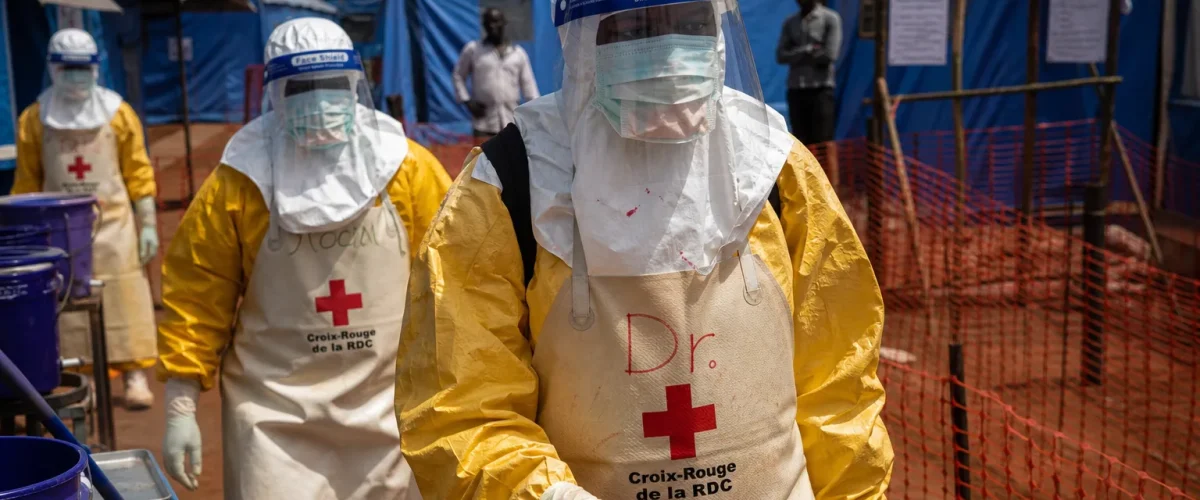
WHO Warns of ‘Catastrophic Collision’ as Ebola Spreads Across Eastern Congo
The World Health Organisation issued its most dire warning yet about the worsening Ebola outbreak in the Democratic Republic of Congo on Thursday, describing the situation as a “catastrophic collision” of infectious disease and armed conflict that threatens to overwhelm the region’s fragile health infrastructure. The outbreak, which began in eastern Congo’s North Kivu province in March, has now surpassed 1,000 confirmed cases with over 200 deaths, making it the most significant Ebola crisis since the devastating 2018-2020 outbreak in the same region.
The WHO’s alarm comes as the outbreak continues to spread into new territories despite containment efforts, driven by population displacement caused by the ongoing armed conflict involving dozens of militia groups, government forces and foreign-backed proxies in eastern Congo. The virus has now been confirmed in four provinces — North Kivu, South Kivu, Ituri and Maniema — with suspected cases reported in areas where health surveillance is minimal due to active fighting.
Uganda Closes Border to Contain Spread
Uganda, which shares a porous 877-kilometre border with eastern Congo, announced on Wednesday that it was closing its land border crossings with the DRC effective immediately as a preventive measure. The Ugandan Ministry of Health said it had deployed screening teams at all major border points and established isolation facilities at district hospitals near the border, while conducting contact tracing for individuals who had recently crossed from Congo into Uganda.
The border closure is a significant escalation of Uganda’s response and reflects the growing concern about cross-border transmission. During the 2018-2020 outbreak, Ebola crossed into Uganda on several occasions, causing a small number of cases and deaths. Uganda has experience managing Ebola outbreaks, having dealt with multiple incursions of the virus over the past two decades, but the scale of the current DRC outbreak and the volume of cross-border movement — estimated at 80,000 to 100,000 people daily — make containment extremely challenging.
The border closure will have significant economic consequences for communities on both sides that depend on cross-border trade for their livelihoods. The Bunagana border crossing, which connects North Kivu’s capital Goma to the Ugandan town of Kisoro, handles approximately $2 million in trade daily and is a vital corridor for food, fuel and medicine supplies to conflict-affected populations in eastern Congo.
India Dispatches Emergency Medical Supplies
India stepped up its humanitarian response to the Ebola crisis by dispatching a consignment of emergency pharmaceutical supplies to the affected region on Thursday. The Africa Centers for Disease Control and Prevention confirmed receiving the Indian donation in Uganda, from where it will be distributed to treatment centres in eastern DRC. The supplies include essential diagnostics, therapeutics, infection prevention and control materials, and case management support equipment.
India’s contribution reflects its growing role as a provider of public health assistance to African nations, building on partnerships established during the COVID-19 pandemic when India supplied vaccines and medical equipment to numerous African countries. External Affairs Minister S. Jaishankar said India was “committed to supporting our African partners in their fight against Ebola” and indicated that additional assistance, including deployment of specialised medical teams, was under consideration.
India’s pharmaceutical industry, which accounts for approximately 20 per cent of global generic drug production, is well-positioned to provide affordable therapeutics and diagnostic supplies for the Ebola response. Indian companies have previously contributed to Ebola vaccine research and development, and the country’s expertise in cold chain logistics — developed during the massive COVID-19 vaccination campaign — could be valuable in distributing temperature-sensitive vaccines and treatments to remote areas of eastern Congo.
Why This Outbreak Is Different
Ebola outbreaks in the DRC are not unusual — the country has experienced over a dozen since the virus was first identified near the Ebola River in 1976. However, the current outbreak is distinguished by several factors that make it particularly dangerous and difficult to contain.
First, the eastern DRC is engulfed in a multi-layered armed conflict that has displaced over six million people and created vast zones where health workers cannot safely operate. The M23 rebel group, backed by Rwanda according to United Nations reports, controls significant territory in North Kivu, while dozens of smaller militia groups operate across the region. Health workers attempting to reach Ebola cases in conflict zones have been attacked, kidnapped and killed in previous outbreaks, and the security situation has not improved.
Second, the displacement of millions of people into overcrowded camps creates ideal conditions for disease transmission. Internally displaced persons camps often lack basic sanitation, clean water and healthcare facilities, turning them into potential amplifiers for infectious disease outbreaks. The WHO has identified several displacement camps where Ebola transmission has been confirmed, raising fears of explosive growth in case numbers.
Third, community resistance to Ebola response teams remains a significant challenge. In previous outbreaks, response teams have faced violent opposition from communities that distrust outside intervention, associate Ebola treatment centres with death, or believe conspiracy theories about the origins and purpose of the response. Building community trust requires time and sustained engagement that is difficult to achieve in the context of active conflict and displacement.
Global Response and Funding Gaps
The international response to the current Ebola outbreak has been slower and less well-funded than previous emergencies, partly due to donor fatigue and the diversion of attention and resources to other global crises including the US-Iran conflict, the continuing humanitarian emergency in Sudan, and the aftermath of natural disasters in South and Southeast Asia.
The WHO has appealed for $500 million in emergency funding for the Ebola response, but as of mid-May, only approximately $120 million had been pledged or disbursed. Médecins Sans Frontières, which has been on the front lines of the response, warned that the funding shortfall was “putting lives at risk” and called on wealthy nations to fulfil their commitments to global health security.
The outbreak has also renewed debate about the global distribution of Ebola vaccines, which have proven highly effective in preventing infection when administered promptly to contacts of confirmed cases. While several hundred thousand doses of the rVSV-ZEBOV vaccine are available globally, logistical challenges in delivering them to remote and conflict-affected areas of eastern Congo have limited their deployment. The WHO is working with manufacturers and logistics partners to establish vaccination corridors in accessible areas near the outbreak zone.
Risk to India and South Asia
While the risk of Ebola reaching India remains low, the Indian government has activated its surveillance protocols at international airports as a precautionary measure. The National Centre for Disease Control has issued advisories to all state health departments, instructing them to be vigilant for potential cases among travellers returning from Central and East Africa. India has direct air links with several countries in the region, and the large Indian diaspora in East Africa adds an additional channel for potential transmission.
The Ministry of Health and Family Welfare said India’s preparedness level for Ebola is “significantly higher” than during the 2014 West Africa outbreak, with improved isolation facilities, diagnostic capabilities and trained rapid response teams at major hospitals and airports across the country.
Explore more: Science | International
Related Articles
- US Launches Fresh Strikes on Iranian Military Site Near Strait of Hormuz as Both Sides Edge Closer to Ceasefire Framework
- NASA Unveils $20 Billion Roadmap to Build Permanent Moon Base — Awards Nearly $1 Billion in New Lunar Contracts
- Red Balloon Aerospace Launches India’s First Indigenous Stratospheric Balloon Platform — Mission Sana Puts India in Elite Global Club