India’s Monsoon 2026 Forecast Drops to 90% of Normal — El Niño Threatens Agriculture and Economy as IMD Issues Below-Normal Warning

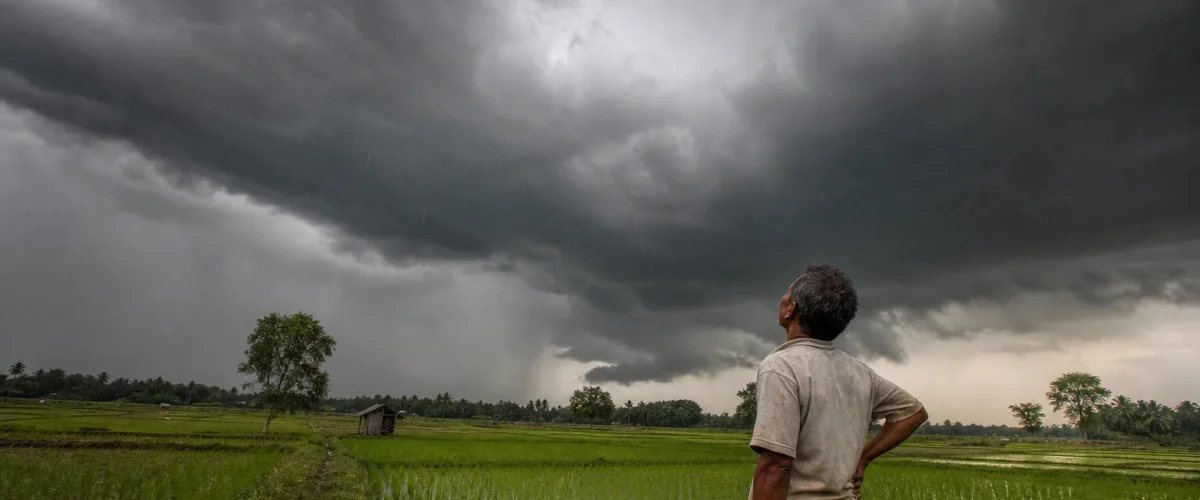
India’s monsoon outlook for 2026 has darkened considerably, with the latest forecasts suggesting the country could receive its lowest rainfall in three years. The India Meteorological Department (IMD) has forecast the 2026 southwest monsoon at approximately 92% of the Long Period Average (LPA) of 870 mm — firmly in the “below normal” category and a significant departure from the above-average rains India has enjoyed since 2023.
The concerns have deepened further this week as updated models suggest the cumulative seasonal figure could slip to around 90% of LPA, bringing the forecast perilously close to the “deficient” threshold. For a country where 60% of farmland relies on monsoon rains and the kharif season drives nearly half the annual agricultural output, the implications are profound.
The El Niño Factor
At the heart of the grim outlook is a developing super El Niño in the Equatorial Pacific Ocean. El Niño — characterised by warmer-than-average sea surface temperatures in the central and eastern Pacific — disrupts the Walker Circulation, a critical atmospheric pressure system that drives moisture-laden winds towards the Indian subcontinent during the June-September monsoon season.
The current El Niño event is being compared to the powerful 2015-16 episode, when India received just 88% of LPA rainfall. During that season, IMD had initially predicted 93% but was forced to revise downward as El Niño intensified. Climate scientists warn that history could repeat itself if Pacific Ocean temperatures continue their upward trajectory through June and July.
“The probability of a deficient season — rainfall below 90% of LPA — stands at 35%, which is more than double the long-term climatological probability of 16%,” noted a senior IMD scientist in a recent briefing. “The chances of a below-normal season are 31%, while the probability of normal rainfall has dropped to just 27%.”
Regional Impact: Most of India at Risk
The rainfall deficit is not expected to be uniform across the country. IMD projections indicate that barring some regions in the extreme north such as Ladakh, the extreme west including parts of Rajasthan, the Northeast, and portions of the northern south peninsula like Telangana, the rest of India will see below-average rainfall.
The Indo-Gangetic plain — India’s agricultural heartland covering Uttar Pradesh, Bihar, Madhya Pradesh, and Punjab — is expected to bear the brunt of the deficit. These states collectively account for over 40% of India’s rice, wheat, and pulses production, and even a 10-15% shortfall in monsoon rains can dramatically reduce crop yields.
Southern states including Karnataka, Tamil Nadu, and Kerala — already grappling with erratic weather patterns — face their own challenges. The latter half of the monsoon season, typically July through September, is expected to be most affected as El Niño conditions peak.
Agricultural Consequences: Kharif Season Under Threat
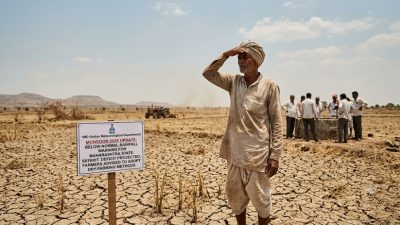
India’s kharif (summer-sown) crops — including rice, cotton, sugarcane, soybean, and pulses — are critically dependent on monsoon rains. A below-normal monsoon could reduce the area under cultivation, delay sowing schedules, and lower per-hectare yields across multiple crops.
Rice, India’s most important kharif crop, requires sustained rainfall during the transplanting period in June-July. If rains are delayed or deficient, farmers in states like West Bengal, Odisha, and Andhra Pradesh could be forced to reduce paddy acreage. India produced approximately 136 million tonnes of rice in 2025-26 — any significant drop could affect both domestic supply and export commitments.
Cotton and soybean farmers in Maharashtra, Gujarat, and Madhya Pradesh are particularly vulnerable. These crops need well-distributed rainfall through the growing season, and El Niño years historically produce uneven, concentrated spells of rain followed by extended dry periods.
Economic Ripple Effects
The monsoon’s influence extends far beyond the farm gate. Agriculture contributes roughly 15% to India’s GDP but employs nearly 42% of the workforce. A poor monsoon season can trigger a cascade of economic effects — reduced rural incomes, lower consumer spending in semi-urban and rural areas, and rising food prices.
Food inflation is the most immediate concern. The Reserve Bank of India, which has been carefully managing monetary policy, may face renewed pressure if vegetable and cereal prices spike due to lower production. During the 2015-16 El Niño, pulses prices surged nearly 40% year-on-year, forcing the government to import emergency stocks.
Reservoir levels across major dam systems — including Koyna, Bhakra, and Nagarjuna Sagar — are currently at seasonal averages, but a deficient monsoon could leave them below capacity by September, affecting irrigation supplies for the rabi (winter) season as well. This creates a double-whammy scenario where both consecutive crop seasons are affected.
Government Response and Preparedness
The central government has begun mobilising contingency plans. The Agriculture Ministry has directed states to prepare drought-management protocols and ensure seed and fertiliser supplies for alternative crop varieties that require less water. The PM-KISAN scheme disbursements have been fast-tracked to provide farmers with liquidity ahead of the sowing season.
Additionally, the government is expanding the coverage of the Pradhan Mantri Fasal Bima Yojana (PMFBY) crop insurance scheme, which saw enrolment surge 18% in the last kharif season. States have also been asked to keep buffer stocks of essential commodities ready to intervene in markets if prices spike.
What Experts Are Saying
Climate scientists caution that while the overall forecast is concerning, the monsoon’s actual performance will depend on several evolving factors. The Indian Ocean Dipole (IOD) — another oceanic phenomenon that can counteract El Niño’s effects — is currently neutral but could turn positive by August, potentially offsetting some of the rainfall deficit.
“The worst-case scenario could be a slightly negative rainfall during the monsoon,” said Dr Roxy Mathew Koll, a climate scientist at the Indian Institute of Tropical Meteorology. “But the monsoon is a complex beast — local factors, the IOD, and the Madden-Julian Oscillation can all modulate the final outcome.”
IMD is expected to release its updated forecast in early June, with finer district-level projections. For now, India watches the Pacific with growing unease as the first monsoon rains, expected around June 1 on the Kerala coast, will provide the first real-world indication of what lies ahead.
Related Articles
- Maharashtra’s Alphonso Mango Trade Devastated by Heatwave, El Niño and Iran Crisis
- Delhi Records Warmest May Night in 14 Years as Severe Heatwave Continues
- Red Balloon Aerospace Launches India’s First Indigenous Stratospheric Balloon