Wix CEO Cuts 20% of Workforce Citing ‘AI Revolution’ — 1,000 Jobs Axed as Tech Industry Reshapes Around Artificial Intelligence

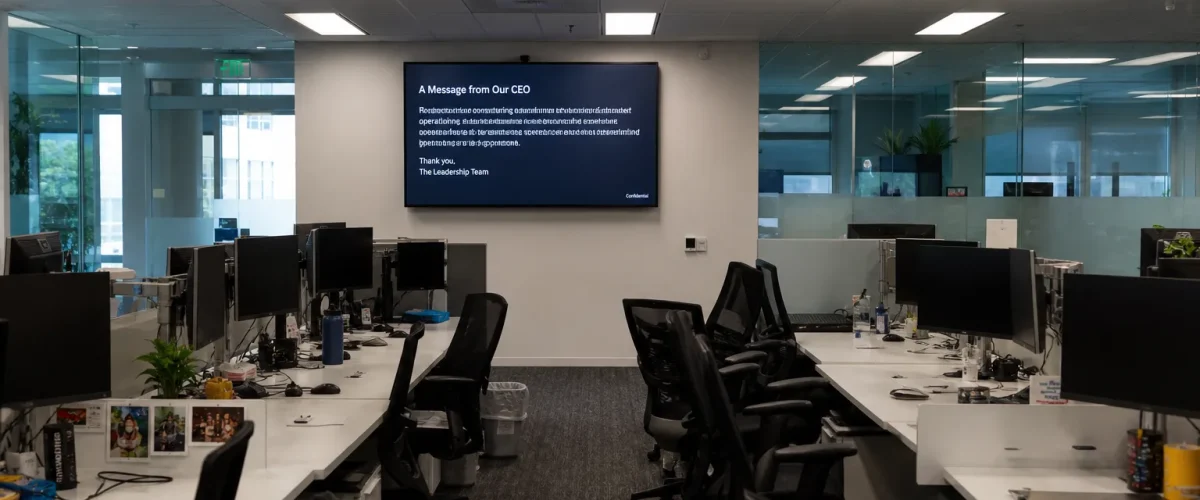
Website-building software giant Wix is cutting approximately 20% of its workforce — around 1,000 jobs — in one of the tech industry’s most significant AI-driven restructuring moves of 2026. CEO Avishai Abrahami shared the news in a company-wide memo posted on X (formerly Twitter) on May 28, citing the “fast evolution of AI capabilities” and the strengthening Israeli shekel as dual drivers of the painful decision.
“Today is a sad day for me,” Abrahami wrote. “We have made a very hard decision. We are reducing the Wix team size by roughly 20%. It is one of the hardest decisions I have had to make, but I am confident it is the right one.” The Israeli-headquartered company, which employs just under 5,300 workers globally, joins a growing list of tech firms that have cited AI as a reason for significant workforce reductions this year.
Two Forces Driving the Cuts
Abrahami identified two primary factors behind the layoffs. The first is economic: the exchange rate between the Israeli shekel and the US dollar has shifted significantly in recent quarters, with the shekel strengthening against the dollar “almost every day.” Since Wix generates revenue primarily in dollars but pays a substantial portion of its workforce in shekels, this currency dynamic creates what Abrahami described as a “structural pressure” on the company’s ability to operate profitably.
The second factor is technological — and far more consequential for the broader tech industry. “We have witnessed the most significant shift in how companies are built since the invention of modern programming languages in the 1970s,” Abrahami wrote. “This is not just about adopting new tools — it is about rewiring how companies are built, how they think, how they manage and how they operate.”
The CEO argued that companies embracing AI will “not only build faster; they will build things the previous generation literally could not have imagined.” For Wix, this means becoming a “faster, leaner, and flatter organization” — with fewer management layers, faster decision-making, and a smaller but more AI-augmented workforce.
Xengineer and Creators: AI-Native Roles
In his memo, Abrahami highlighted two new roles that Wix has recently created as part of its AI transformation. The “Xengineer” is described as a “design-first engineer” who uses AI throughout the entire development lifecycle — from ideation and prototyping to coding, testing, and deployment. Unlike traditional software engineers who write code manually, Xengineers are expected to leverage AI tools to accelerate every phase of development.
The second role, “Creators,” appears to focus on AI-augmented content and design work. Both roles were introduced in a Wix company blog in January 2026 and represent the company’s vision for what work will look like in an AI-native organization.
“Fewer layers means faster decisions, clearer ownership, and less distance between the people setting direction and the people building the product,” Abrahami explained. “But it also means a smaller number of people.” The implication is clear: AI is not just automating individual tasks but restructuring entire organisational hierarchies.
Competitive Pressure from AI-First Platforms
Wix’s AI pivot comes amid intense competitive pressure from a new generation of AI-first website and application builders. Platforms like Lovable, which allows users to create functional web applications through natural language descriptions (“vibe-coding”), have emerged as direct threats to Wix’s core business model. These AI-native tools can generate in minutes what traditionally took hours or days of manual web development.
Wix has responded by integrating AI deeply into its platform — its AI Site Generator, launched in 2024, allows users to create complete websites from text prompts. However, the company’s share price tells a more sobering story: Wix stock is down 23% since the start of 2026, reflecting investor concerns about whether the company can compete effectively in an AI-transformed market.
The fundamental challenge for Wix is existential: if AI can enable anyone to build a website or web application without technical expertise, does the world still need a dedicated website-building platform? Abrahami’s memo suggests he believes Wix can survive and thrive by becoming AI-native itself, but the 20% workforce reduction indicates the transition will be painful.
Part of a Broader Pattern
Wix joins Snap, Block, Atlassian, and a handful of other technology companies that have explicitly cited AI when announcing layoffs in 2026. The language used by executives in these announcements has become strikingly similar — as industry observers have noted, the template typically includes acknowledging the difficulty of the decision, citing AI as transformative, and promising that the resulting organisation will be stronger and more innovative.
The pattern raises important questions about the labour market implications of AI adoption. While AI proponents argue that the technology will create more jobs than it destroys — in areas like AI training, prompt engineering, and AI oversight — the near-term reality for thousands of displaced workers is considerably less optimistic.
A recent Morgan Stanley report estimated that AI could lead European banks to cut up to 20% of jobs, while investment firm Muddy Waters’ CEO Carson Block warned that AI could displace 15% of knowledge workers in the US within three years. India’s outsourcing industry — which employs millions in software development, customer support, and business process operations — is particularly exposed to AI-driven displacement.
Impact on India’s Tech Sector
For India, which has the world’s largest IT services industry employing over 5 million people, the Wix layoffs are a cautionary signal. Indian IT giants like TCS, Infosys, and Wipro have been investing heavily in AI capabilities while simultaneously grappling with reduced hiring and shifting client demands. The fear is that AI will automate many of the routine coding, testing, and support tasks that have been the bread and butter of India’s IT outsourcing model.
However, optimists point out that India’s AI talent pool is growing rapidly, and companies that successfully transition to AI-augmented workforces could actually see increased demand for their services. The key is whether Indian tech workers can upskill fast enough to stay ahead of automation — a race that grows more urgent with every announcement like Wix’s.
As Abrahami concluded in his memo: “Companies that embrace this change will not only build faster; they will build things the previous generation literally could not have imagined.” For the 1,000 Wix employees losing their jobs, the challenge is ensuring they are part of building that future, not casualties of it.
Related Articles
- Anthropic Launches Claude Opus 4.8 with Major Intelligence Upgrade
- Reliance’s Ambani Green Energy Giga Complex Ships First Batch of Solar Cells
- Byju Raveendran Sentenced to Six Months in Singapore Jail for Contempt
- Japan Bans Indian Mango Imports After 20 Years Over Pest Contamination

- Fentanyl Vaccine Breakthrough: Scripps Research Develops Shot That Blocks Deadly Overdoses Before They Reach the Brain - June 13, 2026
- Nipah Virus Returns to Kerala — First Case of 2026 Confirmed, State Declares High Alert - June 12, 2026
- Jill Biden Reveals She Wanted to Keep PM Modi’s 7.5-Carat Diamond Gift but Returned It After State Department Valued It at $20,000 - June 8, 2026