Delhi High Court Fines Google Rs 30 Lakh in Landmark Trademark Ruling — Hindware Keyword Case Could Reshape Digital Advertising in India

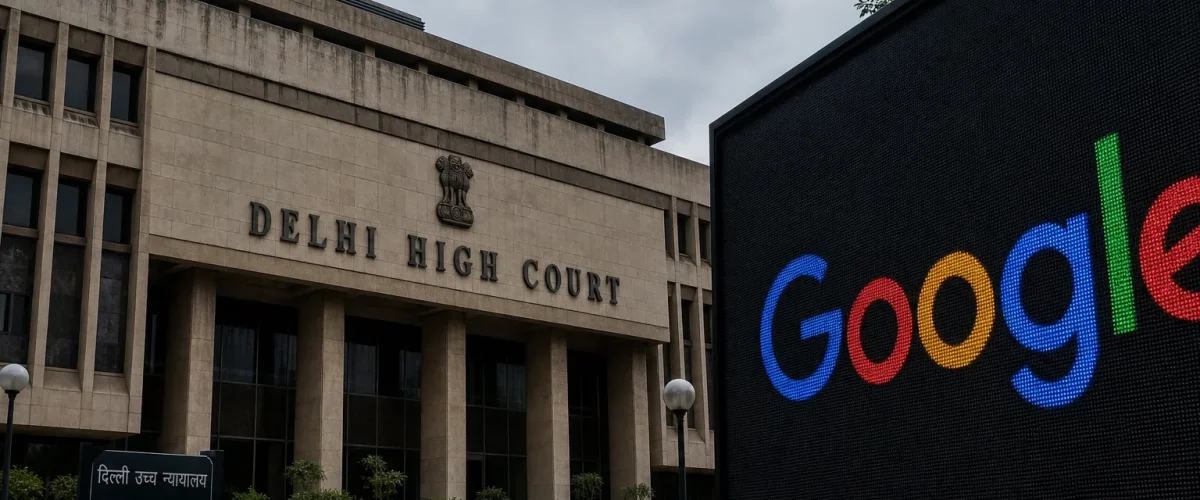
The Delhi High Court has found Google guilty of infringing the trademark rights of Hindware, one of India’s leading bathroom fittings manufacturers, by allowing rival companies to use “Hindware” as an advertising keyword on its platform. Justice Mini Pushkarna, in a 163-page ruling dated 22 May 2026, imposed a Rs 30 lakh fine on the tech giant and permanently restrained it from using Hindware’s name in its keyword advertising system.
The ruling holds that Google does not function as a passive intermediary in keyword advertising. Instead, the court found that Google actively suggests keywords, determines which advertisements appear through its algorithms, and auctions trademarks through a competitive bidding system. This active role, the court said, amounts to trademark use by Google itself — not merely by the advertisers purchasing the keywords.
This ruling could have far-reaching consequences for the Rs 95,000 crore digital advertising market in India’s technology sector, where keyword-based advertising is the dominant revenue model for search engines.
What Google’s Keyword Advertising Actually Does
To understand why this ruling matters, it helps to know how Google’s ad system works in practice. When a company buys a keyword on Google Ads, its advertisement appears whenever a user searches for that term. If a Hindware competitor purchases the keyword “Hindware,” their own ad shows up above or alongside Hindware’s organic search results.
The advertiser pays Google for each click. Google profits from selling access to a brand’s name without the brand’s consent. For years, Google has maintained that this practice does not constitute trademark infringement because the keyword is merely a targeting signal, not a use of the trademark itself.
Justice Pushkarna rejected this argument comprehensively. The ruling found that Google’s system constitutes “free-riding” on Hindware’s reputation and goodwill. The court noted that Google does not merely host third-party ads — it actively curates, ranks and serves them based on the trademarked keyword.
Legal Precedent in India and Globally
The Hindware case builds on a line of Indian trademark jurisprudence that has been developing since the Consim Info v. Google India case, where the Madras High Court first held that using trademarks as keywords could fall under Section 29(6)(d) of the Trade Marks Act, 1999.
The Delhi HC ruling goes further by directly holding Google liable as a participant, not merely a platform. This mirrors developments in European jurisdictions, where the Court of Justice of the European Union ruled in the Google France v. Louis Vuitton case that advertisers — but not necessarily Google — could be liable for trademark infringement.
Indian courts have now taken a firmer stance. The 163-page ruling is one of the most detailed analyses of keyword advertising under Indian law, and it creates a strong precedent for other trademark holders to challenge similar practices. Companies across sectors — from major corporations to emerging brands — will be watching closely.
What This Means for Advertisers
Digital marketing professionals working in the Indian market should pay close attention to this ruling. The immediate effect is narrow — Google must stop using “Hindware” and related terms as advertising keywords. But the legal principle established is broad enough to apply to any brand whose name is being auctioned as a keyword without consent.
In practice, this means brands could begin sending cease-and-desist notices to Google demanding the removal of their trademarks from the keyword auction system. If Google fails to comply, the Hindware precedent gives brands a clear legal path to court orders and damages.
For advertisers who rely on competitor keyword targeting — a common strategy in sectors like insurance, e-commerce and consumer electronics — this ruling introduces real legal risk. What was previously considered aggressive but legal marketing may now attract trademark infringement claims.
The Supreme Court’s recent stance on digital platform regulation suggests Indian courts are increasingly willing to hold technology platforms accountable for the consequences of their business models, not just their stated intent.
Google’s Response and Next Steps
Google has been directed to pay the Rs 30 lakh fine within eight weeks. The company has not yet publicly commented on whether it will appeal the ruling, though legal experts widely expect a challenge before a division bench of the Delhi HC or ultimately the Supreme Court.
Meanwhile, the ruling has already sparked discussion among India’s advertising industry associations. The Internet and Mobile Association of India and the Advertising Standards Council of India have not issued formal statements, but industry insiders suggest policy consultations are underway.
The implications extend beyond search advertising. If the principle that platforms actively facilitate infringement is applied to e-commerce marketplaces, social media advertising and app store search results, the ruling could force a fundamental rethinking of how digital advertising works in India. Much like the recent developments in Google’s AI product strategy, this legal challenge adds another layer of complexity to the company’s operations in one of its fastest-growing markets.
Impact on Small and Medium Brands
While the ruling centres on Hindware — a well-established brand with the legal resources to pursue a multi-year case — the implications are arguably most significant for smaller businesses. Small and medium enterprises in India frequently find their brand names being used as advertising keywords by larger competitors with deeper pockets. Under the existing system, these SMEs had little practical recourse because the cost of litigation against Google exceeded the financial damage from keyword piracy.
The Hindware precedent changes that calculation. If the courts have established that Google itself bears liability for facilitating keyword-based trademark infringement, smaller brands can pursue claims directly against the platform rather than against individual advertisers. This lowers the litigation barrier significantly and could trigger a wave of similar cases from industries including pharmaceuticals, automotive parts and consumer electronics.