ISL 2025-26 Season in Review: Transfers, Breakout Stars, and the Evolving Indian Super League

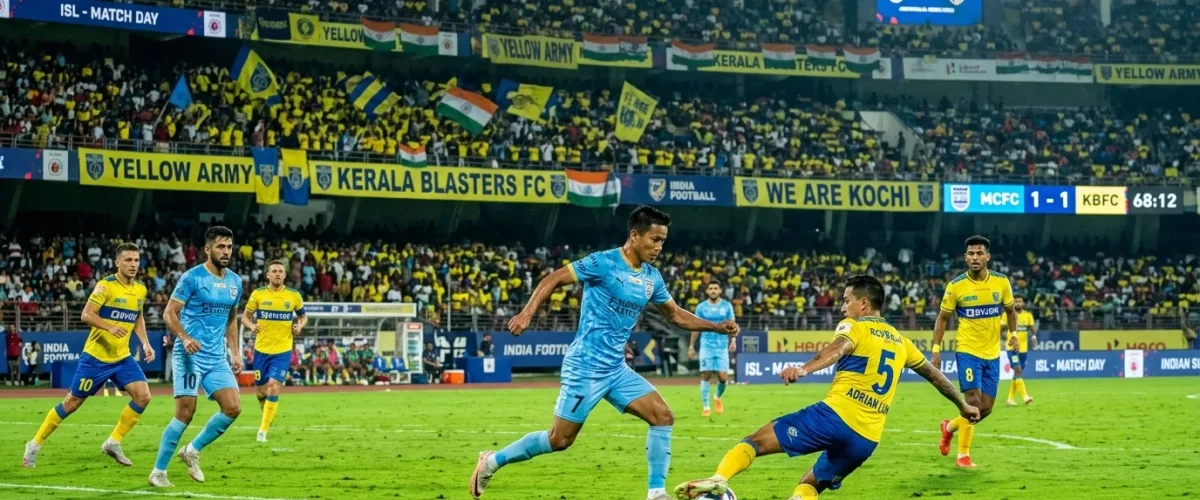
Note: The ISL 2025-26 season is still in progress (February–May 2026). This article reflects the state of play at the time of writing and will be updated as the season concludes.
The 2025-26 Indian Super League season has been one of transformation, controversy, and compelling football that has pushed the boundaries of what India’s premier football competition can offer. As the season reaches its decisive phases, a comprehensive review reveals a league in transition — grappling with the tensions between commercial ambition and sporting merit, while producing moments of brilliance that have captivated fans across the nation.
From blockbuster transfers and tactical innovations to the emergence of young Indian talent, the ISL’s eleventh full season has provided narrative threads that extend well beyond the final whistle. The league’s growing maturity is evident in the quality of football on display, even as structural questions about promotion-relegation, fixture congestion, and player welfare continue to simmer beneath the surface.
The Transfer Window: Big Moves and Bold Gambles
The 2025-26 ISL transfer window was headlined by moves that reshuffled the competitive landscape. FC Goa, fresh off their semi-final exit the previous season, invested significantly in their attacking department, signing two marquee foreign forwards whose combined goal tally in previous Asian leagues exceeded fifty. The investment has paid dividends, with Goa’s attack being the most prolific in the league through the first half of the season.
Mumbai City FC, backed by the City Football Group’s global scouting network, continued their strategy of blending international experience with Indian talent. Their mid-season signing of a Brazilian midfielder, who had been plying his trade in the Portuguese second division, raised eyebrows initially but proved inspired — the player’s ability to dictate tempo from deep midfield transformed Mumbai’s possession game.
Bengaluru FC’s approach was more conservative, focusing on retaining the core that had served them well and supplementing with targeted additions in key positions. The Bangalore club’s stability has been their strength, with continuity of coaching and playing personnel providing a platform for consistent performances. Their fans, among the most passionate in Indian football, have rewarded this approach with impressive attendances at the Sree Kanteerava Stadium.
East Bengal and Mohun Bagan, the Kolkata giants whose rivalry adds unique spice to the ISL, both made ambitious moves. The Kolkata derby matches this season set new attendance and television viewership records, with the intensity on the pitch matching the fervour in the stands.
Breakout Indian Stars: The Next Generation Arrives
Perhaps the most encouraging aspect of the 2025-26 ISL season has been the emergence of young Indian players who have not merely participated but starred. The league’s mandatory Indian player requirements have often been criticised as tokenistic, but this season has produced genuine homegrown talent that could form the backbone of the Indian national team for years to come.
A 21-year-old winger from Kerala Blasters has been the revelation of the season, his pace and dribbling ability drawing comparisons to the best young talents in Asian football. His eight goals and six assists through the season’s midpoint represent statistics that would be impressive for any player, let alone a homegrown product in a league where foreign forwards typically dominate the scoring charts.
Similarly, a young central midfielder from Hyderabad FC has caught the eye with his composure on the ball and ability to break up opposition play. His selection for the Indian national team was a natural consequence of his club performances, and he has carried his form into international fixtures seamlessly. These individual stories, replicated across several clubs, suggest that the ISL’s developmental pathway is beginning to produce meaningful results.
Tactical Evolution: How ISL Teams Are Getting Smarter
The tactical sophistication of ISL teams has taken a notable step forward this season. The influx of coaching talent from Europe and South America, attracted by competitive salaries and the challenge of developing Indian football, has introduced tactical concepts that were previously rare in the Indian game.
High pressing, positional play, and data-driven in-game adjustments have become features of several teams’ approaches. The use of analytics departments by the leading clubs has grown from a luxury to a necessity, with match preparation now involving detailed opponent analysis and set-piece strategies that would not be out of place in established European leagues.
The adoption of a back-three system by at least four ISL teams this season represents a tactical trend that has yielded mixed results but demonstrated coaches’ willingness to experiment. The system demands high-quality wing-backs — a position where Indian players have traditionally excelled — and its implementation has provided platforms for several Indian defenders to showcase their attacking abilities.
Commercial Growth and Expanding Fan Engagement
Off the pitch, the ISL continues to grow its commercial footprint. Television viewership for the current season has increased by an estimated 15% compared to the previous year, driven by improved production quality and the compelling on-field product. Digital engagement, particularly on social media platforms, has been a success story, with clubs leveraging content creation to build relationships with younger demographics.
Stadium attendances have been encouraging across most venues, though disparities remain. Clubs in football-passionate regions like Goa, Kerala, and Kolkata continue to draw impressive crowds, while others struggle to fill their venues consistently. The league’s ongoing challenge of making football culturally relevant across India — competing with the overwhelming popularity of cricket, including the IPL 2026 season with its blockbuster transfers and franchise strategies — remains its most significant long-term hurdle.
Merchandise sales and sponsorship revenues have also shown healthy growth, suggesting that the commercial viability of Indian club football is strengthening. The entry of new sponsors from the technology and fintech sectors reflects the ISL’s appeal to brands targeting India’s young, digitally savvy consumer base.
Challenges Ahead: What the ISL Must Address
Despite its progress, the ISL faces structural challenges that require urgent attention. The promotion-relegation debate continues to polarise opinions, with traditionalists arguing for an open pyramid and franchise owners preferring the stability of a closed league. The resolution of this issue will shape Indian football’s competitive structure for decades to come.
Player welfare and fixture congestion represent another area of concern. With international windows, cup competitions, and league fixtures competing for calendar space, the physical demands on players — particularly Indian internationals who play for both club and country — are significant. The league’s scheduling committee will need to find creative solutions as the sport’s domestic calendar becomes increasingly crowded.
The quality of refereeing has also been a recurring theme this season, with several controversial decisions influencing match outcomes. The introduction of Video Assistant Referee (VAR) technology in select fixtures has been welcomed, but inconsistent application has created as many debates as it has resolved. A comprehensive VAR implementation across all ISL matches would be a significant step towards the sporting credibility the league aspires to achieve.
Looking Forward: The ISL’s Unrealised Potential
The 2025-26 ISL season, for all its imperfections, represents genuine progress. Indian football’s premier league is producing better football, developing more Indian talent, and attracting greater attention than ever before. As the sport continues to grow its footprint across India — from Kerala’s passionate fans to Mumbai’s cosmopolitan supporters — the ISL serves as the engine of professional football’s development in the country. Whether tracking India’s evolving entertainment landscape in Bollywood or the nation’s sporting ambitions, the narrative of growth and aspiration remains consistent.
The remaining weeks of the season promise drama, with the playoff race wide open and several teams mathematically capable of claiming the title. Whatever the outcome, the 2025-26 ISL will be remembered as a season that moved Indian football closer to its enormous potential.
Editor’s Note (3 April 2026): The 2025-26 ISL season runs from 14 February to 17 May 2026, with 14 teams competing in a single-leg round-robin format. Relegation has been implemented for the first time this season. This article reflects mid-season developments and will be updated with final standings.

- India’s Startup Funding Crosses $7.2 Billion in H1 2026 - July 1, 2026
- After Ireland Shock, India’s T20I Side Faces Bigger Test - July 1, 2026
- Ireland Stun World Champions India 2-0 in Belfast, Sooryavanshi Debate Rages On - June 29, 2026