The Rise of Telugu Cinema: How Tollywood Became India’s Most Profitable Film Industry in 2026

In a development that would have been difficult to predict even five years ago, Telugu cinema — commonly known as Tollywood — has emerged as India’s most consistently profitable film industry in 2026. With a combination of massive star-driven vehicles, innovative mid-budget filmmaking, and an increasingly sophisticated approach to pan-India distribution, the Hyderabad-based industry has overtaken Bollywood in several key metrics including return on investment, audience engagement ratios, and the ability to transform regional stars into national icons. The numbers from the first quarter of 2026 tell a compelling story of ambition, strategy, and cultural relevance.
2026’s Box Office Domination
The sheer volume of Telugu cinema’s commercial output in 2026 has been staggering. The year began with Prabhas’s The Raja Saab, directed by Maruthi, which collected ₹208.38 crore worldwide — a figure that would represent a smash hit in any Indian film industry. Mana Shankara Vara Prasad Garu followed with an extraordinary ₹300 crore haul, while Naveen Polishetty’s Anaganaga Oka Raju from the Sithara Entertainments stable crossed ₹100.20 crore, confirming that Telugu cinema’s commercial success extends well beyond its top-tier stars.
Further down the pecking order, Ravi Teja’s Bhartha Mahasayulaku Wignyapthi earned ₹22.48 crore, while Vishnu Vinyasam and Couple Friendly delivered profitable returns on their respective modest budgets. This breadth of commercial viability — from ₹300 crore blockbusters to profitable smaller films — distinguishes the Telugu industry from competitors where the gap between hits and flops has widened dramatically.
The Star System: Reinvented and Expanded
Telugu cinema’s star system has undergone a significant evolution. While Prabhas, Ram Charan, and Pawan Kalyan continue to anchor the industry’s biggest productions, a new generation of actors has emerged who command devoted audiences and deliver reliable box office returns. Naveen Polishetty, whose comedic timing and everyman appeal have made him one of the most bankable names in Indian cinema, exemplifies this shift. His ability to deliver ₹100 crore films on relatively modest budgets represents an economic model that the entire Indian film industry is studying closely.
Sree Vishnu has carved a niche in thoughtful, medium-budget dramas like Mrithyunjay, while Varalaxmi Sarathkumar’s directorial debut Saraswathi showcased the industry’s willingness to embrace unconventional projects. The diversity of talent and the audience’s receptivity to different types of storytelling have created an ecosystem where creative ambition and commercial viability coexist more harmoniously than in perhaps any other Indian film industry.
Production Houses: The Power Behind the Throne
Behind Telugu cinema’s success lies a network of production houses that have mastered the art of content strategy. Mythri Movie Makers, which delivered Ustaad Bhagat Singh and has bankrolled several of the year’s biggest titles, has established a production model that combines high production values with tight budgetary discipline. Sithara Entertainments, responsible for Anaganaga Oka Raju, has demonstrated an ability to identify commercially viable content at budget levels that minimise risk while maximising returns.
The emergence of newer production entities, including those backed by corporate investment and digital-first distribution strategies, has further enriched the industry’s financial infrastructure. These companies have brought data-driven approaches to audience analysis, marketing spend optimisation, and release timing — sophistication that complements the industry’s creative strengths. As the wave of premium OTT content in March 2026 creates additional revenue streams, Telugu production houses have been among the most adept at negotiating digital rights deals that enhance overall project profitability.
Technology, VFX, and the Quality Leap
The visual quality of Telugu cinema has undergone a transformation that has been instrumental in its pan-India appeal. Films like Kalki 2898 AD and the Baahubali franchise had already demonstrated that Indian studios could achieve Hollywood-calibre visual effects. In 2026, this capability has filtered down to mid-budget productions, with advances in virtual production technology, LED volume stages, and AI-assisted post-production enabling smaller films to achieve visual standards that were previously available only to mega-budget productions.
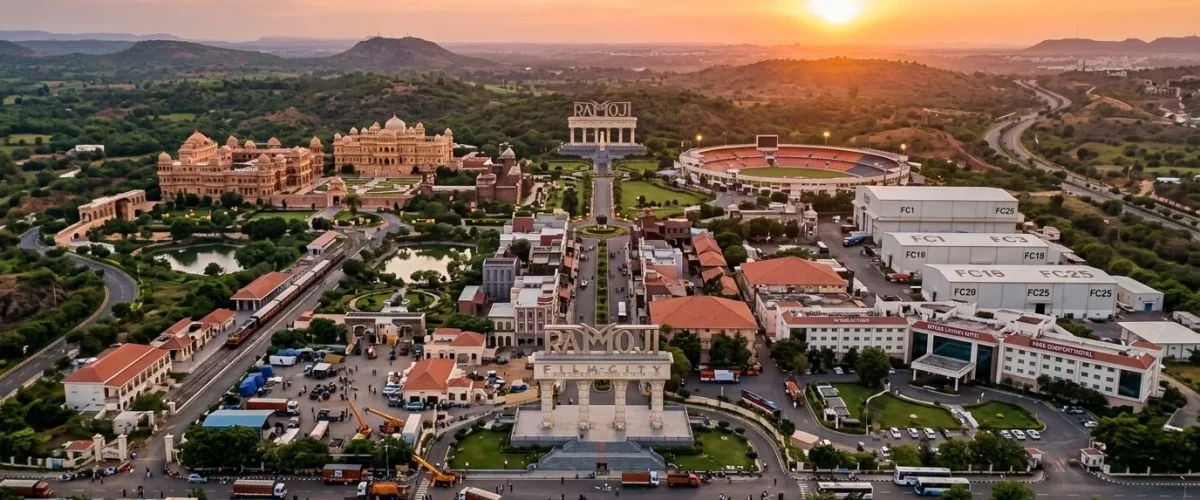
Hyderabad’s infrastructure has been central to this evolution. The city’s film production ecosystem, anchored by Ramoji Film City and complemented by a growing number of independent studios, VFX houses, and post-production facilities, now rivals Mumbai in its comprehensiveness. The cost advantages of producing in Hyderabad — lower studio rental rates, competitive technical crew rates, and a favourable state government policy framework — have attracted productions from other industries, further strengthening the city’s position as India’s second major film production hub.
The Pan-India Playbook
Telugu cinema’s pan-India strategy has become the template that other regional industries seek to emulate. The approach involves several coordinated elements: casting actors with cross-regional appeal (such as Bollywood stars in supporting roles), commissioning Hindi dubbing from the pre-production stage rather than as an afterthought, designing marketing campaigns with national media placements, and securing wide Hindi-belt theatrical distribution.
This strategy has yielded impressive results. Films like RRR, Pushpa, and Baahubali demonstrated the potential, but it is the consistency of 2026 releases in executing this approach that signals a permanent structural shift. As Bollywood’s blockbuster March 2026 box office performance and pan-India releases compete for the same screens, Telugu cinema has shown that regional identity and national appeal are not contradictory but complementary.
Challenges and the Road Ahead
Despite its remarkable trajectory, Telugu cinema faces challenges. Budget inflation has become a concern, with top-tier films now costing ₹200-300 crore — sums that demand proportionally larger returns to achieve profitability. The reliance on a relatively small number of bankable stars creates vulnerability; a string of underperformances from any top star could significantly impact industry-wide confidence. Additionally, the Telugu diaspora market, while substantial, is showing signs of saturation in traditional strongholds like the United States.
Nevertheless, the structural advantages of Telugu cinema — its entrepreneurial production culture, its deep talent pool, its technological infrastructure, and its audience’s appetite for diverse storytelling — suggest that its ascendancy is sustainable. With Indian music’s 2026 resurgence driven by Bollywood soundtracks and cross-industry collaborations blurring the boundaries between Indian film industries, Telugu cinema is not merely the most profitable regional industry; it is increasingly the creative and commercial benchmark against which all Indian cinema measures itself.

- India’s Startup Funding Crosses $7.2 Billion in H1 2026 - July 1, 2026
- After Ireland Shock, India’s T20I Side Faces Bigger Test - July 1, 2026
- Ireland Stun World Champions India 2-0 in Belfast, Sooryavanshi Debate Rages On - June 29, 2026