RBI and Centre Deny Selling $12 Billion Gold Reserves — PIB Fact-Checks Bloomberg Report on Forex Defence

The Reserve Bank of India (RBI) and the central government have jointly dismissed reports that the central bank sold nearly $12 billion worth of gold reserves to shore up the country’s foreign exchange position. The denial, issued through the Press Information Bureau (PIB), came in response to a Bloomberg analysis that claimed the RBI had reduced part of its gold holdings to protect forex reserves from the impact of the West Asia conflict.
What Bloomberg Reported
The original Bloomberg report, published on 3 June, analysed changes in the RBI’s published reserve data for the two weeks ending 22 May. The data showed a decline in the gold component of India’s total foreign exchange reserves alongside an increase in foreign currency assets. Bloomberg interpreted this as evidence that the RBI had sold gold — valued at approximately $12 billion — and converted the proceeds into foreign currency to strengthen the rupee-dollar position.
The analysis attracted significant attention because it implied a defensive posture from the RBI at a time when India’s forex reserves had come under sustained pressure. The Iran-US conflict has driven up India’s import bill (primarily through higher crude oil prices), while foreign portfolio investors have been pulling capital out of Indian equities, creating a dual drain on reserves.
India’s total forex reserves stood at approximately $610 billion as of mid-May, down from a peak of $680 billion in September 2024. The decline has been a source of concern for market participants, though economists note that $610 billion still represents over nine months of import cover — well above the international safety threshold.
The RBI’s Response
The RBI’s official response, released through the PIB’s fact-checking mechanism, called the Bloomberg report “misleading and factually incorrect.” Without disclosing specific operational details, the central bank stated that changes in the gold component of reserves can reflect accounting adjustments — including mark-to-market valuations — rather than actual physical sales.
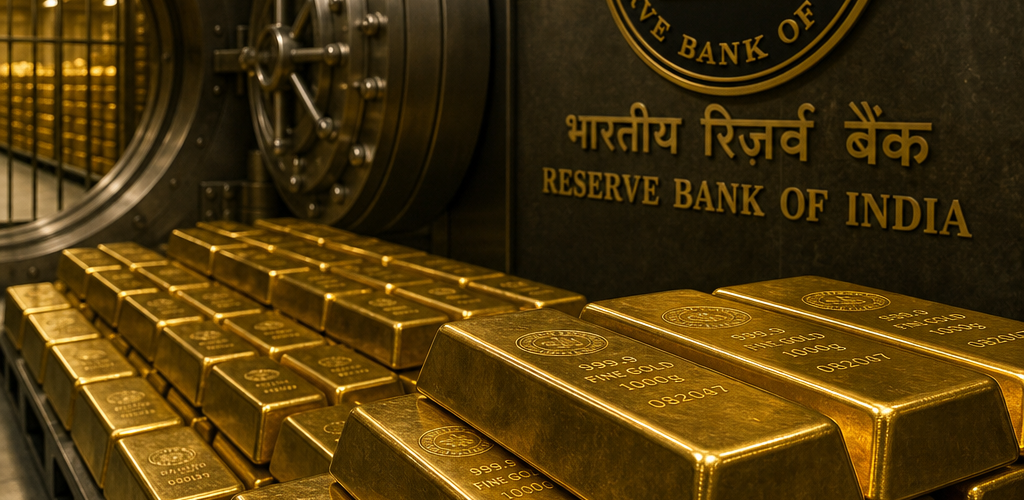
India’s gold reserves include both physical gold held in domestic vaults and with the Bank of England, as well as gold deposit schemes and gold swap agreements with other central banks. The valuation of these holdings changes with global gold prices, which have been volatile in 2026 due to the same geopolitical tensions driving the forex debate.
Between early May and late May, gold prices fell from approximately $2,500 per ounce to around $2,350 per ounce — a decline of roughly 6 percent. This price movement alone could account for a significant portion of the reported $12 billion decline in the gold component, without any physical sale taking place.
Why the Denial Matters
Central banks rarely sell gold, and for good reason. Gold reserves serve as a store of value that is independent of any single currency, provides collateral for international borrowing, and serves as an ultimate reserve during balance-of-payments crises. The RBI has been a consistent net buyer of gold for over a decade, adding approximately 250 tonnes to its holdings since 2017.
If the RBI had actually sold $12 billion in gold — equivalent to roughly 150 tonnes at current prices — it would represent a dramatic reversal of this long-term strategy and signal that the central bank was running low on other options to defend the currency. Such a move would likely trigger further capital outflows as investors interpreted it as a sign of desperation.
The emphatic denial is therefore as much about managing market expectations as correcting the factual record. The RBI cannot afford a narrative that suggests it is liquidating strategic assets to manage short-term pressures. The central bank’s credibility as a steady-handed steward of India’s reserves is itself a form of defence — any perception of panic would become self-fulfilling.
India’s Forex Reserves in Context
India’s foreign exchange reserves are the fourth largest in the world, behind China, Japan, and Switzerland. The reserves comprise foreign currency assets (primarily US Treasury bonds and deposits with foreign central banks), gold, Special Drawing Rights (SDRs) with the IMF, and India’s reserve tranche position.
Gold represents approximately 10 percent of India’s total reserves, with the RBI holding around 850 tonnes. The central bank has been gradually increasing the gold share as part of a diversification strategy to reduce dependence on US dollar-denominated assets — a prudent move given the weaponisation of the dollar-based financial system through sanctions.
The decline in total reserves from $680 billion to $610 billion over the past eight months is primarily attributable to the RBI’s intervention in the foreign exchange market to prevent excessive rupee depreciation. The central bank has been selling dollars from its reserves to meet demand from importers — particularly oil companies — and to smooth out currency volatility during periods of FPI outflows.
This intervention is routine and well within the RBI’s operational framework. The Monetary Policy Committee under Governor Sanjay Malhotra has consistently stated that the RBI intervenes to manage volatility, not to target a specific exchange rate. The rupee has depreciated approximately 5 percent against the dollar in 2026, a manageable decline given the external pressures.
Lessons from the Episode
The Bloomberg-RBI episode highlights the sensitivity of financial market narratives during periods of geopolitical stress. A data-driven analysis from a credible news agency created a narrative that, if left unchallenged, could have undermined market confidence in India’s external stability.
The speed of the PIB fact-check — issued within hours of the report gaining traction on social media — suggests that the government and RBI have learned from past communication failures. During the 2013 taper tantrum, delayed and ambiguous communication from the RBI contributed to a currency crisis that forced emergency measures including gold import restrictions and foreign currency deposit schemes.
For investors and market participants, the takeaway is nuanced. India’s reserves are under pressure, and the RBI is actively using them to manage the current account deficit and currency stability. But the central bank is not — repeat, not — selling gold. The strategic reserves remain intact, and the RBI’s demonstrated willingness to use its communication tools aggressively suggests it will defend the credibility of its reserve position as vigorously as the reserves themselves.