Solar Eclipse Today: Surya Grahan on June 11, 2026 Visible Across India — Timings, Where to Watch, and Safety Tips

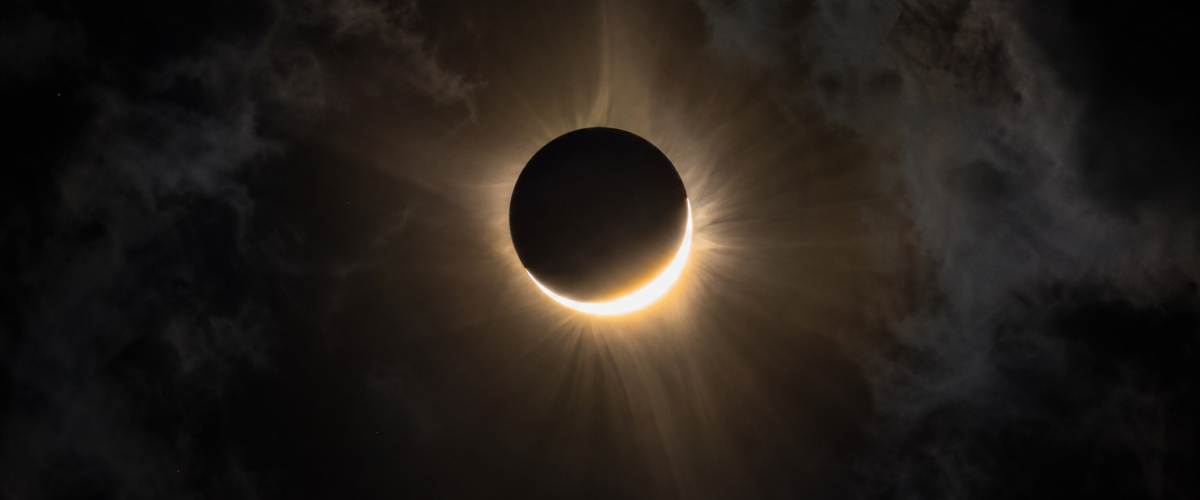
Skywatchers across India are in for a rare celestial treat today as a solar eclipse — or Surya Grahan — is visible across large parts of the country on June 11, 2026. The event, which occurs when the Moon passes between the Earth and the Sun, casting a shadow on our planet, is being described by astronomers as one of the most significant solar eclipses visible from the Indian subcontinent in recent years.
The eclipse is expected to be visible as a partial solar eclipse across most of India, with the degree of obscuration varying by location. Northern and western India will experience a more pronounced eclipse, while southern regions will see a smaller fraction of the Sun covered. The event has generated widespread excitement among amateur astronomers, science enthusiasts, and the general public alike.
Timings and Visibility Across India
According to the Indian Meteorological Department (IMD) and NASA’s eclipse prediction data, the partial solar eclipse will begin in India in the late morning hours, with the maximum eclipse occurring around midday. The exact timings vary by city — Delhi is expected to see the eclipse begin at approximately 11:15 AM IST, with maximum coverage around 12:45 PM. Mumbai will see it start slightly later, around 11:30 AM, while Kolkata can expect the eclipse from about 11:45 AM.
The eclipse’s path and the degree of solar coverage depend on the observer’s geographic location. Cities in northern India, including Delhi, Jaipur, Lucknow, and Chandigarh, will see a larger portion of the Sun covered — up to 60-70% in some areas. Central India, including Bhopal, Indore, and Nagpur, will see moderate coverage of around 40-50%. Southern cities like Bangalore, Chennai, and Hyderabad will experience a smaller partial eclipse, with 20-30% coverage.
The entire event is expected to last approximately two to three hours from first contact to last contact, though the period of maximum eclipse will be much shorter — typically around 30-45 minutes depending on location.
How to Watch Safely
Astronomers and eye specialists have issued strong warnings against viewing the solar eclipse with the naked eye. Looking directly at the Sun — even during an eclipse — can cause permanent retinal damage, a condition known as solar retinopathy. This damage can occur in seconds and is often irreversible.
The safest way to view the eclipse is through ISO 12312-2 certified solar eclipse glasses, which are specifically designed to filter out harmful ultraviolet, visible, and infrared radiation. Regular sunglasses, no matter how dark, are not safe substitutes. Welding glass of shade 14 or higher can also be used as an alternative.
For those without eclipse glasses, indirect viewing methods are recommended. A simple pinhole projector — made by poking a small hole in a piece of cardboard and projecting the Sun’s image onto a flat surface — is a safe and effective way to watch the eclipse. Many planetariums, science centres, and astronomical societies across India are organising public viewing events with telescopes equipped with proper solar filters.
The Nehru Planetarium in Delhi, the Jawaharlal Nehru Planetarium in Bangalore, and the Birla Planetarium in Kolkata have all announced special eclipse viewing programmes. Several universities and IITs are also hosting events, making this an educational opportunity for students and the public.
The Science Behind the Eclipse
A solar eclipse occurs when the Moon’s orbit brings it directly between the Earth and the Sun. Despite the Sun being approximately 400 times larger than the Moon, it is also roughly 400 times farther away — a cosmic coincidence that allows the Moon to appear nearly the same size as the Sun in our sky. This is what makes total solar eclipses possible, though today’s event is a partial eclipse for Indian observers.
During a partial eclipse, the Moon covers only a portion of the Sun’s disc, creating a crescent-shaped Sun that is visible through proper filters. The temperature may drop slightly during the maximum phase, and observers may notice a subtle dimming of daylight, though the effect is less dramatic than during a total eclipse.
India’s space agency ISRO has positioned its Aditya-L1 solar observatory to capture data during the eclipse. Launched in September 2023, Aditya-L1 orbits the Sun-Earth Lagrange point L1 and will provide valuable scientific data about the Sun’s corona and solar activity during the eclipse event.
Cultural Significance in India
Solar eclipses hold deep cultural and religious significance in India. In Hindu tradition, eclipses are associated with the mythological demon Rahu, who is believed to swallow the Sun. Many temples across the country close their doors during the eclipse period and reopen after a purification ritual. Devotees often take ritual baths in sacred rivers, and pregnant women are traditionally advised to stay indoors.
While modern science has thoroughly explained the mechanics of eclipses, many Indians continue to observe traditional practices alongside scientific viewing. This blend of ancient tradition and modern astronomy is a uniquely Indian phenomenon, reflecting the country’s ability to hold multiple worldviews simultaneously.
Also Read
- India’s Space Economy Crosses $13 Billion: ISRO Commercial Launches Agnikul Skyroot and 200 Startups Fuel India’s New Space Race
- Will Gaganyaan Fly in 2027? Inside ISRO’s Human Spaceflight Race and India’s 300-Startup Space Boom
- ISRO Launches START 2026 Programme to Inspire India’s Next Generation of Space Scientists
- Axiom Mission 4: Indian Astronaut Subhanshu Shukla on ISS
The next solar eclipse visible from India is not expected for several years, making today’s event a must-watch for anyone interested in astronomy. Whether you view it through eclipse glasses, a pinhole projector, or a live stream from one of the many observatories broadcasting the event, the Surya Grahan of June 11, 2026, promises to be a memorable celestial spectacle.