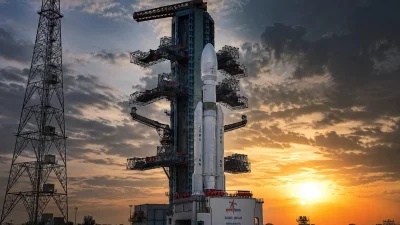
Will Gaganyaan Fly in 2027? Inside ISRO’s Human Spaceflight Race and India’s 300-Startup Space Boom

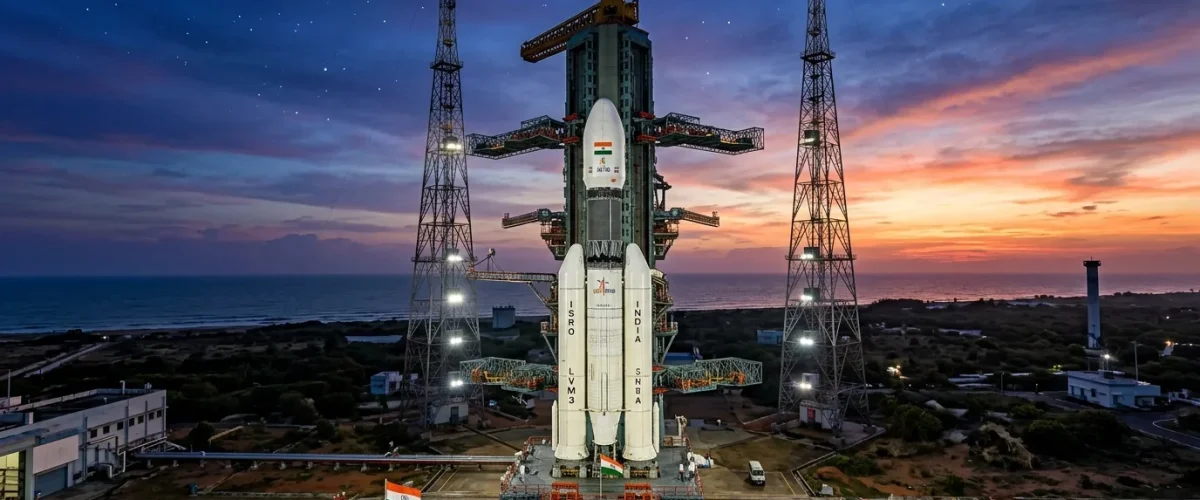
India’s human spaceflight programme, Gaganyaan, is supposed to send astronauts into orbit by 2027. ISRO insists it is on track. Independent analysts and former space scientists are not so sure. Meanwhile, more than 300 private startups are transforming India’s space sector from a government monopoly into a vibrant commercial ecosystem. Here is a comprehensive look at where India stands in the space race as of April 2026.
Gaganyaan: The 2027 Promise
ISRO Chairman V. Narayanan has repeatedly stated that the crewed Gaganyaan mission will launch in 2027. The four astronaut-designates have completed training at the Yuri Gagarin Cosmonaut Training Centre in Russia and at ISRO’s own Human Space Flight Centre in Bengaluru. India’s Wing Commander Shubhanshu Shukla became the country’s second person in space in early 2025, spending time aboard the International Space Station as part of a NASA Axiom mission, providing Indian scientists with invaluable real-world data on microgravity physiology.
Yet as an India Today investigation published on April 15, 2026 detailed, the gap between ISRO’s announced timeline and ground reality is significant. At the heart of the concern lies a fundamental unfinished checklist: India is yet to complete two critical uncrewed test missions that must precede any human spaceflight.
The Uncrewed-Mission Bottleneck
Gaganyaan’s architecture demands at least two successful uncrewed orbital flights before a crewed mission can be cleared. ISRO has completed the second Integrated Air Drop Test (IADT-02) of the crew module parachute system, but the full-duration orbital flight tests — designated G1 and G2 — are still in the integration phase. No firm dates have been publicly announced, and insiders acknowledge that the LVM3 (GSLV Mk III) launch vehicle requires additional qualification flights with the crew-escape system active.
If the first uncrewed orbital test does not happen before mid-2026, pushing the crewed flight to late 2027 becomes almost impossible given the mandatory analysis window between missions. A 2028 target would be more realistic — but ISRO is under political pressure to deliver before the next general election cycle.
NISAR: The Crown Jewel of Indo-US Space Cooperation
Separate from Gaganyaan, the NISAR (NASA-ISRO Synthetic Aperture Radar) satellite stands as the most ambitious joint project between the Indian and American space agencies. NISAR will use dual-frequency radar to map Earth’s changing surface with unprecedented precision — tracking glaciers, earthquakes, landslides, and crop health. The satellite is in its final integration and testing phase, with a launch window expected in the coming months aboard an ISRO GSLV Mk II.
NISAR represents more than just science: it is a statement of geopolitical alignment. At a time when US–India relations are being tested by trade tariffs, the space partnership demonstrates enduring strategic collaboration in an area that matters to both nations.
India’s 300-Startup Space Boom
While ISRO operates the national programme, the private sector is where the real disruption is happening. The Economic Survey 2026 highlighted that India now has over 300 active space startups, up from fewer than 50 in 2020. The transformation was catalysed by the Indian Space Research Organisation’s decision to open the sector through IN-SPACe (Indian National Space Promotion and Authorisation Centre) and the comprehensive Space Policy of 2023.
Key players include:
- Skyroot Aerospace: Hyderabad-based Skyroot, which made history in 2022 with India’s first privately launched rocket (Vikram-S), has raised $27.5 million in a round led by Singapore’s Temasek. The company is developing the Vikram-1 orbital vehicle, targeting its first commercial payload delivery in 2026–27.
- Agnikul Cosmos: Chennai’s Agnikul is building the world’s first single-piece 3D-printed semi-cryogenic rocket engine, Agnilet. The startup has conducted successful sub-orbital test flights and is on track for an orbital attempt later this year.
- Pixxel: A Bengaluru startup that operates a constellation of hyperspectral imaging satellites, Pixxel has signed contracts with governments and enterprises for agricultural monitoring, disaster response, and urban planning.
- Dhruva Space: Focused on satellite deployment and space situational awareness, Dhruva has partnered with international clients and India’s thriving startup ecosystem continues to channel venture capital into space technology.
Debris and Sustainability
India is also taking space sustainability seriously. ISRO’s Space Debris Research Centre (SDRC) reported that 36 rocket bodies re-entered Earth’s atmosphere in 2025 under its Debris-Free Space Mission, which targets zero debris contribution by 2030. The programme has been praised internationally and positions India as a responsible space-faring nation — a critical diplomatic asset as global discussions on orbital traffic management intensify.
The Commercial Launch Market
ISRO’s commercial arm, NewSpace India Limited (NSIL), has been expanding its launch services to foreign clients. The PSLV remains one of the most cost-effective and reliable small-satellite launchers in the world, and NSIL is working to increase launch frequency to 12–15 missions per year by 2028. For private players, the goal is to complement ISRO’s heavy-lift capabilities with smaller, more frequent, and cheaper access to orbit — a market currently dominated by SpaceX’s Falcon 9 and Rocket Lab’s Electron.
What’s Next
The next 12 months will be decisive for India’s space ambitions. If ISRO can execute the G1 uncrewed orbital test by late 2026, Gaganyaan remains a plausible 2027 mission. If delays persist, the programme risks becoming a symbol of ambition outpacing execution. Meanwhile, the private sector will continue to attract global investment and talent, gradually making India a full-spectrum space power — from launch vehicles and satellites to ground infrastructure and data analytics.
Track the latest in Indian space technology and ISRO updates on Space & ISRO at Daily Tips.