India’s Museum Renaissance: Major Exhibitions, Digital Innovation, and a New Era of Cultural Engagement in 2026

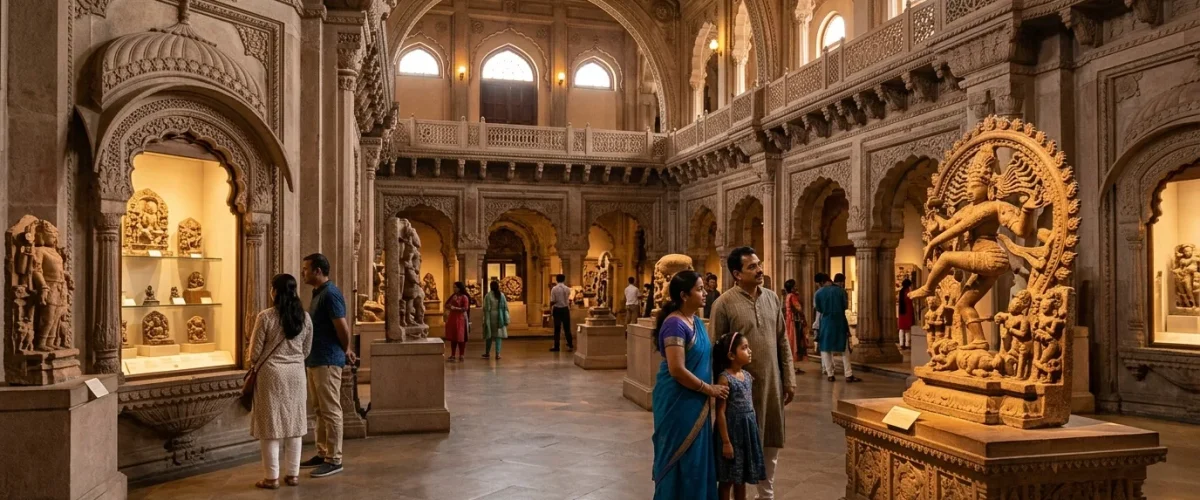
India’s museums and cultural institutions are experiencing a remarkable transformation in 2026, driven by ambitious new exhibitions, digital innovation, increased government funding, and a growing public appetite for cultural engagement. From the renovation of storied institutions in Delhi and Kolkata to the opening of cutting-edge new facilities in Mumbai and Ahmedabad, India’s museum landscape is being reimagined for a new generation of visitors who expect immersive, interactive, and intellectually stimulating experiences.
Landmark Exhibitions Drawing Record Crowds
The National Museum in New Delhi has opened its most ambitious exhibition in years, showcasing a comprehensive retrospective of Indian textile traditions spanning three millennia. The exhibition, which features over 500 objects including rare archaeological fragments, Mughal-era brocades, and contemporary designer creations, has drawn record visitor numbers since its inauguration in February 2026. The exhibition’s success underscores a growing public interest in India’s material culture heritage that extends beyond the traditional museum-going demographic.
In Mumbai, the Chhatrapati Shivaji Maharaj Vastu Sangrahalaya (CSMVS) has inaugurated a major exhibition exploring the artistic and architectural legacy of the Deccan sultanates, featuring loans from international institutions including the Metropolitan Museum of Art, the Victoria and Albert Museum, and the Aga Khan Museum. The exhibition has attracted art enthusiasts, scholars, and tourists in equal measure, with weekend queues stretching around the museum’s iconic Indo-Saracenic building. The growing interest in India’s heritage parallels broader cultural conversations documented in IPL 2026 Season Preview: Key Transfers, Injuries, and Franchise Strategies.
The Indian Museum in Kolkata, one of the oldest museums in Asia, has completed a phased renovation programme that has modernised its galleries while preserving the institution’s colonial-era architectural character. The renovated galleries, which feature updated lighting, climate control, and interpretive materials, have revitalised the museum’s visitor experience and attracted a younger demographic through partnerships with local universities and cultural organisations.
New Museums and Cultural Spaces
Several new museum and gallery spaces have opened or announced opening dates in 2026, reflecting both public and private investment in India’s cultural infrastructure. The much-anticipated Nalanda Museum in Bihar, situated near the UNESCO World Heritage Site of the ancient Nalanda university ruins, has opened its doors to visitors, showcasing archaeological discoveries from the site alongside interactive exhibits that bring the ancient centre of learning to life through digital reconstruction and augmented reality.
In Ahmedabad, a new contemporary art museum funded by a prominent Indian industrialist has begun receiving its inaugural collection, which includes works by leading Indian contemporary artists alongside international acquisitions. The museum’s striking modernist architecture, designed by an award-winning Indian firm, has already become a landmark in Ahmedabad’s cultural landscape. Private philanthropy has played an increasingly important role in India’s cultural infrastructure development, with wealthy collectors and corporate foundations funding museum projects, exhibition sponsorships, and conservation initiatives.
The Kochi-Muziris Biennale, India’s most internationally recognised contemporary art event, has also announced plans for a permanent exhibition space that will maintain year-round programming between biennial editions. The project aims to establish Kochi as a sustainable hub for contemporary art beyond the biennial festival period, creating ongoing cultural tourism and educational opportunities.
Digital Transformation of Museum Experiences
India’s leading museums have embraced digital technology to enhance visitor experiences and expand their reach beyond physical gallery spaces. Virtual reality tours, augmented reality overlays, AI-powered audio guides, and interactive digital installations have become standard features at major institutions, transforming how visitors engage with collections and narratives.
The Archaeological Survey of India has launched a digital heritage platform that provides virtual access to hundreds of protected monuments and museums across the country, enabling citizens who cannot physically visit these sites to explore them through high-resolution 3D models and immersive virtual walkthroughs. The platform has been particularly popular in educational settings, with thousands of schools incorporating virtual heritage visits into their curricula.
Several museums have also experimented with AI-powered personalisation, offering visitors customised tour recommendations based on their expressed interests, time constraints, and previous visits. These technologies, while still in their early stages, promise to make museum visits more engaging and efficient, particularly for first-time visitors who may feel overwhelmed by large collection displays. The intersection of technology and cultural engagement reflects trends also visible in AI Summit 2026: India Showcases Ambitions but Structural Gaps Exposed.
Conservation and Collection Management
Behind the public-facing improvements, Indian museums have made significant progress in conservation and collection management practices. The establishment of specialised conservation laboratories at several major institutions, staffed by internationally trained professionals, has improved the care of vulnerable objects including ancient manuscripts, metal sculptures, and textile fragments that are susceptible to India’s challenging climatic conditions.
Digitisation of collections has also advanced substantially, with several museums completing comprehensive digital catalogues that make collection information available to researchers worldwide. The National Mission on Monuments and Antiquities has supported these efforts through grants and technical assistance, recognising that accessible digital records are essential for both scholarly research and public accountability.
Community Engagement and Accessibility
Indian museums are increasingly recognising the importance of community engagement programmes that extend their impact beyond traditional visitor interactions. Educational workshops, artist residencies, community history projects, and public lecture series have become standard offerings at major institutions, creating deeper relationships with local communities and fostering a sense of shared cultural ownership.
Accessibility improvements have also received attention, with several museums upgrading their facilities to better serve visitors with disabilities. Tactile exhibits for visually impaired visitors, wheelchair-accessible gallery routes, and sign-language-interpreted tours have been introduced at leading institutions, though accessibility advocates note that much work remains to be done to make India’s cultural institutions truly inclusive.
Challenges and Funding Realities
Despite the positive developments, India’s museum sector faces significant challenges. The vast majority of India’s estimated 1,000-plus museums are small, underfunded institutions that lack the resources for meaningful programming, conservation, or visitor engagement. Government funding for cultural institutions, while increasing, remains modest relative to the sector’s needs and compared to cultural spending in peer nations.
Professional development in the museum sector is another concern, with India’s limited number of museology programmes producing fewer graduates than the sector requires. International training fellowships and partnerships have helped address this gap, but building a robust pipeline of museum professionals—curators, conservators, educators, and administrators—remains a long-term challenge.
The issue of repatriation of cultural artefacts has also gained renewed attention, with Indian authorities pursuing the return of historically significant objects from international collections. Several successful repatriation cases in recent years have raised public awareness of the issue and generated support for more assertive diplomatic efforts to recover objects removed during the colonial period. As coverage of March 2026 in Bollywood: Anil Kapoor Leads Bold Storytelling has noted, these repatriation campaigns represent an important dimension of India’s cultural diplomacy.
A Cultural Moment to Seize
India’s museum sector in 2026 stands at an inflection point. The combination of increased public interest, government support, private philanthropy, and technological innovation has created conditions that could catalyse a genuine museum renaissance—one that positions India’s cultural institutions not merely as repositories of the past but as dynamic spaces for learning, inspiration, and community building. Whether the sector can sustain this momentum through consistent investment and professional development will determine whether 2026 proves to be a turning point or a missed opportunity.