Indian Badminton’s 2026 BWF World Tour Campaign: Rankings, Rising Stars, and Road to Glory

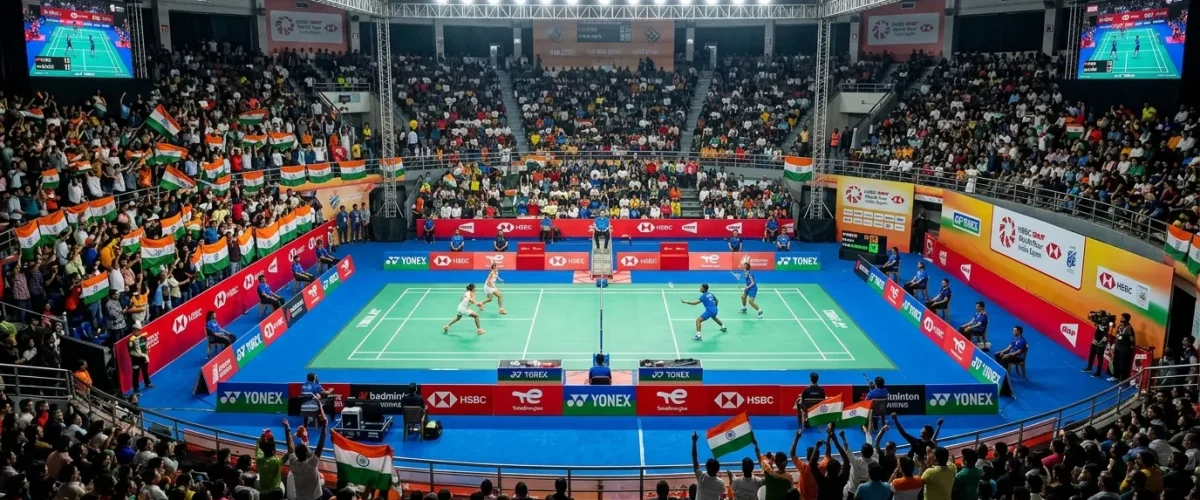
Indian badminton’s presence on the BWF World Tour in 2026 tells a story of depth, ambition, and systematic development. With multiple players holding strong positions in the world rankings across singles and doubles categories, India has firmly established itself as one of the sport’s global powerhouses. As the tour progresses through its Super 500 and Super 750 events, Indian shuttlers are making their mark with performances that reflect both individual brilliance and institutional investment.
Men’s Singles: Strength in Depth
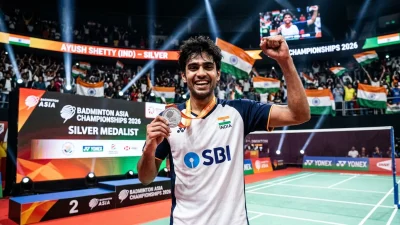
The men’s singles rankings paint an encouraging picture for Indian badminton. Lakshya Sen, fresh from his silver medal run at the All England Open 2026, holds the top Indian position at world number 12. His consistency throughout the 2025-26 BWF tour has been the hallmark of a player maturing into genuine elite status.
Behind Sen, the emergence of Ayush Shetty as India’s second-ranked player at world number 22 is one of the most exciting developments in Indian badminton. Shetty’s ascent through the rankings has been rapid and well-deserved, built on a combination of aggressive shot-making, improved fitness, and growing tactical awareness. At just 21 years old, Shetty represents the future of Indian men’s singles badminton.
Kidambi Srikanth, the experienced former world number one, continues to contribute at world number 32. While his best years may be behind him, Srikanth’s presence in the top 40 provides valuable experience and mentorship for younger players in the squad. His journey — from Olympic quarterfinalist to World Championships finalist — serves as inspiration for the next generation.
Women’s Singles: Beyond Sindhu
In women’s singles, PV Sindhu remains the torchbearer of Indian badminton. The two-time Olympic medallist’s form in 2026 has shown encouraging signs of her returning to the levels that made her the sport’s most decorated Indian player. However, the bigger story has been the emergence of challengers within the Indian ranks who are pushing for their own places at the top table.
Young Indian women shuttlers have been making inroads on the BWF World Tour, with several securing main draw positions at Super 500 events and recording notable victories against higher-ranked opponents. This development pipeline, supported by dedicated coaching programmes and competitive domestic tournaments, is crucial for India’s long-term competitiveness in women’s singles.
Doubles: The Final Frontier
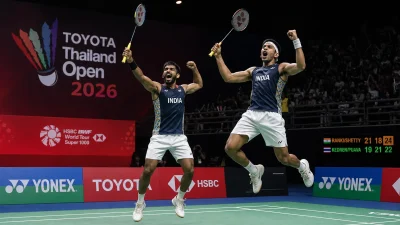
Historically, doubles has been the weaker discipline in Indian badminton’s international portfolio. However, sustained investment in doubles-specific coaching and the identification of compatible partnerships has begun to yield results. Indian men’s doubles and mixed doubles pairs have climbed the world rankings, with several now regularly competing in the latter stages of BWF World Tour events.
The progress in doubles is particularly significant because it broadens India’s medal prospects at major championships and the Olympics, where doubles events offer additional opportunities for podium finishes. The coaching staff have emphasised the importance of doubles development as part of a comprehensive approach to building a badminton superpower.
The Academy System: India’s Competitive Advantage
At the heart of Indian badminton’s success is the academy system, anchored by the Pullela Gopichand Academy in Hyderabad but now extending to multiple centres across the country. These academies provide world-class training facilities, international-standard coaching, and the competitive environment necessary to produce elite players.
The Gopichand Academy’s track record speaks for itself — from Saina Nehwal and PV Sindhu to Lakshya Sen and the current crop of emerging talents, the academy has been the cradle of Indian badminton’s revival. The expansion of similar facilities in other cities has democratised access to high-quality training, allowing talented players from diverse backgrounds to pursue their potential.
Corporate Sponsorship and Financial Ecosystem
The financial ecosystem supporting Indian badminton has matured significantly. Corporate sponsorships, prize money from the BWF World Tour, and government grants through the Target Olympic Podium Scheme provide the funding necessary for international travel, coaching, equipment, and support services. This financial stability allows players to focus entirely on their development and performance without the financial anxieties that have historically plagued Indian athletes.
The commercial appeal of Indian badminton, driven by Olympic success and charismatic personalities like Sindhu and Sen, has attracted sponsors from across sectors. This virtuous cycle of success breeding investment breeding further success is a model that other Indian sports are seeking to emulate, drawing parallels with the franchise-driven commercial growth seen in Indian cricket’s IPL ecosystem.
The Olympic Cycle and Tournament Strategy
With the 2028 Los Angeles Olympics now firmly in focus, every BWF World Tour event in 2026 carries strategic importance. The Olympic qualification process rewards consistency across the tour, meaning that Indian players must maintain high performance levels throughout the year. The balancing act between peak performance at specific marquee events and sustained competitiveness across the calendar is a challenge that the coaching team is actively managing.
Tournament scheduling, travel logistics, and physical conditioning are all critical factors in this equation. The sports science support available to Indian badminton players has improved markedly, with data analytics, biomechanical analysis, and mental conditioning now integrated into training programmes. This holistic approach to player development reflects the growing professionalisation of Indian sport.
Challenges and Opportunities Ahead
While Indian badminton’s trajectory is overwhelmingly positive, challenges remain. The depth of competition in Asian badminton — particularly from China, Japan, South Korea, and Indonesia — is immense. Maintaining and improving world rankings requires sustained excellence against opponents with comparable or superior resources and training infrastructure.
Nevertheless, the opportunities are equally compelling. India’s demographic advantage, growing sporting culture, and expanding infrastructure create conditions for badminton to continue its upward trajectory. The 2026 BWF World Tour season is far from over, and Indian shuttlers have already demonstrated that they intend to be central figures in its narrative. For fans of Indian sport, the badminton court remains one of the most reliable sources of pride and excitement.

- India’s Startup Funding Crosses $7.2 Billion in H1 2026 - July 1, 2026
- After Ireland Shock, India’s T20I Side Faces Bigger Test - July 1, 2026
- Ireland Stun World Champions India 2-0 in Belfast, Sooryavanshi Debate Rages On - June 29, 2026