Monsoon Pushes North as IMD Forecasts Advance Into UP, Bihar and Gujarat

The southwest monsoon is tracking close to schedule, but IMD’s seasonal forecast still points to below-normal rainfall across most of the country for June–September.
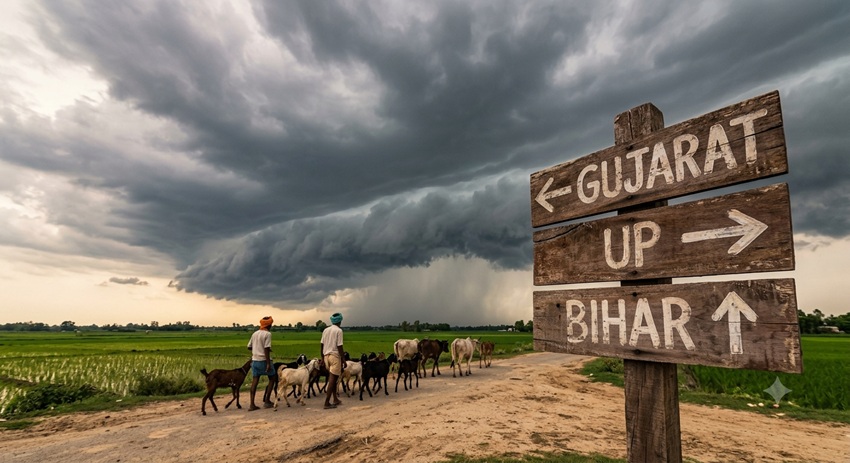
The southwest monsoon is moving. As of 25 June, the India Meteorological Department confirmed conditions are now favourable for the monsoon’s further advance into additional parts of Gujarat, Madhya Pradesh, the remaining stretches of Chhattisgarh, Jharkhand, and Bihar, and into portions of Uttar Pradesh and Uttarakhand — all expected within the next three to four days.
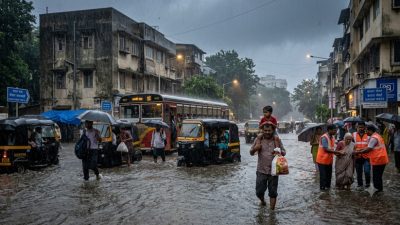
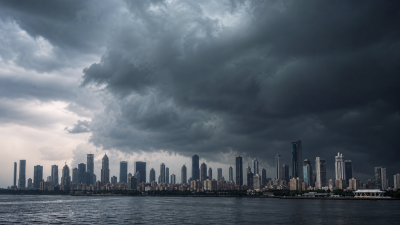
It marks a significant push northward after a period of slower-than-usual progress. The monsoon reached Mumbai and parts of Maharashtra around 23 June, and IMD’s extended forecast for the period 25 June to 8 July indicates normal to above-normal rainfall is likely across the country as a whole during this window — with coastal Gujarat, Konkan and Goa, coastal Karnataka, and Kerala expected to receive widespread heavy to very heavy falls.
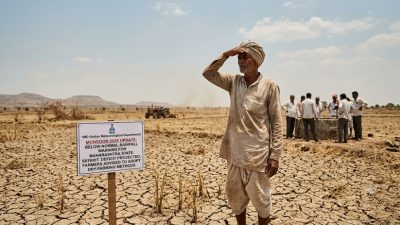
The broader picture, however, is more cautious. IMD’s updated seasonal forecast issued earlier in June warns that below-normal rainfall is the most likely outcome for most parts of the country over the full June-to-September season. The exceptions are parts of northwest India, northeastern India, eastern peninsular India, and isolated pockets in east-central India, where normal to above-normal rainfall remains probable. The development of El Niño conditions during the monsoon season is cited as a key driver of the subdued outlook, though neutral Indian Ocean Dipole conditions currently prevail and provide some counterbalancing effect.
For agriculture, the stakes are high. The monsoon is the lifeblood of India’s kharif sowing season — covering crops including paddy, pulses, oilseeds, and cotton — and any significant rainfall deficit translates directly into reduced yields, rural economic strain, and inflationary pressure on food prices. IMD has advised farmers to delay rice transplanting in areas expecting heavy rainfall in the immediate term, a precautionary measure against crop damage from waterlogging.
The monsoon’s arrival has not entirely ended heat distress. Severe heatwave conditions were recorded across parts of Vidarbha as recently as 21 to 23 June, while East Uttar Pradesh saw heatwave conditions through much of the third week of June. Those pockets will need sustained monsoon rainfall before temperatures normalise.
For Delhi and the northwest — where the monsoon typically arrives in the first week of July — IMD forecasts the advance will reach the capital and surrounding states during the second week, between 2 and 8 July. The Somali Jet, a low-level atmospheric wind system over the Arabian Sea, is expected to strengthen during this period, supporting the monsoon’s northward movement.
Water reservoir levels, hydropower output, and urban water supplies across peninsular India will be watched closely through July and August to gauge how the season ultimately performs against IMD’s below-normal baseline.