March 2026 Art Exhibition Hotlist: From K.S. Radhakrishnan’s Bronze Sculptures to Bengal’s Modern Masters

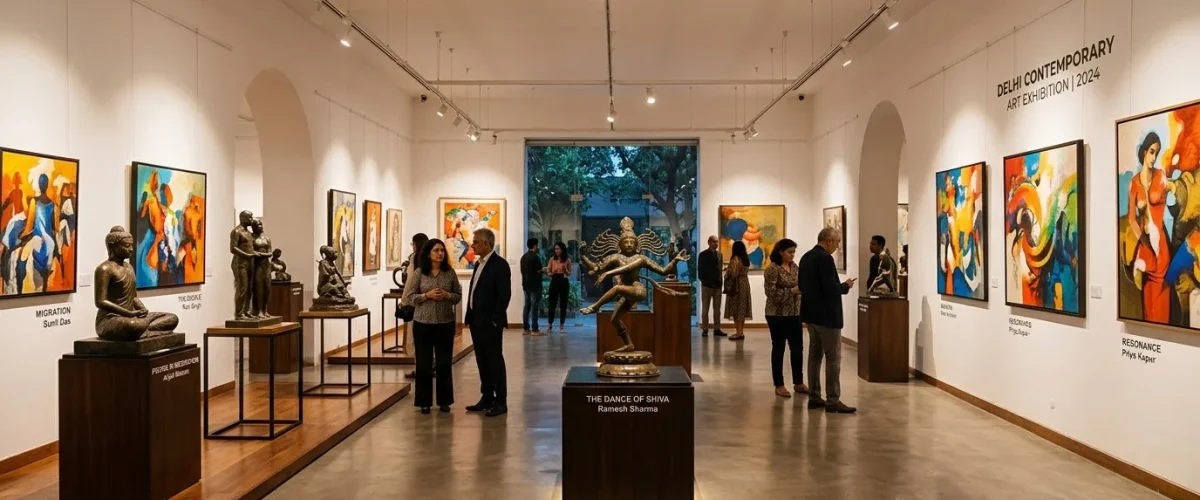
As March 2026 draws to a close, India’s art world finds itself in the midst of an unusually fertile period. From New Delhi to Bangalore, from Mumbai to Hyderabad, galleries are staging exhibitions that span the full spectrum of Indian artistic expression — from the classical traditions of the Bengal School to provocative contemporary installations engaging with politics, identity, and ecology. For collectors, critics, and casual art enthusiasts alike, this month’s exhibition calendar offers compelling evidence that India’s visual arts scene is not merely surviving in the digital age but thriving with renewed vigour and ambition.
Once Upon a Sculptor: K.S. Radhakrishnan’s Bronze Legacy
Among the month’s most significant openings is Once Upon a Sculptor, an appointment-only exhibition at Chawla Art Gallery in New Delhi, running from 18 March through 30 April. Curated by Shibani Chawla, the show presents a comprehensive survey of K.S. Radhakrishnan’s decades-long artistic journey through his expressive bronze sculptures. Radhakrishnan, widely regarded as one of India’s most important contemporary sculptors, is celebrated for his iconic Musui and Maiya figures — works that distil the human form into essences of movement, emotion, and cultural memory.
The exhibition brings together pieces from various phases of Radhakrishnan’s career, illuminating the evolution of his practice from figurative representation towards increasingly abstract explorations of form and narrative. For New Delhi’s art community, the show represents an opportunity to engage with a body of work that has been exhibited internationally — from Paris to Singapore — but is rarely assembled in such comprehensive fashion in the artist’s home country.
The Masters & The Modern: Bengal’s Artistic Legacy
Gallery G in Bangalore hosts The Masters & The Modern: East Edition, curated by Kallol Bose, through 31 March. This ambitious exhibition traces the evolving story of art in Eastern India — spanning Bengal, Bihar, Odisha, and Jharkhand — by placing master painters of the Bengal School in dialogue with modern and contemporary practitioners. The Bengal School, which emerged in the early twentieth century as a nationalist artistic movement championing indigenous aesthetics over colonial academic styles, laid the foundation for modern Indian art as we know it.
The exhibition’s modern section features works by Jogen Chowdhury, Sunil Das, and Paritosh Sen — artists who redefined figurative painting in the post-independence period through expressive intensity, bold linework, and compressed compositional space. Their works explore psychological tension, social realities, and political unease with a directness that resonates powerfully in the current socio-political climate. The juxtaposition of these modern masters with their Bengal School predecessors creates a visual argument about continuity and transformation in Indian art.
Delhi’s Galleries in Full Bloom
New Delhi has emerged as the month’s most active gallery hub. Anant Art Gallery’s inaugural exhibition at its new four-storey building in Safdarjung Enclave, The Teeming Earth, features 27 artists from multiple countries exploring humanity’s relationship with the natural world. Works by Atul Dodiya and Sudhir Patwardhan anchor a show that addresses environmental consciousness with both urgency and aesthetic sophistication.
At Sridharani Triveni Kala Sangam, Shruti Gupta Chandra’s solo exhibition, Where Does the Mind Stop and the World Begin, presents luminous compositions across acrylic, oil, watercolour, pastel, collage, and mixed media. Chandra’s four-decade engagement with both visual art and Kathak dance informs a body of work where rhythm and mark-making exist in dynamic dialogue — a fusion of artistic disciplines that is characteristic of the interdisciplinary approach increasingly favoured by contemporary Indian artists.
The India Habitat Centre’s Visual Arts Gallery hosts A Voyage to Permanence, while at Wonderwall in Lado Sarai, Karan Sidhu’s Vagabond of Quiet Moments continues through the end of March. The concentration of significant exhibitions in the capital reflects both Delhi’s established position as India’s primary art market and the growing collector base that sustains its gallery ecosystem.
Beyond Delhi: Mumbai, Hyderabad, and Kochi
Mumbai’s gallery scene has been equally active. Gallery Pradarshak hosted Threads of Solidarity, a group exhibition celebrating 115 years of International Women’s Day by bringing together both women and men artists — including Nalini Joshi, Madhavi Joshi, and Hema Mhatre — to explore solidarity as a shared social consciousness rather than a gendered discourse. Akara Modern in Colaba continues its centenary tribute to Laxman Pai (1926-2021) with Early Lines, Lasting Forms, an exhibition of works from the artist’s formative decades.
In Hyderabad, Srishti Art Gallery presents Death Is Nothing but Love, featuring Arpan Sadhukhan’s prints, drawings, collages, and sculptures that probe ideological contradictions in contemporary life. The Kolkata-based artist’s use of printmaking as a critical methodology — influenced by Marxist philosophy and the writings of Rabindranath Tagore — represents a politically engaged artistic practice. Meanwhile, Mado Studio in Kochi hosted an intimate Art Pop Up curated by Srila Chatterjee, featuring folk and contemporary masters.
Art as Cultural Infrastructure
The breadth and quality of March 2026’s exhibition calendar reflects the maturation of India’s art ecosystem. Gallery infrastructure has improved significantly over the past decade, with purpose-built spaces replacing the repurposed commercial premises that once characterised the scene. Collector education programmes, art fairs, and digital platforms have expanded the audience for contemporary Indian art beyond the traditional elite circles.
As Indian entertainment celebrates its biggest blockbuster season, the visual arts provide a more contemplative counterpoint — one that engages with the same cultural currents of identity, modernity, and tradition but through a medium that invites sustained attention rather than spectacle. For those willing to seek them out, this month’s exhibitions offer some of the most rewarding cultural experiences available anywhere in the world. The Indian art market, valued at approximately $1.5 billion and growing, suggests that this is not merely a moment but a movement — and technology-driven innovations in art creation and curation promise to expand its horizons further still.