India’s Housing Market in 2026: Rising Supply, Cautious Buyers, and the Shift to Peripheral Cities

A Market in Transition: Supply Outpaces Demand in Key Cities
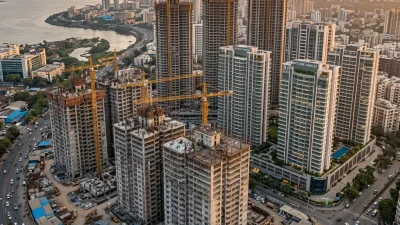
India’s residential real estate market is navigating a significant inflection point in 2026. After three years of robust post-pandemic growth that saw property prices appreciate 20-40 per cent across major cities, the market dynamics are shifting. New supply is increasing rapidly, particularly in peripheral and infrastructure-linked areas, while sales velocity is moderating as buyers become more price-sensitive. The result is a market that remains active but is transitioning from a seller’s market to one that offers more negotiating power to buyers—a development that has significant implications for developers, investors, and homebuyers alike.
Data from leading real estate consultancies indicates that unsold housing inventory across India’s top eight cities has risen to approximately 7.8 lakh units as of December 2025, a 12 per cent increase from the cyclical low of 6.9 lakh units in March 2024. This inventory buildup is most pronounced in the premium and luxury segments, where aggressive launches during the boom period have outpaced absorption. In contrast, the affordable housing segment (units priced below ₹50 lakh) continues to see healthy demand, supported by government subsidies and the aspirations of first-time homebuyers.
City-Level Analysis: Pune, Hyderabad, and Bengaluru Lead
Pune has emerged as the standout performer in India’s housing market in 2026, with sales volumes maintaining an upward trajectory even as other cities moderate. The city’s combination of relatively affordable pricing (average prices of ₹6,500-8,500 per square foot in key corridors), strong IT sector employment, and excellent infrastructure connectivity has sustained buyer interest. New micro-markets like Hinjewadi Phase 3, Kharadi, and Wagholi are attracting young professionals who prioritise proximity to tech parks and social infrastructure.
Hyderabad continues to ride the tech-driven real estate boom, with the western corridor (Gachibowli-Financial District-Kokapet) commanding premium valuations above ₹12,000 per square foot. The Telangana government’s business-friendly policies and the expansion of major technology campuses by companies like Amazon, Google, and Microsoft have created a sustained demand pipeline. However, the pace of new launches in Hyderabad—which exceeded 30,000 units in calendar year 2025—has raised concerns about potential oversupply in specific micro-markets.
Bengaluru, traditionally India’s strongest residential market due to its IT industry concentration, is experiencing a nuanced slowdown in 2026. While demand from end-users remains healthy, investor-driven purchases have declined as rental yields—which had compressed to 2-2.5 per cent in prime locations—no longer justify speculative acquisition. The city’s chronic infrastructure challenges, including traffic congestion and water supply concerns, have also prompted some buyers to explore alternative cities, contributing to the growth of satellite towns like Devanahalli and Mysore Road.
The Peripheral City Phenomenon
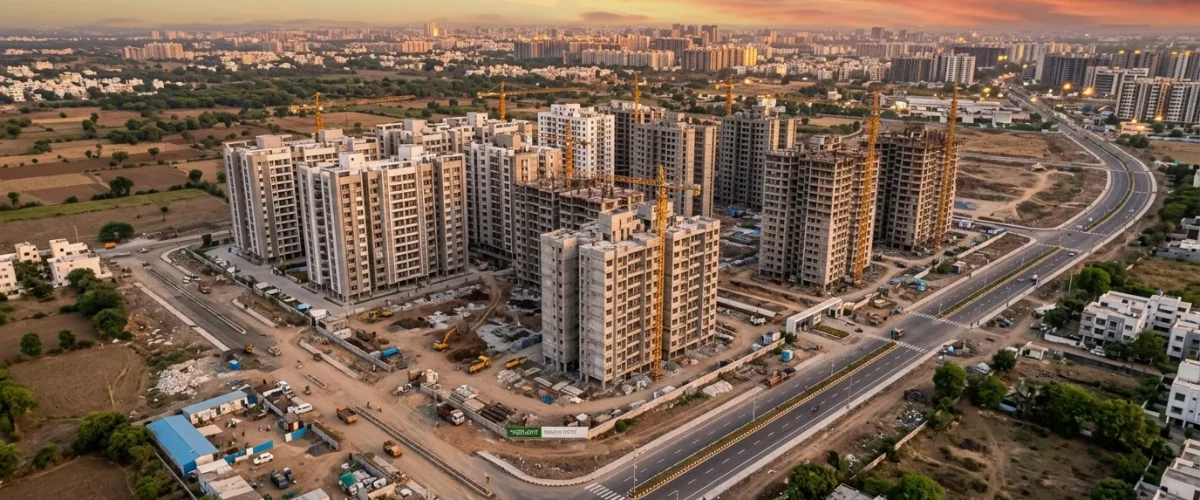
One of the most notable trends in India’s 2026 housing market is the emergence of peripheral and satellite cities as legitimate residential destinations. Areas like Greater Noida and Yamuna Expressway (NCR), Navi Mumbai and Panvel (Mumbai Metropolitan Region), and Electronic City South (Bengaluru) are witnessing rapid development, driven by a combination of infrastructure upgrades, SEZ developments, and significantly lower price points compared to city centres.
The Yamuna Expressway corridor, in particular, has become a focal point of development activity following the announcement of the Noida International Airport (Jewar Airport), expected to commence operations in late 2026. Property prices in this corridor have appreciated 60-80 per cent over the past two years, attracting both end-users seeking affordable homeownership and investors betting on the airport-driven development paradigm. Major developers including Godrej Properties, ABA Group, and Gaurs Group have launched integrated township projects spanning hundreds of acres.
This peripheral shift is facilitated by infrastructure investments outlined in the Union Budget 2026-27’s capital expenditure programme, which includes metro rail extensions, highway upgrades, and industrial corridor development. The government’s emphasis on transit-oriented development—creating residential nodes around metro stations and highway interchanges—is gradually making peripheral locations viable for white-collar professionals who previously had no alternative to expensive city-centre housing.
Luxury Housing: A Separate Universe
India’s luxury housing segment, defined as properties priced above ₹3 crore, continues to defy the moderation seen in the mass market. Ultra-luxury sales in Mumbai’s South Mumbai and Worli precincts, Delhi’s Lutyens zone, and Gurugram’s Golf Course Extension Road have set new records in FY26, driven by high-net-worth individuals, senior corporate executives, and NRI buyers seeking trophy assets in prime locations.
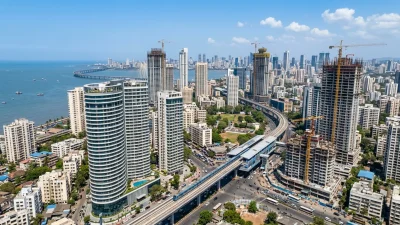
Mumbai, where property prices in premium micro-markets like Lower Parel, Bandra-Kurla Complex, and Malabar Hill exceed ₹50,000-80,000 per square foot, has seen multiple transactions above ₹100 crore in FY26. The stamp duty rationalisation in Maharashtra, combined with the pandemic-induced “space upgrade” phenomenon—where affluent families seek larger homes with premium amenities—has sustained demand in this segment. Branded residences, developed in partnership with luxury hotel chains like Ritz-Carlton, Four Seasons, and Armani, are a growing niche that commands significant price premiums.
RERA’s Evolving Role and Market Transparency
The Real Estate (Regulation and Development) Act, 2016—commonly known as RERA—has transformed India’s real estate market from an opaque, developer-dominated environment to one with meaningful consumer protection and regulatory oversight. By 2026, RERA has been operational for nearly a decade, and its cumulative impact on market practices is substantial: project delays have reduced significantly, customer complaints resolution has improved, and the weeding out of non-compliant developers has concentrated market share among organised, well-capitalised players.
The top ten listed developers now account for approximately 25 per cent of new launches in the top eight cities, up from less than 10 per cent in 2016. This consolidation, accelerated by RERA compliance requirements and the GST regime that favoured organised players, has improved the overall quality and reliability of India’s housing supply. For homebuyers, the presence of listed developers with audited financials, RERA-registered projects, and reputation risk provides a level of assurance that was conspicuously absent in the pre-RERA era.
Outlook: Stability Over Speculation
As India’s housing market enters FY27, the overarching theme is stability rather than the exuberance of the past three years. Price appreciation is expected to moderate to 5-8 per cent annually across most markets, a sustainable rate that reflects genuine demand growth rather than speculative excess. Home loan interest rates, currently at 8.5-9.5 per cent, may edge lower if the RBI delivers the expected rate cuts in the second half of 2026, providing additional tailwinds for buyer sentiment.
For prospective homebuyers, the current environment offers a window of opportunity. The combination of higher inventory levels, moderating price growth, and potential interest rate reductions creates more favourable conditions than the hyper-competitive market of 2023-24. However, location selection remains paramount: areas with strong employment anchors, infrastructure connectivity, and social amenities will appreciate steadily, while speculative pockets with limited economic rationale may face extended periods of stagnation. As India’s diverse sectors continue to evolve—from the economic landscape to cultural milestones like IPL 2026’s franchise developments—the real estate market reflects the broader narrative of a nation balancing ambition with pragmatism.