India’s New Climate Statecraft: How Delhi Is Rewriting the Rules of Decarbonisation Without Sacrificing Economic Growth

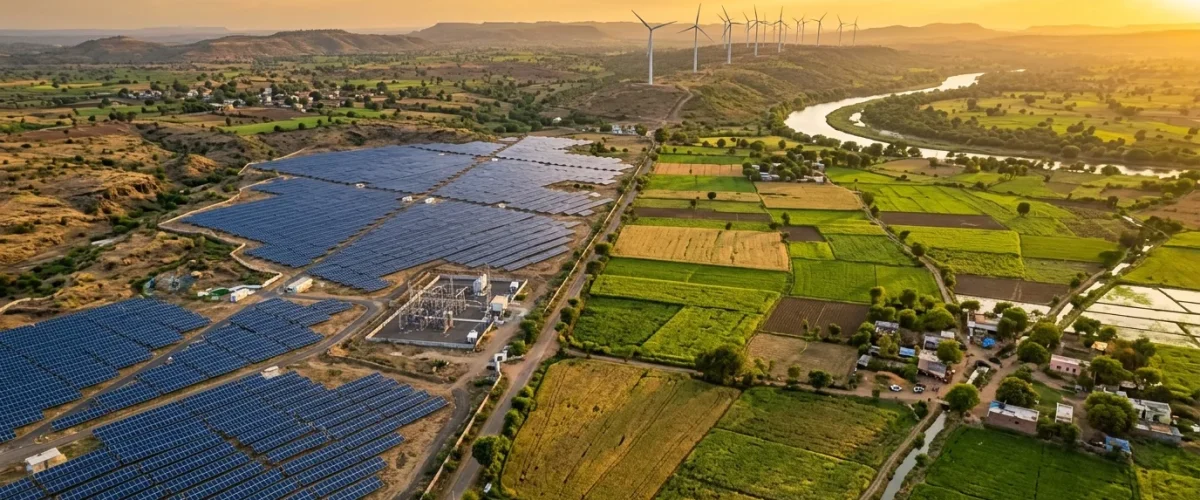
India’s climate diplomacy is undergoing a fundamental transformation that is reshaping global decarbonisation politics. No longer content with the defensive, equity-centred posture that defined its position within the United Nations Framework Convention on Climate Change (UNFCCC) for decades, India has evolved into a practitioner of strategic climate statecraft—simultaneously pursuing aggressive renewable energy deployment, defending its developmental prerogatives, and positioning itself as an indispensable partner in the global energy transition. This evolution, accelerated by geopolitical shifts and domestic economic ambitions, has made India the most consequential swing actor in international climate politics in 2026.
From Defensive Equity to Strategic Engagement
India’s traditional climate negotiating position was built on a straightforward moral argument: as a developing nation with historically minimal per capita emissions and hundreds of millions of citizens still lacking basic energy access, India should not bear equivalent mitigation burdens to wealthy industrialised nations whose cumulative emissions created the climate crisis. This position, articulated through the principle of Common But Differentiated Responsibilities and Respective Capabilities (CBDR-RC), successfully shielded India from binding emission reduction targets through successive COP negotiations.
The 2026 iteration of India’s climate strategy retains the equity principle but operationalises it differently. Rather than using equity arguments primarily as a defensive shield against mitigation obligations, India now frames its climate engagement through the lens of economic modernisation, energy security, and industrial competitiveness. Decarbonisation is no longer presented as a concession to international pressure but as a strategic choice that serves India’s development interests—a reframing that dramatically expands India’s diplomatic room for manoeuvre.
This strategic evolution has been catalysed by three intersecting developments: the economic competitiveness of renewable energy technologies, which now undercut fossil fuel alternatives in many Indian applications; the industrial policy opportunities created by global supply chain diversification away from China; and the diplomatic vacuum created by the United States’ retreat from climate leadership under the current administration, which creates space for India to emerge as a credible alternative voice in global climate governance.
The Renewable Energy Acceleration
India’s renewable energy deployment has accelerated to a pace that consistently surprises international observers. Solar energy capacity, which has grown from negligible levels in 2010 to over 100 gigawatts, continues to expand through a combination of government auction mechanisms, production-linked incentive schemes for domestic manufacturing, and private sector investment driven by improving project economics. Wind energy, both onshore and the nascent offshore sector, adds further generation capacity, while India’s ambitious green hydrogen mission aims to position the country as a global production hub for the fuel of the future.
The economics of renewable energy in India have reached a tipping point that makes continued expansion self-sustaining regardless of policy incentives. Solar tariffs discovered through competitive auctions have fallen to levels that make solar the cheapest source of new electricity generation in most Indian states—cheaper than not just new coal plants but, in many cases, the marginal cost of operating existing coal infrastructure. This economic reality is driving renewable deployment at a pace that policy mandates alone could never have achieved.
However, the renewable energy acceleration coexists with a parallel reality: India’s coal consumption continues to grow. Peak electricity demand, driven by economic expansion, urbanisation, and the increasing penetration of air conditioning in a warming climate, is growing faster than renewable capacity additions can supply. Coal remains the baseload backbone of India’s electricity system, providing the reliable, dispatchable generation that variable renewable sources cannot yet deliver at the required scale. This dual trajectory—rapid renewable growth alongside continued coal dependence—defines the complexity of India’s energy transition.
Industrial Policy and the Green Manufacturing Play
India’s climate strategy is increasingly intertwined with its industrial policy ambitions. The production-linked incentive (PLI) schemes for solar photovoltaic manufacturing, battery storage, and electric vehicle components represent a deliberate strategy to capture domestic value from the energy transition rather than simply importing clean energy technology from established manufacturing centres in China, Southeast Asia, and Europe.
The domestic solar manufacturing push is particularly significant. India currently imports the majority of its solar panels and cells, primarily from China—a dependency that creates both economic leakage and supply chain vulnerability. The PLI scheme for solar manufacturing, combined with the imposition of basic customs duties on imported solar cells and modules, aims to build an indigenous manufacturing capability that serves both domestic deployment and export markets. The integration of advanced technology with manufacturing policy reflects the same strategic approach visible in India’s semiconductor ambitions and the broader technology governance framework covered by India’s AI Summit 2026 and the structural gaps it revealed.
Green hydrogen is another domain where industrial and climate policy converge. India’s National Green Hydrogen Mission, backed by significant government funding and incentive structures, targets annual green hydrogen production of five million tonnes by 2030. Achieving this target would make India one of the world’s largest green hydrogen producers, supplying both domestic industrial demand—particularly in steel manufacturing and fertiliser production—and export markets in energy-importing nations across Europe and East Asia.
The Coal Conundrum: Just Transition in Practice
India’s continued reliance on coal—the country is the world’s second-largest consumer of the fuel—represents the most contentious dimension of its climate strategy. International climate advocates and some domestic environmental organisations argue that India should commit to a coal phase-out timeline, following the precedent set by several developed nations. India’s government has consistently resisted such commitments, arguing that coal phase-out timelines are premature for a nation where energy poverty remains widespread and where no viable combination of alternative energy sources can yet replace coal’s contribution to grid stability and industrial heat.
Instead, India has adopted a “just transition” framework that emphasises the social and economic dimensions of coal dependency. India’s coal sector directly and indirectly employs millions of workers, and the coal-producing states of Jharkhand, Odisha, Chhattisgarh, and West Bengal depend heavily on coal royalties and economic activity. A disorderly coal exit would devastate these communities and regions, creating social and political consequences that no responsible government can ignore.
India’s approach prioritises demand-side management and efficiency improvements that reduce coal intensity without mandating supply-side shutdowns. Supercritical and ultra-supercritical coal plant technologies, which generate more electricity per tonne of coal burned, are being mandated for new installations. Older, inefficient plants are being retired or retrofitted. Coal gasification and carbon capture technologies, while still nascent, are receiving research investment as potential pathways for reducing coal’s climate impact without eliminating its energy contribution.
Climate Finance: The Unresolved Equation
India’s climate strategy is fundamentally shaped by the availability—or absence—of international climate finance. The developed world’s long-standing commitment to mobilise USD 100 billion annually in climate finance for developing nations was consistently underdelivered, eroding trust in the international climate finance architecture. The new collective quantified goal (NCQG) agreed at COP29, which ostensibly targets higher funding levels, faces similar credibility challenges.
India has been among the most vocal advocates for reformed climate finance mechanisms that deliver funding at scale, on concessional terms, and through governance structures that give developing nations meaningful decision-making authority. The country’s position is that the global energy transition cannot be achieved on the backs of developing nation taxpayers—that the trillions of dollars required to decarbonise the world’s fastest-growing economies must come substantially from developed nation public finance and private capital mobilised through appropriate risk-sharing mechanisms.
Domestically, India has demonstrated the capacity to mobilise significant private capital for renewable energy investment when the policy and regulatory frameworks are supportive. The country has attracted tens of billions of dollars in renewable energy investment through its auction mechanisms, tax incentives, and grid connectivity guarantees. Extending this domestic mobilisation model to international climate finance—creating investment frameworks that attract global capital at scale—represents the next frontier of India’s climate finance strategy. The financial innovation seen in sectors from RBI’s digital lending framework to green bonds demonstrates India’s capacity to develop sophisticated financial mechanisms when the policy environment is supportive.
The Geopolitical Dimension
India’s climate statecraft operates within an increasingly complex geopolitical environment. The US retreat from multilateral climate commitments has weakened the COP process while simultaneously creating opportunities for India to assume greater diplomatic visibility. The US-China rivalry, which has spilled into climate cooperation through trade restrictions on clean energy technology and competing industrial subsidies, complicates the multilateral framework that India has traditionally relied upon.
India’s response has been to diversify its climate diplomacy across multiple forums—bilateral partnerships, plurilateral initiatives such as the International Solar Alliance (which India co-founded and hosts), and regional cooperation frameworks. This multi-channel approach reduces dependence on any single diplomatic venue while allowing India to exercise influence across a broader range of climate-related policy domains. As India’s technological capabilities advance across sectors from ISRO’s 2026 mission calendar from EOS-N1 to Gaganyaan to digital infrastructure, its capacity to offer climate solutions—not just climate commitments—enhances its diplomatic positioning in ways that traditional negotiating positions alone cannot achieve.
India’s climate statecraft in 2026 represents a maturation of approach that matches the country’s growing economic weight and technological capability. The transition from defensive equity arguments to strategic climate engagement positions India not as an obstacle to global decarbonisation but as a necessary partner whose cooperation any viable global climate strategy must secure.