Street Art to Gallery Walls: India’s Urban Art Movement Finds Institutional Recognition in 2026

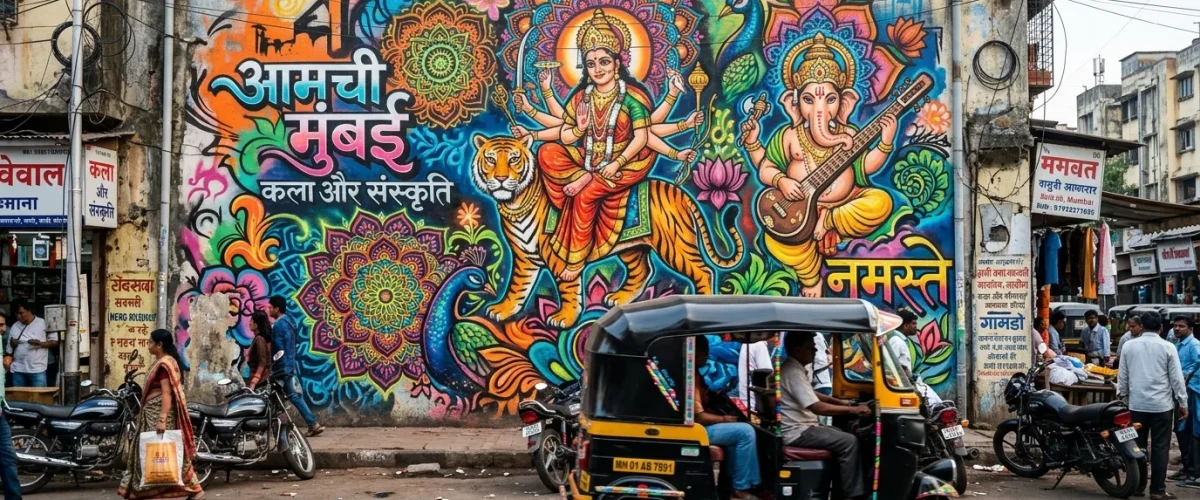
For more than a decade, India’s cities have been quietly transformed by an urban art movement that turned blank walls into canvases, construction sites into galleries, and public spaces into sites of creative expression. In 2026, this movement — long dismissed by the institutional art world as decorative ephemera — is receiving the kind of critical and commercial recognition that marks a decisive shift in how Indian culture values art made outside traditional frameworks.
From Margins to Mainstream
India’s street art movement traces its modern origins to the early 2010s, when a small community of artists began painting murals in cities like Mumbai, Delhi, Bengaluru, and Kochi. Inspired by global street art traditions but grounded in distinctly Indian visual languages, these artists developed a practice that drew on everything from traditional folk art motifs to contemporary political commentary. Their work was deliberately public, deliberately accessible, and deliberately outside the gallery system that controlled the official narratives of Indian art.
The movement’s growth over the following decade was remarkable. Street art festivals in cities across India — St+art India Foundation’s initiatives in Delhi and Mumbai, the Kannagi Nagar project in Chennai, wall art projects in Varanasi and Hyderabad — transformed neighbourhoods and generated significant public engagement. Social media amplified the movement’s reach exponentially, turning local murals into viral sensations and individual artists into recognisable names. By 2024, Indian street art had evolved from a subcultural practice into a significant cultural phenomenon — one that the institutional art world could no longer ignore.
Institutional Recognition in 2026
The year 2026 marks a turning point in the relationship between Indian street art and institutional recognition. Several developments signal this shift. Major galleries in Mumbai and Delhi have mounted solo exhibitions of work by artists who built their reputations on the street, presenting large-scale studio works alongside documentation of public murals. The India Art Fair, the country’s premier art event as covered in our report on the India Art Fair 2026 and its reimagining of contemporary Indian art, included a dedicated section on urban art practices for the first time, legitimising the movement within the commercial art ecosystem.
Museums have followed suit. The Museum of Art and Photography in Bengaluru acquired works by several prominent street artists in early 2026, adding them to a permanent collection that positions urban art alongside painting, sculpture, and photography. Government-backed cultural institutions, historically conservative in their definitions of art, have begun commissioning public murals from established street artists, acknowledging the form’s capacity to democratise cultural access and beautify urban environments.
The Tension Between Street and Gallery
The transition from street to gallery is not without tension. Street art’s power derives partly from its context — its presence in public space, its accessibility to audiences who would never enter a gallery, its dialogue with the architectural and social environment in which it exists. When a mural is reproduced as a gallery painting, something of that contextual power is inevitably lost. The most thoughtful artists in the movement are acutely aware of this tension and navigate it with creativity, developing studio practices that complement rather than replicate their public work.
Commercial dynamics add another layer of complexity. The art market’s interest in street art is driven partly by the movement’s cultural cachet and partly by the commercial logic of an expanding collector base seeking accessible, visually impactful work. While market recognition provides welcome financial sustainability for artists who spent years working without compensation, it also raises concerns about co-optation — the risk that the market’s embrace will sand down the provocative, politically engaged qualities that made street art compelling in the first place.
Art as Urban Regeneration
One of the most significant legacies of India’s street art movement is its demonstration of art’s capacity to transform urban spaces. In cities across India, mural projects have revitalised neglected neighbourhoods, increased property values, generated tourism, and fostered community pride. The Sassoon Dock project in Mumbai, the Lodhi Colony art district in Delhi, and numerous neighbourhood projects in Bengaluru and Chennai have shown that public art can function as a tool of urban regeneration that benefits communities economically and socially.
Government bodies have taken notice. Municipal corporations in several Indian cities now include public art provisions in their urban planning frameworks, allocating budgets for mural programmes and art installations in public spaces. While the scale of these investments remains modest compared to cities like Melbourne or Berlin, the institutional acknowledgement of public art’s urban value represents a meaningful evolution in Indian municipal governance.
Themes and Voices: What India’s Street Art Speaks About
The thematic landscape of Indian street art in 2026 is as diverse as the country itself. Environmental themes — climate change, pollution, wildlife conservation — feature prominently, reflecting a generation of artists for whom ecological crisis is an existential concern. Gender identity and women’s rights are explored through murals that range from the celebratory to the confrontational. Cultural heritage, particularly the preservation of traditional art forms and architectural traditions threatened by rapid urbanisation, provides another rich thematic vein.
Political commentary, always a fraught territory in a country where artistic expression can attract controversy, is handled with varying degrees of directness. Some artists engage politics through allegory and metaphor, embedding critical perspectives within visually appealing compositions. Others are more explicit, using public walls to address issues of caste, religion, and governance that mainstream media may treat cautiously. This political dimension connects the movement to broader conversations about free expression in India — a subject of considerable relevance in 2026.
Technology and the Digital Afterlife of Street Art
One of the unique aspects of contemporary street art is its dual existence — physical and digital. A mural painted on a wall in Kochi or Jaipur reaches a local audience of thousands; photographed and shared on Instagram, it can reach millions. This digital afterlife has transformed the economics and reach of street art, allowing artists to build global followings and attract international opportunities from work rooted in Indian localities.
In 2026, technology is also influencing the creation of street art. Augmented reality (AR) layers added to physical murals create interactive experiences accessible through smartphones, adding animation, sound, and narrative depth to static images. Projection mapping transforms building facades into temporary canvases for large-scale animated works. These technological extensions of street art practice connect the movement to India’s broader technology ecosystem, which continues to evolve rapidly as evidenced by developments like India’s AI Summit 2026 and its exploration of creative technology applications.
The Next Generation
Perhaps the most encouraging development in India’s urban art movement is the emergence of a younger generation of artists who have grown up with street art as an established form. Unlike their predecessors, who often had to justify the legitimacy of working in public space, these younger artists take the form’s validity for granted and push its boundaries in new directions. Community engagement projects, collaborative murals involving non-artists, art therapy initiatives using mural-making, and cross-disciplinary projects that blend visual art with music, dance, and storytelling represent the movement’s expanding definition of what urban art can be and do.
Art education institutions have also responded. Several art schools now include courses on public art practice, mural techniques, and the theoretical frameworks that contextualise street art within broader art historical narratives. This institutional integration ensures that the movement’s knowledge and techniques are transmitted systematically, supporting its sustainability beyond the careers of its founding figures.
As India’s cultural landscape continues its dynamic evolution — from entertainment innovations captured in Bollywood’s bold 2026 lineup to the sporting spectacle of the IPL season — street art’s journey from the margins to the mainstream stands as one of the most compelling cultural stories of the decade. The walls of India’s cities have always had stories to tell; in 2026, the art world is finally listening.