IRCTC’s Bharat Gaurav Trains 2026: New Heritage Routes Connecting India’s Iconic Pilgrimage Sites

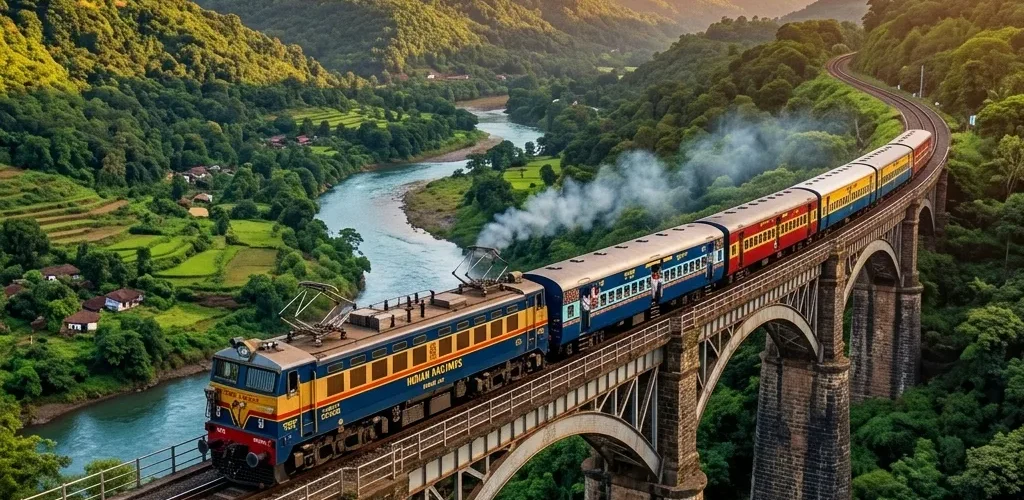
Indian Railways, the world’s fourth-largest rail network and the lifeline of the nation’s transport infrastructure, is charting new territory in heritage tourism with the ambitious expansion of its Bharat Gaurav train programme in 2026. Launched originally to showcase India’s rich cultural and historical legacy through dedicated theme-based train journeys, the programme has undergone a significant enlargement this year, with the Indian Railway Catering and Tourism Corporation introducing new routes that connect the country’s most iconic pilgrimage and heritage sites in immersive, multi-day rail experiences.
New Routes for 2026: Pilgrimage Meets Premium Rail Travel
The 2026 expansion introduces five new Bharat Gaurav circuits, bringing the total to fourteen operational routes nationwide. The most anticipated is the Tirth Yatra Express, a 12-day journey that links the four Char Dham sites of Uttarakhand — Yamunotri, Gangotri, Kedarnath, and Badrinath — with rail connections to Haridwar, Rishikesh, and Varanasi. While the mountainous final stretches to each Dham require road transport, the train serves as a luxurious mobile base, eliminating the accommodation and logistics challenges that have historically deterred older pilgrims and families from attempting the complete Char Dham circuit.
The second major addition is the Dakshin Bharat Darshan, a 10-day southern heritage circuit connecting Chennai, Rameswaram, Madurai, Kanyakumari, Trivandrum, and Kochi — covering some of India’s most magnificent temples, colonial-era architecture, and coastal landscapes. The route includes guided visits to the Meenakshi Temple, the Rameswaram Corridor, the Padmanabhaswamy Temple, and the historic spice markets of Kochi, with onboard cultural programmes featuring Carnatic music performances and traditional South Indian cuisine prepared by specialist chefs.
The third new route, the Buddhist Heritage Express, traces the life journey of Gautama Buddha from Lumbini (accessed via a cross-border arrangement with Nepal) through Bodh Gaya, Sarnath, Kushinagar, and Rajgir — a circuit of profound spiritual significance that has attracted strong interest from international Buddhist communities in Japan, South Korea, Thailand, and Sri Lanka.
Upgraded Amenities: Bridging Heritage and Comfort
The Bharat Gaurav trains of 2026 represent a significant upgrade from the programme’s early iterations. Coaches have been refurbished with semi-luxury interiors featuring individual berths with privacy curtains, USB charging points, improved air conditioning, and clean modern restrooms. Each train carries a dedicated kitchen car staffed by chefs who prepare regional cuisine corresponding to the route — Rajasthani thalis on the western circuits, Varanasi chaat and Bengali sweets on the eastern routes, and traditional filter coffee and Chettinad specialties on the southern journeys.
Onboard entertainment includes cultural storytelling sessions by local historians and scholars, documentary screenings about the heritage sites on the itinerary, and interactive workshops such as rangoli making, classical dance demonstrations, and meditation sessions. IRCTC has also partnered with leading audioguide platforms to provide multilingual narration via a dedicated mobile app, allowing passengers to learn about the landscapes passing outside their windows in twelve Indian and four international languages.
Pricing and Accessibility: Pilgrimage for Every Budget
One of the Bharat Gaurav programme’s defining features is its commitment to affordability. Unlike India’s luxury tourist trains — the Palace on Wheels, the Maharajas’ Express, and the Golden Chariot, which command tariffs of several lakh rupees — Bharat Gaurav trains are priced to be accessible to middle-income pilgrims and families. The Tirth Yatra Express, for instance, offers packages starting at Rs 15,000 per person for the 12-day journey, inclusive of rail travel, road transfers, accommodation at dharamshalas and budget hotels, meals, and guided visits. Premium packages with hotel accommodation and additional excursions are available from Rs 30,000.
Senior citizens, families with children, and group bookings receive additional discounts, and IRCTC has introduced a micro-EMI option that allows passengers to pay in interest-free monthly instalments — a feature specifically designed to make pilgrimage travel accessible to fixed-income retirees and lower-middle-class families. This pricing philosophy extends the railway’s historic mandate as a democratic institution that serves all Indians, regardless of economic status, and mirrors the inclusive technology approaches being advocated at India’s leading policy forums.
Economic Impact on Pilgrimage Towns
The Bharat Gaurav expansion is generating significant economic ripple effects in the pilgrimage towns and heritage cities along its routes. Local tourism boards report increased demand for guide services, handicraft purchases, and dining at local restaurants, with the train’s arrival creating a concentrated burst of economic activity that benefits small businesses and artisan communities. In Varanasi, the programme’s most popular single destination, the scheduled arrival of Bharat Gaurav trains has prompted the development of a dedicated reception area near the railway station, complete with cultural welcome ceremonies and a handicraft bazaar operated by local artisan cooperatives.
The programme also addresses a persistent challenge in Indian pilgrimage tourism: the exploitation of pilgrims by unregulated operators. By offering comprehensive, IRCTC-managed packages that cover transport, accommodation, meals, and guided visits at transparent prices, the Bharat Gaurav trains provide a trusted alternative to the fragmented and sometimes predatory local tourism market. Travellers combining Bharat Gaurav journeys with independent exploration will find that Varanasi’s revamped Ganga Aarti experience makes for a perfect extension to the northern pilgrimage circuits.
Operational Challenges and Government Response
The programme is not without challenges. Scheduling Bharat Gaurav services on India’s congested rail network requires careful coordination to avoid disrupting regular passenger and freight traffic. Some routes have experienced delays when special trains are diverted to accommodate higher-priority services on shared tracks. IRCTC has responded by negotiating dedicated time slots on key routes and introducing buffer days into itineraries to absorb potential delays without disrupting the overall journey experience.
Capacity constraints at popular heritage sites — particularly Varanasi, Bodh Gaya, and Rameswaram during peak pilgrimage seasons — have also required coordination with local authorities to manage visitor flow and ensure that Bharat Gaurav groups receive timely access to monuments and temples. The Ministry of Railways has committed to expanding the fleet of Bharat Gaurav coaches and introducing new routes covering the Northeast and the Western Himalayan regions by 2027.
Booking and Planning Tips
Travellers interested in Bharat Gaurav journeys can book through the IRCTC tourism portal, which provides detailed itineraries, pricing, and availability calendars for all operational routes. Advance booking of two to three months is recommended for popular routes, particularly the Char Dham and Buddhist Heritage circuits, which fill quickly during the October-to-March season. The IRCTC portal also offers a “customise your journey” feature that allows passengers to select add-on excursions, accommodation upgrades, and dietary preferences.
For those combining rail journeys with broader travel plans, the Bharat Gaurav programme pairs naturally with India’s growing road trip culture. The recently completed expressway network connecting many of the same pilgrimage destinations provides an alternative for travellers who wish to explore at their own pace after completing the structured rail itinerary. Together, rail and road journeys offer a comprehensive way to experience India’s vibrant cultural moment in 2026.
A Train for Every Indian Story
The Bharat Gaurav train programme embodies a powerful idea: that India’s heritage belongs to all its people, and that the railways — the institution that more than any other has connected the nation’s geography and communities — are the natural vehicle for experiencing it. In 2026, as new routes open and the programme matures, millions of Indians are discovering that the journey to their country’s sacred and historic places can itself be a pilgrimage — one measured not in kilometres but in moments of wonder, devotion, and connection to a civilisation that stretches back millennia.