Neeraj Chopra’s 2026 Season: The Olympic Champion’s Comeback Trail from Injury to Diamond League and World Championship Ambitions

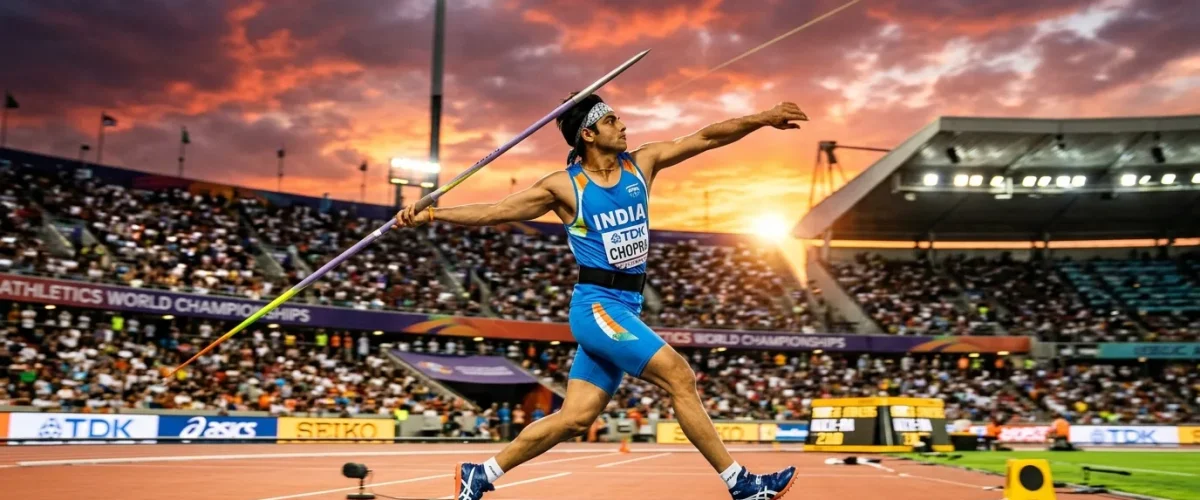
Lieutenant Colonel Neeraj Chopra, India’s most celebrated track and field athlete and the nation’s first Olympic gold medallist in athletics, faces what could be the defining season of his already extraordinary career. The 2026 competitive season, which kicks off with early European meetings before building towards the Diamond League series and the World Athletics Championships, will test not only Chopra’s legendary arm but his ability to return to peak form following an injury-disrupted 2025 that raised questions about his long-term durability.
Chopra, who turned 28 in December 2025, remains the gold standard of Indian athletics — a trailblazer who proved that an Indian athlete could reach the pinnacle of a discipline traditionally dominated by European and Scandinavian throwers. His Olympic gold in Tokyo 2020, followed by the World Championship gold in Budapest 2023 and a historic 26-consecutive-tournament streak of top-two finishes, established him as one of javelin’s all-time greats. Now, as he prepares for his 2026 campaign, the question is whether Chopra can recapture that dominance or whether the sport is catching up with India’s golden arm.
The Injury Concern: Understanding What Happened
Chopra’s 2025 season was disrupted by a recurrence of the adductor muscle issue that has plagued him intermittently since the Paris Olympics 2024. The injury, while not career-threatening, forced the withdrawal from several planned competitions and required a carefully managed rehabilitation programme that prioritised long-term health over short-term competitive returns.
The nature of javelin throwing — an explosive, full-body action that places extraordinary stress on the shoulder, elbow, hip, and lower body — means that injuries are an occupational hazard for elite throwers. Chopra’s throwing mechanics, while technically excellent, generate forces that push the human body to its biomechanical limits. The key challenge for his medical and coaching team has been finding the balance between maintaining competitive readiness and preventing re-injury.
Reports from Chopra’s training base in Germany, where he works under biomechanics expert and coach Klaus Bartonietz, suggest that the rehabilitation has progressed well. Video analysis from recent training sessions shows Chopra’s throwing motion to be smooth and powerful, with the explosive hip rotation and late arm acceleration that characterise his best throws appearing intact. However, training throws and competition throws are fundamentally different experiences, and the true test will come when Chopra faces the pressure of a competitive runway for the first time in 2026.
The Competitive Landscape: Has the World Caught Up?
While Chopra rehabilitated, the javelin world did not stand still. Several young throwers have emerged as genuine contenders for major titles, with personal bests approaching or exceeding 90 metres becoming increasingly common among the sport’s top tier. The depth of quality in men’s javelin — always one of athletics’ most competitive field events — has deepened further, meaning that Chopra can no longer rely solely on his reputation to dominate fields.
Anderson Peters of Grenada, Jakub Vadlejch of the Czech Republic, and a new cohort of German and Finnish throwers have all demonstrated the ability to produce 88-90 metre throws consistently. In major championship finals, where conditions and the unique pressure of the occasion produce unpredictable results, any of these athletes is capable of beating Chopra on their best day.
For Chopra, the evolving competitive landscape may actually serve as motivation. Throughout his career, his greatest performances have come when the challenge has been most significant — the Olympic final in Tokyo, the World Championship final in Budapest, and the Diamond League Final where he has consistently risen to the occasion. A more competitive field may bring out the best in an athlete who thrives on the biggest stages.
Training and Preparation: The German Connection
Chopra’s decision to base his training in Germany, working with Bartonietz and a team of specialists, continues to be vindicated by results. The training environment provides access to world-class facilities, biomechanical analysis equipment, and sparring partners who push Chopra to his limits in practice. The cultural and logistical challenges of living and training abroad are outweighed by the competitive advantages that the arrangement provides.
The 2026 pre-season has focused on rebuilding the physical base that was compromised by the 2025 injury. Strength work in the gym, throwing drills with lighter implements, and a graduated return to full-weight competition throws have formed the core of the programme. Chopra’s flexibility and mobility work — crucial for a thrower who generates speed through a long, flowing run-up — has been enhanced with input from physiotherapists who specialise in athletic throwing events.
Mental preparation has also been a priority. The experience of an injury-disrupted season, while frustrating, has given Chopra an opportunity to reflect on his approach to competition and to develop coping strategies for the inevitable challenges that lie ahead. His mental fortitude — often cited by coaches and competitors as one of his greatest assets — has been reinforced through work with a sports psychologist who specialises in high-performance athletics.
Diamond League and World Championships: The Key Targets
Chopra’s 2026 competitive calendar is structured around two primary targets: sustained excellence in the Diamond League series and a medal at the World Athletics Championships. The Diamond League, with its circuit of prestigious meetings across Europe and beyond, provides both competition practice and the ranking points necessary for favourable seeding at major championships.
Chopra’s record in the Diamond League is impressive — he won the Diamond League Final title in 2024, defeating a world-class field with a series of throws that showcased his consistency under pressure. Replicating that form in 2026, following the injury layoff, would represent a significant achievement and confirm that his competitive powers are undiminished.
The World Athletics Championships, the sport’s biennial showcase event, represents the ultimate test. Chopra is the defending champion, and the expectations that come with that status add an extra layer of pressure. In javelin, where form can fluctuate between competitions and even between throws within a single competition, defending a title is arguably harder than winning it for the first time.
India’s Athletics Ecosystem: Beyond Neeraj
While Chopra remains the headline act, Indian athletics in 2026 is about more than one individual. The Athletics Federation of India (AFI) has invested in development programmes that are producing results across multiple events, from sprints to middle-distance running to field events. The India’s Thomas and Uber Cup 2026 squad selections demonstrate the breadth of Indian sporting talent, and athletics is contributing its own stories of progress.
The growth of Indian athletics owes much to the “Neeraj effect” — the inspiration that Chopra’s Olympic gold provided to a generation of young athletes who now believe that world-class achievements are possible. The increase in athletics participation at the grassroots level, the improvement in coaching standards, and the greater investment in facilities across the country are all tangible legacies of Chopra’s success.
What 2026 Means for Chopra’s Legacy
At 28, Chopra is entering what should be the peak years of a javelin thrower’s career. The sport’s history is replete with examples of throwers who produced their best performances in their late twenties and early thirties, and Chopra’s technical proficiency suggests that there are throws of 90+ metres still within him. The 2026 season will go a long way towards determining whether Chopra’s legacy is that of a brilliant champion who peaked at the Olympics, or a sustained force who dominated javelin for a decade.
As India’s sporting achievements continue to multiply across disciplines — from IPL 2026 season preview with key transfers and franchise strategies to FIH Hockey World Cup 2026 schedule and India’s qualification campaign — Chopra’s 2026 comeback will be watched with intense interest by a nation that has come to view him as more than an athlete. He is a symbol of what Indian sport can achieve on the world stage, and his performances this year will carry a significance that transcends the throw-by-throw results.
Editor’s Note (3 April 2026): Neeraj Chopra’s competition schedule and injury recovery timeline are based on Athletics Federation of India (AFI) and World Athletics reporting. Diamond League and World Championships schedules should be verified against the latest World Athletics calendar, as event dates may be subject to change.

- India’s Startup Funding Crosses $7.2 Billion in H1 2026 - July 1, 2026
- After Ireland Shock, India’s T20I Side Faces Bigger Test - July 1, 2026
- Ireland Stun World Champions India 2-0 in Belfast, Sooryavanshi Debate Rages On - June 29, 2026