When Ayurveda Meets the Microbiome: Inside the Landmark CCRAS-JNU Study Bridging Traditional Medicine and Modern Biology

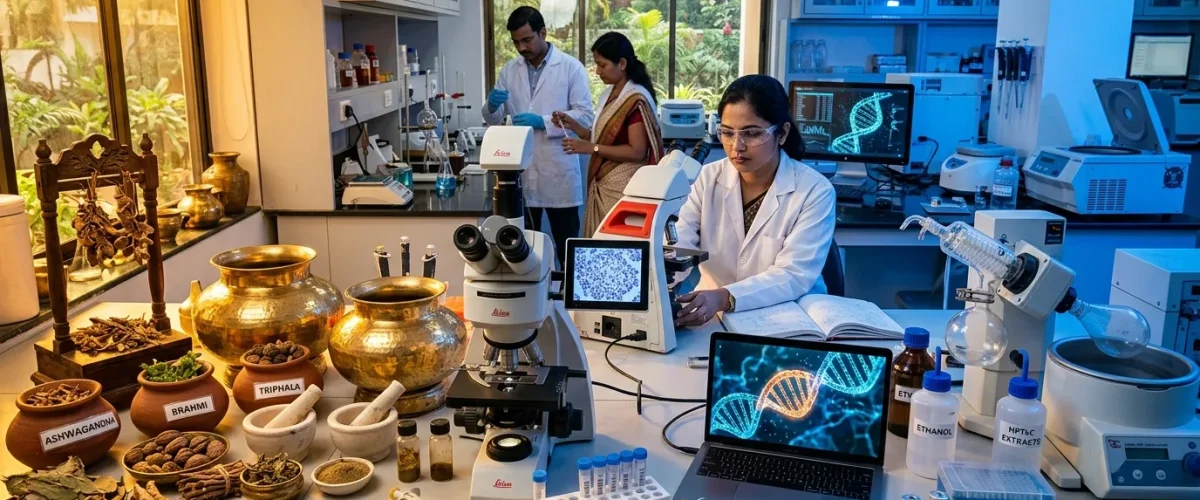
A tripartite research collaboration signed on March 6, 2026, between the Central Council for Research in Ayurvedic Sciences (CCRAS), Jawaharlal Nehru University (JNU), and the A&U Tibbia College and Hospital represents one of the most methodologically rigorous attempts yet to bridge the vast gulf between India’s traditional medical systems and contemporary biomedical science. The study—titled “Effect of Seasonal Emesis (Vasanthik Vamana) on Metabolic, Inflammatory, and Microbiome Markers in Apparently Healthy Adults”—is designed as an exploratory randomised controlled trial that applies modern analytical tools to evaluate a practice documented in Ayurvedic texts for over two millennia. Its significance extends far beyond the specific clinical question it addresses, touching on fundamental issues of evidence generation, integrative healthcare, and the scientific legitimation of traditional knowledge systems in the twenty-first century.
Vasanthik Vamana: The Ancient Practice Under the Microscope
Vasanthik Vamana is a seasonal purification procedure prescribed in classical Ayurvedic literature, specifically the Charaka Samhita and Sushruta Samhita, as a spring-season therapeutic emesis intended to eliminate accumulated Kapha dosha—a concept in Ayurvedic physiology associated with mucous accumulation, metabolic sluggishness, and susceptibility to respiratory and allergic conditions. The procedure, traditionally performed during the Vasanta (spring) season, involves a preparatory phase of internal oleation and sudation followed by administered therapeutic emesis using specific herbal preparations.
While millions of Indians undergo seasonal Panchakarma procedures annually—Vamana being one of the five foundational therapies—the biological mechanisms underlying these practices remain poorly understood in terms of contemporary physiology. The CCRAS-JNU study aims to change this by measuring the procedure’s effects on three categories of biomarkers: metabolic markers including lipid profiles, blood glucose regulation, and liver function parameters; inflammatory markers including C-reactive protein, interleukins, and other cytokines; and—most innovatively—gut microbiome composition and diversity as assessed through metagenomic sequencing of stool samples.
The Microbiome Connection: A New Scientific Framework
The inclusion of microbiome analysis in the study design reflects the explosive growth of human microbiome research over the past decade and its potential to provide a scientific framework for understanding traditional therapeutic practices. The human gut microbiome—comprising trillions of bacteria, archaea, fungi, and viruses that inhabit the gastrointestinal tract—has been demonstrated to influence immune function, metabolic processes, neurological activity, and susceptibility to a wide range of diseases.
The hypothesis that Vasanthik Vamana may alter gut microbiome composition is scientifically plausible on multiple grounds. The preparatory oleation phase, which involves ingestion of medicated ghee over several days, could plausibly alter the intestinal environment in ways that shift microbial community structure. The emesis procedure itself represents a significant physiological perturbation of the upper gastrointestinal tract that could reset mucosal immune dynamics. And the post-procedure dietary regimen, which progressively reintroduces foods in a prescribed sequence, could influence the recolonisation dynamics of gut microbial communities.
If the study demonstrates significant alterations in microbiome composition or metabolic markers following Vamana, it would provide a biological mechanism for effects that Ayurvedic practitioners have observed clinically for centuries—translating traditional observational knowledge into the language of molecular biology. This translational potential is what elevates the study from a niche investigation into a potentially paradigm-shifting contribution to integrative medicine. The convergence of traditional knowledge systems with cutting-edge biological science reflects the broader trend of India leveraging its unique cultural and scientific heritage, much as India’s AI Summit 2026 showcased the nation’s ambition at the frontier of artificial intelligence.
Methodological Rigour: The Randomised Controlled Trial Framework
The study’s design as an exploratory randomised controlled trial (RCT) represents a deliberate methodological choice that addresses one of the most persistent criticisms of traditional medicine research: the absence of rigorous evidence from study designs that can establish causal relationships. By randomising healthy adult participants to either the Vamana intervention group or a control group, and by measuring outcomes using validated laboratory assays and standardised collection protocols, the study employs the same evidential standards applied to pharmaceutical drug development.
The involvement of JNU’s School of Life Sciences brings molecular biology and bioinformatics expertise that is essential for the microbiome analysis component. Metagenomic sequencing—the technique used to characterise the composition of complex microbial communities—generates datasets of enormous complexity that require specialised computational analysis pipelines. JNU’s bioinformatics infrastructure and analytical expertise ensure that the microbiome data will be processed using methods consistent with international research standards.
The participation of A&U Tibbia College and Hospital provides clinical expertise in Unani and Ayurvedic therapeutic procedures, ensuring that the Vamana intervention is administered according to classical protocols by practitioners with appropriate training and experience. This combination of traditional clinical expertise with modern analytical capability is essential for producing results that are credible to both the traditional medicine community and the biomedical research establishment.
India’s AYUSH Research Ecosystem
The CCRAS-JNU collaboration exists within a broader ecosystem of traditional medicine research that has expanded significantly under India’s Ministry of AYUSH (Ayurveda, Yoga and Naturopathy, Unani, Siddha, and Homeopathy). The ministry, elevated to full ministry status in 2014, has progressively increased research funding and established institutional frameworks for evidence-based investigation of traditional therapeutic systems.
The CCRAS, as the apex research body for Ayurveda under the Ministry of AYUSH, operates a network of research institutes and clinical units across India that conduct both fundamental research into Ayurvedic principles and clinical investigations of traditional therapeutic interventions. The council’s research agenda has shifted increasingly toward collaborative studies with mainstream biomedical institutions—a strategy that enhances methodological rigour while creating interdisciplinary research communities that can bridge the gap between traditional and modern medical paradigms.
India’s traditional medicine research enterprise faces an inherent tension between preserving the philosophical and practical integrity of traditional systems and subjecting them to analytical frameworks developed for fundamentally different therapeutic paradigms. The CCRAS-JNU study navigates this tension by focusing on measurable biological outcomes without requiring that Ayurvedic theoretical constructs be validated on their own terms—an approach that respects traditional knowledge while demanding empirical evidence of biological effects. This nuanced approach to evidence generation parallels India’s broader technology governance philosophy, where frameworks for emerging domains—from India’s 2026 AI content regulation framework to data privacy—seek to balance innovation with established principles.
Global Context: The Integrative Medicine Movement
The CCRAS-JNU study occurs within a global context of growing interest in integrative and traditional medicine. The World Health Organisation’s Traditional Medicine Strategy 2025-2034 calls for evidence-based integration of traditional medicine into national health systems, and research institutions across East Asia, Europe, and the Americas are pursuing similar investigations of traditional therapeutic practices using modern analytical tools.
India’s unique position in this global movement derives from the scale and diversity of its traditional medical systems. Ayurveda, Yoga, Siddha, Unani, and various regional healing traditions represent an enormous knowledge repository that is both systematically documented in classical texts and actively practised by millions of practitioners serving billions of patient encounters annually. The potential for evidence-based validation and integration of effective traditional practices into mainstream healthcare—reducing costs, expanding therapeutic options, and honouring cultural heritage—is perhaps greater in India than anywhere else in the world.
The pharmaceutical industry is watching these developments with commercial interest. If traditional medicine research identifies biologically active compounds or therapeutic protocols with demonstrated efficacy, the pathway from traditional practice to standardised therapeutic product represents an enormous commercial opportunity. India’s pharmaceutical industry, already globally competitive in generic drug manufacturing, could leverage traditional medicine research to develop novel therapeutics that combine traditional knowledge with modern formulation and delivery technologies.
Looking Ahead: From Single Study to Research Programme
The CCRAS-JNU Vasanthik Vamana study, however well-designed, represents a single investigation of a single traditional practice. Realising the broader potential of evidence-based traditional medicine research requires sustained institutional commitment to a research programme that systematically evaluates priority traditional interventions using appropriate study designs and modern analytical methods.
The infrastructure for such a programme is gradually materialising. India’s National Education Policy 2020, which emphasises interdisciplinary research and the integration of Indian knowledge systems into higher education, provides an institutional framework for training the next generation of researchers capable of working across traditional and modern medical paradigms. The Anusandhan National Research Foundation, with its mandate to coordinate and fund research across disciplines, represents a potential funding mechanism for large-scale traditional medicine research programmes. As India’s scientific research infrastructure strengthens across domains—from India’s quantum computing mission to biological sciences—the resources and methodological sophistication available for traditional medicine investigation will continue to expand.
The scientific validation of traditional medicine is not merely an academic exercise but a matter of practical significance for a nation where millions depend on traditional healthcare systems. The CCRAS-JNU collaboration, by demonstrating that rigorous science and traditional knowledge can work together productively, points toward a future where India’s healthcare system draws on the best of both worlds—modern biomedicine for its analytical power and traditional systems for their accumulated wisdom about the relationship between human beings, their environment, and their health.