Beyond Easy Growth: How India’s D2C Brands Navigate Quick Commerce, Channels, and Profitability in 2026

The D2C Landscape Has Fundamentally Shifted
The definition of Direct-to-Consumer (D2C) in India has undergone a radical transformation in 2026. What began as a movement built on the promise of cutting out intermediaries and selling directly to consumers through owned digital channels has evolved into something far more complex and strategically demanding. The channel of origin no longer defines D2C, according to analysts and venture capitalists surveyed by Inc42; instead, D2C is now about control—over consumer data, product experience, distribution strategy, and unit economics. This evolution has separated the category’s winners from its also-rans and created a new playbook for building consumer brands in India.
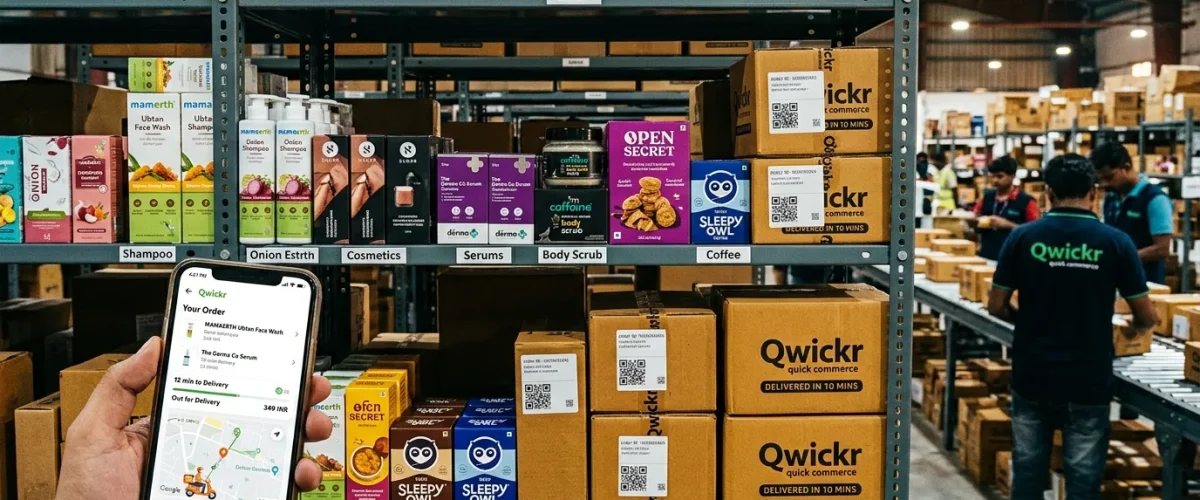
The catalyst for this transformation has been quick commerce. The explosive growth of platforms like Blinkit, Zepto, and Swiggy Instamart—which collectively generated over ₹35,000 crore in annualised GMV by the end of 2025—has disrupted the D2C model’s fundamental value proposition. When consumers can receive products in 10-20 minutes through a quick commerce app, the incentive to visit a brand’s own website diminishes significantly. For D2C founders, this has created an existential strategic question: do they embrace quick commerce as a distribution channel, or do they resist, risking irrelevance in a market where consumer behaviour is rapidly shifting?
The Quick Commerce Dilemma
Quick commerce has added new complexity to how D2C brands manage their channel strategy. On one hand, platforms like Blinkit offer unprecedented access to urban consumers with high purchase intent and minimal friction. A brand that achieves top-three positioning in its category on Blinkit can generate ₹50-100 crore in annual revenue through the platform alone—a scale that would take years to build through an owned website. On the other hand, quick commerce margins are punishing: platform commissions of 25-35 per cent, combined with the cost of managing inventory across hundreds of dark stores, leave D2C brands with contribution margins that are often half of what they earn on their own channels.
The most successful D2C brands in 2026 have adopted a nuanced multi-channel approach. Mamaearth (Honasa Consumer), which went public in late 2023 and has since built a market capitalisation of approximately ₹15,000 crore, generates revenue through a carefully calibrated mix: 30 per cent from its own website and app, 25 per cent from quick commerce, 20 per cent from horizontal e-commerce platforms (Amazon, Flipkart), and 25 per cent from offline retail. This diversification provides revenue stability while maintaining sufficient direct-channel volume to preserve the data advantage that is central to the D2C model.
Category Leaders: Who’s Winning and Why
India’s D2C landscape in 2026 features a clear hierarchy of established leaders, rising challengers, and struggling laggards. In beauty and personal care—the largest D2C category by revenue—Mamaearth, Sugar Cosmetics, and mCaffeine have cemented their positions through strong brand recall, product innovation, and multi-channel distribution. Mamaearth’s revenue exceeded ₹2,000 crore in FY25, while Sugar Cosmetics crossed ₹600 crore, demonstrating that Indian D2C beauty brands can achieve meaningful scale.
In consumer electronics, boAt has achieved a remarkable position as India’s largest wearables brand by volume, with an estimated market share of 30 per cent in the truly wireless earbuds category and a growing presence in smartwatches and speakers. The company’s FY25 revenue exceeded ₹3,500 crore, making it one of the largest D2C brands in India by revenue. However, boAt faces intensifying competition from Chinese brands (Noise, Realme, Xiaomi) and is under pressure to move upstream toward premium products that command higher margins.
The food and beverage D2C segment has emerged as a growth frontier, with brands like Sleepy Owl (coffee), Raw Pressery (juices), Lahori (carbonated beverages), and Yoga Bar (nutrition) building loyal consumer bases. This category benefits from repeat purchase dynamics and the natural fit with quick commerce delivery—a freshly brewed cold brew coffee or a pack of protein bars is an ideal quick commerce purchase. These consumer innovations align with the broader cultural shifts in India, paralleling the creative evolution seen in sectors like Bollywood’s March 2026 storytelling.
The Profitability Imperative
The most critical challenge facing India’s D2C brands in 2026 is the transition from growth to profitability. The funding environment, while improved from the depths of 2023-2024, has instilled a clear message: brands that cannot demonstrate a path to sustainable profitability will not receive further capital. This has forced D2C founders to make difficult decisions about customer acquisition spending, SKU rationalisation, and geographic focus.
The economics of D2C profitability in India are demanding. Customer acquisition costs (CAC) through digital advertising have increased 2-3x since 2020, as competition for digital attention has intensified. Social media platforms—Instagram, YouTube, and increasingly WhatsApp Business—remain the primary discovery channels, but the cost per click and cost per conversion have risen sharply. D2C brands that relied heavily on performance marketing to drive sales are finding that the math no longer works at scale, forcing a strategic pivot toward organic brand building, community engagement, and content marketing.
Product margin optimisation has become equally critical. D2C brands are investing in private label manufacturing, backward integration into raw material sourcing, and packaging innovation to improve gross margins from the typical 50-60 per cent range to 65-70 per cent. Premiumisation—launching higher-priced product lines with better margins—is another lever being deployed by mature brands. Mamaearth’s Aqualogica and The Derma Co. sub-brands, for example, command price points 20-30 per cent higher than the core Mamaearth range, contributing disproportionately to profitability.
Offline Expansion: The Next Growth Frontier
The most significant strategic shift among India’s leading D2C brands is the aggressive expansion into offline retail. Brands that were born online are recognising that India’s offline retail market—estimated at over $800 billion—dwarfs the e-commerce market and remains the primary shopping channel for the majority of consumers, particularly outside metropolitan areas.
Sugar Cosmetics has expanded its offline presence to over 60,000 retail touchpoints, including exclusive brand outlets, multi-brand beauty retailers, and modern trade chains. Mamaearth is present in over 1.5 lakh retail stores across India. boAt has established a network of 200 exclusive brand stores and is available through 30,000 multi-brand retail outlets. This offline expansion is capital-intensive and operationally complex—requiring investments in distributor networks, merchandising teams, and supply chain infrastructure—but it is essential for reaching the scale that justifies the valuations these brands have received.
The Road Ahead: Consolidation and Category Creation
India’s D2C sector is entering a phase of consolidation, where market leaders in each category are pulling ahead while smaller brands face existential challenges. The advantages of scale—in procurement, brand building, distribution, and data analytics—are becoming more pronounced, making it increasingly difficult for bootstrapped or under-funded brands to compete effectively. This dynamic is expected to drive M&A activity, with larger D2C brands and traditional FMCG companies acquiring niche brands to expand their product portfolios. The investment appetite for such opportunities is strong, as evidenced by the startup funding rebound in Q1 2026.
For the D2C brands that survive and thrive, the opportunity remains immense. India’s online consumer base of over 350 million shoppers is growing at 15-20 per cent annually, driven by smartphone penetration, improving logistics infrastructure, and rising disposable incomes. The key to success in this evolving landscape is strategic agility—the ability to navigate across channels, adapt to changing consumer preferences, and build brands that transcend their digital origins to become enduring consumer franchises. As India’s economy expands and aspirations grow, as reflected in the RBI’s optimistic GDP forecast for FY26, D2C brands that execute effectively have the potential to become the next generation of Indian consumer giants.