The Kabaddi Ecosystem in 2026: How PKL, National Championships, and Grassroots Are Shaping India’s Indigenous Sport

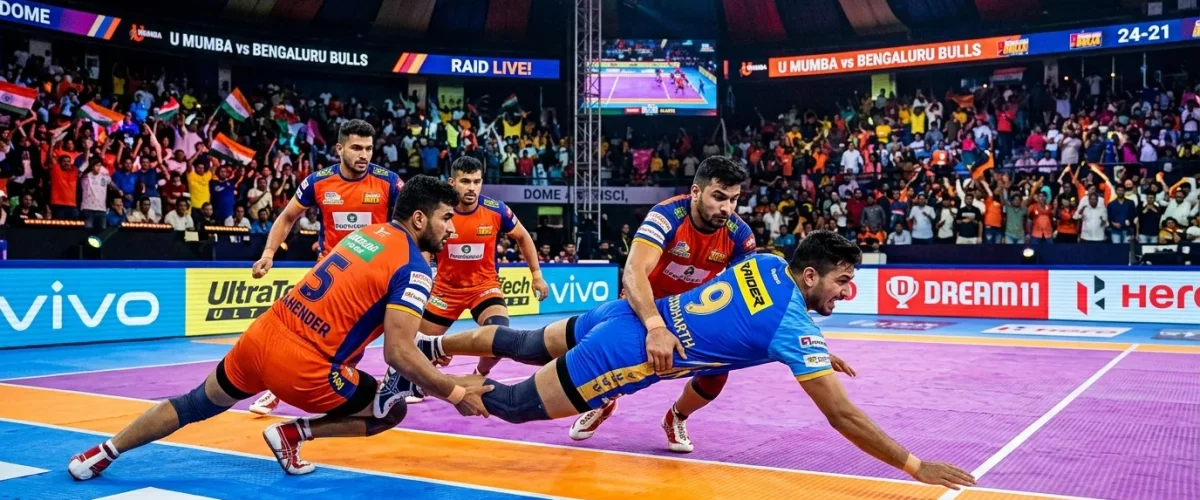
Kabaddi in India occupies a space that no other sport can claim. It is simultaneously a village tradition and a prime-time television spectacle, a playground game and a professional career, a cultural heritage and a modern entertainment product. In 2026, the sport’s ecosystem — comprising the Pro Kabaddi League, national championships, international competitions, and grassroots development — is more complex, more commercially significant, and more consequential for Indian sport than at any point in its history.
The recently concluded 72nd Senior Men’s National Kabaddi Championship, won by Indian Railways with a dominant performance, has brought the sport’s domestic structure into focus. At the same time, the Pro Kabaddi League (PKL) continues to evolve as one of India’s most-watched sporting properties, while the international kabaddi calendar presents opportunities for India to leverage its historical dominance on the global stage.
The Pro Kabaddi League: Commercial Juggernaut and Talent Factory
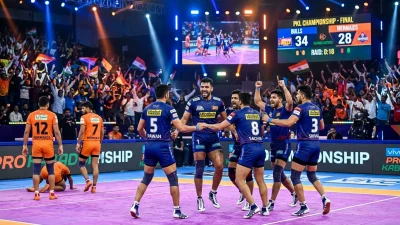
The Pro Kabaddi League, since its inception in 2014, has transformed kabaddi from a niche sport into a mainstream entertainment product. The league’s franchise model, modelled on the IPL, brought professional management, broadcasting deals, and commercial investment to a sport that had previously survived on institutional patronage and cultural momentum.
In 2026, the PKL stands as one of India’s top three sporting properties by television viewership, behind only the IPL in cricket and the Indian Super League in football. The league’s broadcasting deal, renewed in 2025 on significantly improved terms, reflects the commercial confidence that media companies have in kabaddi’s ability to attract and retain audiences. The demographics of PKL viewership — skewing younger and more rural than cricket — make it particularly attractive to advertisers seeking to reach India’s vast non-metropolitan audience.
The PKL’s impact on player development has been transformative. Young kabaddi players from states like Haryana, Maharashtra, Tamil Nadu, and Uttar Pradesh now have a clear pathway from village-level competition to professional sport. The financial rewards available to top PKL players — with auction prices reaching several crores for elite raiders and defenders — have elevated kabaddi as a viable career option, attracting athletic talent that might previously have gravitated towards cricket or other sports.
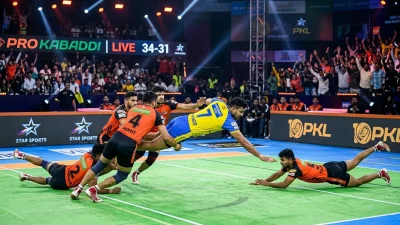
The technical and tactical evolution of kabaddi within the PKL framework has been remarkable. Coaching standards have risen sharply, with several franchises employing analytics teams, video analysts, and specialist coaches for different aspects of the game. The result is a style of play that is faster, more tactically sophisticated, and more physically demanding than the kabaddi of even five years ago.
National Championships: The Foundation Layer
While the PKL garners the headlines and the commercial attention, the national championship system remains the foundation of kabaddi’s competitive structure in India. Tournaments like the 72nd Senior National Championship provide the competitive pathway through which young players are identified, developed, and eventually recruited into the PKL and the national team.
The national championship ecosystem, which includes senior, junior, and sub-junior categories across both men’s and women’s disciplines, produces the volume of competitive opportunities that talent development requires. State-level competitions, zonal tournaments, and national finals create a pyramid that, while imperfect, ensures that kabaddi talent from every corner of India has an opportunity to be seen and developed.
The dominance of institutional sides like Indian Railways and Services in national championships has been a recurring feature, raising questions about the competitive balance of the tournament. However, the gradual improvement of state teams — particularly from non-traditional kabaddi states — suggests that the competitive gap is narrowing, albeit slowly.
International Kabaddi: India’s Unrivalled Dominance
On the international stage, India’s dominance in kabaddi is near-absolute. Indian teams — both men’s and women’s — have won virtually every major international kabaddi competition, from Asian Games to Kabaddi World Cups. This dominance reflects both the depth of Indian kabaddi talent and the reality that the sport’s international development has not kept pace with its growth within India.
The challenge for international kabaddi — and for India specifically — is to foster genuine competitive balance that makes international competitions meaningful rather than foregone conclusions. India has a vested interest in the sport’s global growth: a more competitive international landscape would enhance kabaddi’s prospects for Olympic inclusion, which remains the ultimate aspiration for the sport’s administrators.
The International Kabaddi Federation’s efforts to promote the sport in non-traditional markets, including East Asia, Europe, and Africa, have produced modest results. The IKF’s development programmes, coaching exchanges, and international tournaments provide platforms for growth, but the gap between India and the rest of the world remains vast. Bridging this gap will require sustained investment and patience from all stakeholders.
Grassroots Development: The Heart of Indian Kabaddi
Kabaddi’s greatest strength in India is its accessibility. Unlike cricket, which requires equipment, or football, which requires goals and a pitch, kabaddi can be played anywhere — in school compounds, village squares, parks, and any flat surface large enough to accommodate two teams. This accessibility makes kabaddi an unrivalled vehicle for sports participation at the grassroots level.
State associations and the Amateur Kabaddi Federation of India (AKFI) have invested in grassroots programmes that aim to identify and nurture talent from an early age. School-level tournaments, district championships, and coaching camps form the base of the development pyramid, with the best players progressing through state teams to national representation.
The PKL’s franchise academies have added another dimension to grassroots development. Several PKL teams operate youth development programmes in their home regions, providing coaching, equipment, and competitive opportunities for young players. These academies serve dual purposes: developing talent that may eventually represent the franchise, and building fan engagement in the community.
Women’s Kabaddi: The Untold Story
Women’s kabaddi in India deserves greater attention and investment than it currently receives. Indian women’s kabaddi teams have been dominant in international competition, yet the sport lacks the domestic professional structure that the PKL provides for men. The absence of a professional women’s kabaddi league represents a significant gap in the sport’s ecosystem.
The talent in women’s kabaddi is undeniable. National championship performances by women’s teams from Haryana, Tamil Nadu, and Maharashtra have showcased skills and athleticism that would captivate audiences if given the platform and broadcast exposure. The commercial case for a women’s PKL, while perhaps not as immediately compelling as the men’s league, is strengthened by the growing appetite for women’s sport content in India and the success of women’s leagues in other sports.
The Olympic Dream: Kabaddi’s Long-Term Ambition
The inclusion of kabaddi in the Olympic Games remains the sport’s greatest aspiration and its most significant challenge. The International Olympic Committee’s criteria for inclusion — which consider global participation, governance standards, and competitive balance — present hurdles that kabaddi must clear. India’s dominance, while a testament to the sport’s domestic strength, is paradoxically an obstacle to Olympic inclusion, as the IOC values genuine global competitiveness.
Efforts to promote kabaddi internationally, standardise rules across federations, and develop the sport in new markets are all steps towards the Olympic goal. The sport’s inclusion in the Asian Games has been a positive development, providing a multi-sport platform that raises awareness. However, the path from Asian Games inclusion to Olympic status is long and uncertain.
Kabaddi in 2026: A Sport at a Crossroads
Kabaddi in India in 2026 is a sport of enormous potential and genuine challenges. The PKL has demonstrated that kabaddi can be commercially viable and culturally relevant in a modern entertainment landscape. The national championship system, while needing reform, continues to produce talent. International competition, while dominated by India, is slowly growing. And at the grassroots, millions of Indians continue to play kabaddi with the same joy and passion that has sustained the sport for centuries.
The decisions made by kabaddi’s stakeholders in the coming years — about league expansion, women’s professional competition, international development, and Olympic strategy — will determine whether the sport fulfils its potential or remains constrained by its current limitations. As Indian sport thrives across disciplines in 2026, from Neeraj Chopra’s 2026 comeback season and Diamond League ambitions to India’s Thomas and Uber Cup 2026 squad selections, kabaddi’s unique contribution to the national sporting identity deserves recognition, investment, and a vision that matches the sport’s extraordinary grassroots vitality.

- India’s Startup Funding Crosses $7.2 Billion in H1 2026 - July 1, 2026
- After Ireland Shock, India’s T20I Side Faces Bigger Test - July 1, 2026
- Ireland Stun World Champions India 2-0 in Belfast, Sooryavanshi Debate Rages On - June 29, 2026