India’s Literary Spring: The Most Anticipated Books and Publishing Trends Shaping 2026


The Indian publishing industry is enjoying a remarkably productive 2026, with a rich harvest of new titles across genres, languages, and formats that reflects both the diversity of Indian literary talent and the evolving appetites of the country’s growing reading public. From debut novels that have captivated critics to non-fiction works that have sparked national conversations, the year’s literary output underscores India’s emergence as one of the world’s most dynamic book markets.
Fiction Highlights: Bold Voices and Fresh Narratives
The fiction landscape in early 2026 has been dominated by a new generation of Indian writers whose work blends literary ambition with commercial accessibility. Several debut novels have attracted exceptional attention, with publishers reporting first-print runs that would have been considered unusually large even for established authors just a few years ago.
Among the most discussed releases is a sweeping multigenerational saga set across three continents, tracing an Indian family’s journey from colonial-era Bengal through partition, the Emergency, and into the complexities of 21st-century diaspora life. The novel has drawn comparisons to the work of Amitav Ghosh and Jhumpa Lahiri, while carving out a distinctive narrative voice that critics have praised for its emotional depth and historical precision. The book’s domestic sales have exceeded 150,000 copies in its first three months—a remarkable figure for literary fiction in India.
Genre fiction has also thrived, with Indian crime writers, science fiction authors, and romance novelists building substantial readerships that challenge the historical dominance of literary fiction in Indian publishing discourse. A Mumbai-set thriller series that combines noir sensibilities with acute social observation has become a bestselling franchise, while a science fiction novel set in a near-future Indian megacity has attracted international translation rights in over a dozen languages. The creative dynamism in India’s literary world mirrors the innovation visible in IPL 2026 Season Preview: Key Transfers, Injuries, and Franchise Strategies.
Non-Fiction: Ideas That Are Shaping India
Indian non-fiction publishing has produced several titles in early 2026 that have moved beyond literary circles to influence broader public discourse. A comprehensive analysis of India’s economic transformation under recent policy regimes has become required reading in corporate and policy circles, while a deeply reported investigation into India’s water crisis has prompted renewed attention to an environmental challenge that affects hundreds of millions of citizens.
Memoir and autobiography have continued to perform well commercially, with several prominent Indian figures publishing personal narratives that offer behind-the-scenes perspectives on politics, business, sport, and entertainment. Health and wellness publishing has seen particular growth, driven by increasing consumer interest in mental health, nutrition, fitness, and holistic well-being.
Regional Language Publishing: A Quiet Revolution
Perhaps the most significant structural development in Indian publishing has been the accelerating growth of regional language book markets. Publishing in Hindi, Tamil, Telugu, Malayalam, Kannada, Bengali, Marathi, and other Indian languages has expanded dramatically, driven by improved distribution infrastructure, the growth of regional-language e-commerce, and increasing cultural pride among non-English-speaking readers.
Hindi publishing has seen particularly strong growth in commercial fiction, with several Hindi-language novels achieving bestseller status and generating film adaptation interest. The Tamil publishing market has been buoyed by a vibrant literary culture, with new publishers entering the market. Malayalam publishing continues to punch above its weight, producing a disproportionate share of India’s most critically acclaimed literary fiction.
The growth of audiobook and e-book platforms in Indian languages has been a key enabler, with Storytel, Audible, and Pratilipi investing significantly in regional catalogues.
The Publishing Industry Landscape
India’s publishing industry is estimated to be worth approximately ₹30,000 crore in 2026, one of the world’s largest by volume. The industry’s structure remains fragmented, with major publishers—Penguin Random House India, HarperCollins India, Hachette India—coexisting with hundreds of smaller independents and a vibrant self-publishing ecosystem.
Independent publishers have been particularly important in driving literary innovation, taking risks on experimental works. The relationship between publishing and other media industries has deepened, with streaming platforms increasingly looking to published works for adaptation—a trend clearly visible in AI Summit 2026: India Showcases Ambitions but Structural Gaps Exposed.
Literary Festivals and Cultural Infrastructure
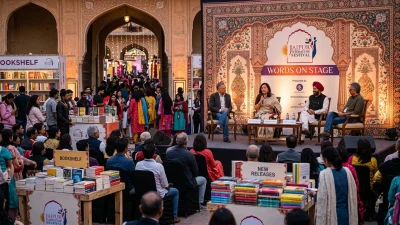
India’s literary festival circuit continues to play a vital role in promoting reading culture. The Jaipur Literature Festival attracted over 500,000 visitors in 2026, featuring sessions with Nobel laureates, Booker Prize winners, and leading Indian writers. Regional festivals in Kerala, Assam, Punjab, and Maharashtra have also multiplied.
Challenges and the Road Ahead
Despite positive trends, Indian publishing faces persistent challenges. Book piracy continues to undermine revenue. Pricing sensitivity compresses margins. Physical bookstore infrastructure has contracted. The discovery challenge remains acute. Yet India in 2026 is reading more than ever. The broader cultural implications are explored in March 2026 in Bollywood: Anil Kapoor Leads Bold Storytelling.