Indian Publishing in the Digital Age: How Audiobooks, AI and Self-Publishing Are Transforming Literature in 2026

The Indian publishing industry, long anchored in the physicality of paper and ink, is undergoing a digital transformation that promises to reshape how 1.4 billion people discover, consume, and engage with the written word. In 2026, the convergence of audiobooks, artificial intelligence, self-publishing platforms, and social media-driven book discovery is creating an ecosystem where traditional publishers, independent authors, and technology companies compete and collaborate in ways that are expanding literature’s reach while raising fundamental questions about its future.
The Audiobook Revolution Comes to India
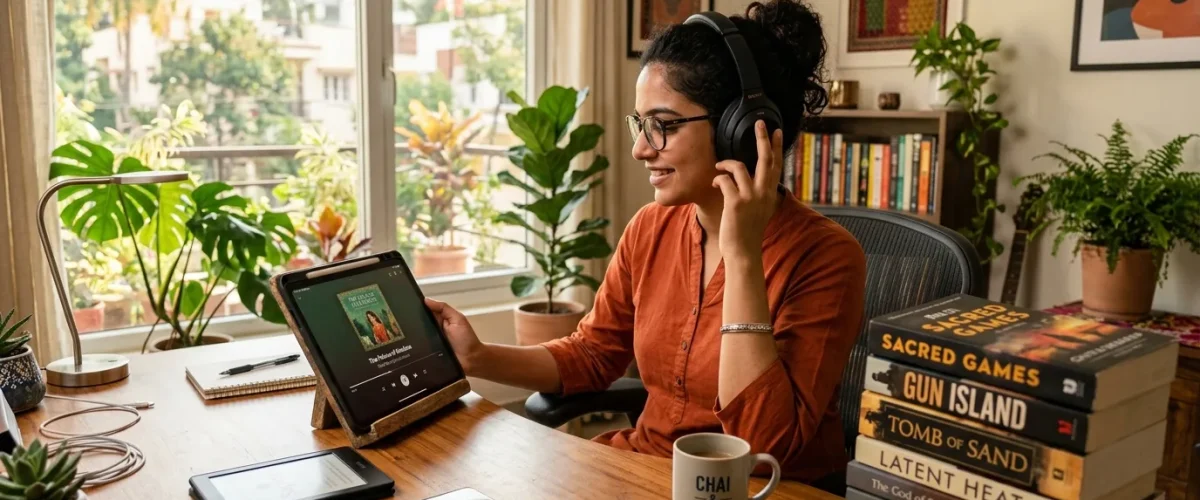
India’s audiobook market has experienced explosive growth in 2025-2026, driven by a confluence of factors that make the format particularly suited to Indian consumers. Long commute times in major cities, the prevalence of mobile-first internet usage, and a cultural tradition of oral storytelling that predates the printed word have all contributed to audiobooks’ rapid adoption. Industry estimates suggest the Indian audiobook market grew by over 60 per cent in the past year alone, making it one of the fastest-growing audiobook markets globally.
The platforms serving this market reflect India’s distinctive digital ecosystem. International players like Audible and Storytel compete with Indian platforms such as Kuku FM, Pocket FM, and Pratilipi, each offering different models — from premium subscriptions to ad-supported free access — that cater to India’s diverse consumer segments. Regional language audiobooks have proven particularly popular, with Hindi, Tamil, Telugu, and Bengali content driving subscriber growth outside the English-language segment that initially dominated.
The audio format has also created new categories of content that blur the line between publishing and entertainment. Audio dramas, serialised fiction designed specifically for audio consumption, and hybrid formats that combine narration with sound design and music represent innovations that owe as much to podcasting and radio traditions as to conventional publishing. For creators, the audio format offers a distribution channel that reaches audiences who may never visit a bookshop or open an e-reader.
AI in Publishing: Tool, Threat or Transformation?
Artificial intelligence’s penetration into the publishing industry has generated a debate in India that mirrors global conversations while carrying distinctly local dimensions. AI tools are being deployed across the publishing value chain — from manuscript assessment and editing to cover design, translation, and marketing copy generation. For publishers operating with thin margins, these tools offer efficiency gains that can mean the difference between profitability and loss.
The translation application is particularly significant for India. AI-powered translation tools are dramatically reducing the time and cost required to bring regional language works to English-speaking audiences and vice versa. While the quality of AI translation for literary texts remains inferior to human translation — nuance, cultural context, and stylistic voice are still beyond machine capability — AI tools are increasingly used for initial drafts that human translators then refine, accelerating the translation pipeline that is so crucial to India’s multilingual literary ecosystem. These AI applications connect to the broader technology developments explored at India’s AI Summit 2026 and its examination of AI’s transformative potential.
The ethical dimensions of AI in publishing are vigorously debated. Concerns about AI-generated content flooding the market, undermining human authors’ livelihoods, and eroding the artistic quality that distinguishes meaningful literature from functional text are expressed by authors, publishers, and literary organisations across India. The Indian publishing industry has yet to establish clear guidelines on AI disclosure and usage, but the conversation is active and consequential.
Self-Publishing: Democratisation and Its Discontents
India’s self-publishing ecosystem has matured considerably in 2026, evolving from a domain of last resort into a legitimate pathway for authors who choose independence over traditional publishing’s gatekeeping. Platforms like Amazon’s Kindle Direct Publishing, Notion Press, and BlueRose Publishers have made it technically feasible for any author to publish and distribute their work, while social media provides marketing tools that can compensate for the absence of a publisher’s promotional infrastructure.
The commercial results are mixed but include genuine success stories. Several self-published Indian authors have achieved sales figures that rival traditionally published works, particularly in genre categories — romance, thriller, fantasy, and self-help — where audience demand outpaces traditional publishing’s supply. These successes have created aspirational narratives that attract new entrants to self-publishing, fuelling a cycle of growth that shows no signs of slowing.
However, the democratisation of publishing has also produced a volume of content that overwhelms discovery mechanisms. When anyone can publish, the challenge shifts from production to discoverability — how readers find works worth their time amid an ocean of available titles. This discoverability challenge has spawned a cottage industry of book marketing services, social media strategies, and promotional tactics that represent an additional investment self-published authors must make beyond the creative effort of writing itself.
Social Media and the New Book Discovery
The way Indian readers discover books has been transformed by social media, with Instagram’s BookStagram community, YouTube’s BookTube creators, and dedicated book recommendation accounts across platforms functioning as influential tastemakers whose reach rivals traditional literary criticism. In 2026, a viral recommendation from a popular BookStagram account can drive sales that match or exceed those generated by a review in a national newspaper — a shift that has fundamentally altered the marketing calculus for publishers.
This social media-driven discovery ecosystem is particularly impactful for Indian literature, where traditional media coverage has historically favoured English-language works from established publishers. Social media’s flat hierarchy allows regional language works, independent publications, and debut authors to reach audiences on the same platform as bestselling titles, creating opportunities for literary diversity that traditional gatekeeping mechanisms often failed to provide.
Subscription Models and the Future of Reading
The subscription model — familiar from streaming platforms in entertainment and music — is making inroads into Indian publishing. Services like Kindle Unlimited, Scribd, and Indian platforms offering unlimited reading for a monthly fee are changing how readers relate to books economically. Rather than purchasing individual titles, subscribers access libraries of thousands of works for a flat fee, encouraging exploration and genre-hopping that benefits less-known authors whose work might not have been purchased individually.
For publishers and authors, subscription models present complex economics. While subscriptions generate revenue from readers who might not otherwise purchase books, the per-read payouts are typically lower than individual sale royalties, and the model’s emphasis on volume can incentivise quantity over quality. The Indian publishing industry is watching the subscription experiment closely, aware that its outcome will shape the commercial foundations of literature for years to come.
Physical Books: Resilience and Reinvention
Despite the digital onslaught, physical books in India maintain a resilience that confounds predictions of their imminent obsolescence. Print book sales in India have remained stable in 2025-2026, supported by a cultural attachment to physical reading, the expansion of bookshop chains and independent stores in tier-2 and tier-3 cities, and a gift economy where books remain among the most popular presents. The physical book’s survival may also reflect digital fatigue — a desire for screen-free experiences that is growing in an increasingly connected society.
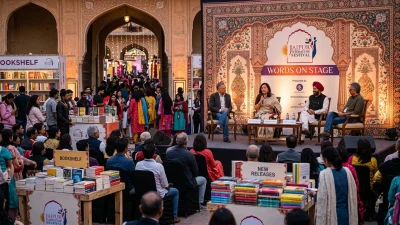
Physical bookshops are reinventing themselves as cultural spaces rather than mere retail outlets. Stores that combine book sales with cafes, event spaces, co-working areas, and curated cultural programming are finding business models that sustain physical retail in competition with online convenience. These spaces serve as community gathering points for readers, complementing the literary festival culture that represents one of India’s most vibrant cultural exports.
Looking Forward
Indian publishing in 2026 stands at an inflection point where digital innovation and literary tradition must find productive coexistence. The technologies reshaping the industry — AI, audio, self-publishing platforms, social media — are neither salvation nor threat but tools whose impact depends on how they are deployed. The enduring value of literature — its capacity to illuminate human experience, challenge assumptions, and create empathy across difference — remains independent of format. Whether consumed as printed pages, audio streams, or digital text, the stories that matter will continue to find their readers. In a year when Indian culture is asserting itself with unprecedented confidence across entertainment, fashion, and the arts, as seen in Bollywood’s bold 2026 slate and the India Art Fair’s expansive vision, Indian publishing’s digital transformation is another chapter in the nation’s ongoing story of creative reinvention.