Inside India’s Wellness Revolution: From Ayurvedic AI Apps to Corporate Mental Health, the Trends Shaping 2026

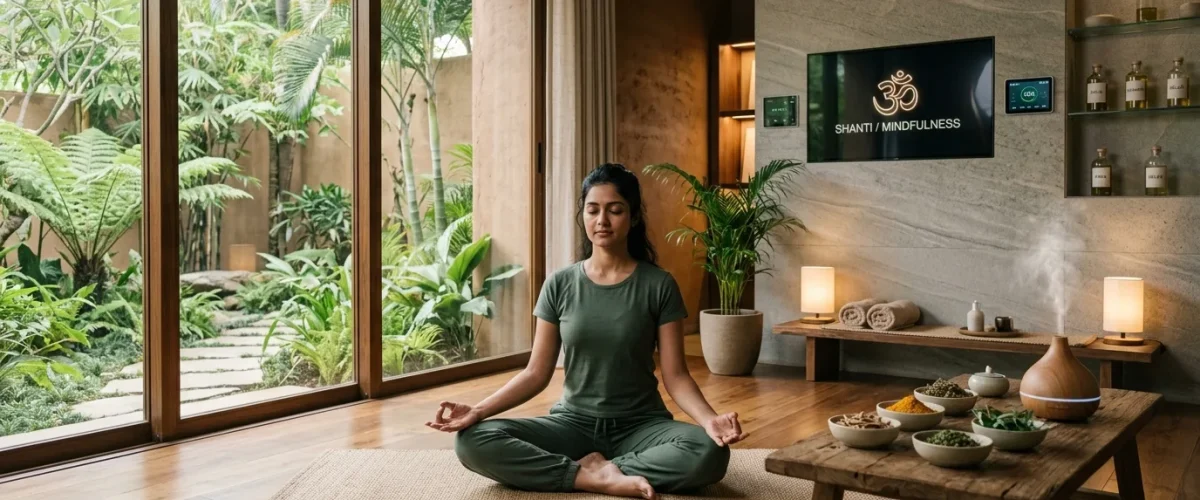
India’s relationship with wellness is undergoing its most significant recalibration in generations. In 2026, the country that gave the world yoga and Ayurveda is reimagining these ancient traditions through the lens of modern science, digital technology, and a mental health consciousness that would have been unthinkable even a decade ago. The result is a wellness ecosystem that blends the philosophical depth of traditional Indian health systems with the precision of contemporary medicine and the convenience of digital delivery — a fusion that is reshaping how 1.4 billion people think about health, happiness, and the art of living well.
Ayurveda Meets Artificial Intelligence
The most striking development in India’s wellness landscape is the marriage of Ayurvedic wisdom with artificial intelligence. In 2026, a growing number of digital health platforms are using AI to personalise Ayurvedic recommendations based on individual health data, lifestyle patterns, and constitutional assessments (prakriti analysis). These platforms — which range from venture-backed startups to initiatives by established Ayurvedic institutions — promise to make one of the world’s oldest medical systems accessible to a generation that expects the convenience of digital interaction.
The AI-Ayurveda convergence is generating both excitement and controversy. Advocates argue that machine learning can identify patterns in Ayurvedic protocols that human practitioners, limited by the scope of individual experience, might miss. Critics counter that reducing Ayurveda to algorithmic recommendations strips the system of the holistic, relationship-based consultation model that is central to its therapeutic philosophy. The debate mirrors broader conversations about AI’s role in Indian society, including those examined at India’s AI Summit 2026 and its exploration of AI’s promises and limitations.
The Mental Health Awakening
India’s mental health landscape in 2026 reflects a society in transition — moving from a culture of stigma and silence towards one of acknowledgement and, increasingly, action. The conversation around mental health has been mainstreamed to a degree that would have seemed impossible a decade ago, driven by celebrity advocacy (notably Deepika Padukone’s sustained public engagement with the issue), social media discussions, and a post-pandemic recognition that psychological wellbeing is not a luxury but a necessity.
Corporate India has been a significant driver of this shift. Major employers, facing talent retention challenges and recognising the productivity costs of unaddressed mental health issues, have invested in employee wellness programmes that include counselling services, mental health days, stress management training, and access to digital therapy platforms. While the quality and accessibility of these programmes vary considerably, their proliferation signals a fundamental change in how Indian workplaces conceptualise employee health.
The digital therapy sector has experienced particularly rapid growth. Platforms offering online counselling, meditation guidance, and cognitive behavioural therapy tools have expanded their Indian user bases dramatically in 2025-2026, serving a population that often lacks access to in-person mental health professionals. India’s ratio of mental health practitioners to population remains among the lowest globally, making digital solutions not merely convenient but, for many, the only accessible option.
Fitness Culture: Beyond the Gym
India’s fitness culture in 2026 has evolved beyond the gym-centric model that dominated the previous decade. While commercial gym chains continue to expand — particularly in tier-2 and tier-3 cities where fitness infrastructure is catching up with metropolitan areas — the more interesting trend is the diversification of fitness practices. Functional training, calisthenics, martial arts, dance fitness, outdoor adventure sports, and swimming are all gaining adherents who seek physical activity that engages the mind and spirit alongside the body.
The running revolution, in particular, has transformed Indian urban landscapes. Marathon events, once confined to Mumbai and a handful of major cities, now take place in dozens of locations across the country, attracting millions of participants whose motivations range from competitive achievement to community belonging to personal health management. Running communities — both physical and digital — have become significant social networks, providing the kind of communal engagement that urbanisation has eroded in other spheres of Indian life.
Nutrition: The Clean Eating Wave
Indian dietary habits are undergoing a transformation driven by health consciousness, environmental awareness, and the influence of global food trends filtered through Indian sensibilities. In 2026, the clean eating movement — emphasising whole foods, reduced processing, and ingredient transparency — has moved from niche preoccupation to mainstream consideration, supported by a growing ecosystem of health food brands, organic retailers, and nutrition-focused content creators.
The Indian clean eating movement is distinctive for its embrace of traditional Indian dietary wisdom. Rather than importing Western health food trends wholesale, Indian consumers are rediscovering the nutritional benefits of traditional ingredients — millets, turmeric, ghee, fermented foods, seasonal eating patterns — that fell out of favour during decades of urbanisation and Westernisation. This reconnection with traditional Indian food systems represents a compelling synthesis of heritage and contemporary health science.
Sleep Science and the Rest Revolution
Sleep, long treated as a negligible variable in India’s culture of hard work and early rising, has emerged as a significant wellness concern in 2026. Growing awareness of sleep’s impact on physical health, mental performance, and emotional regulation has created a market for sleep-enhancing products and services — from smart mattresses and sleep-tracking devices to melatonin supplements and guided sleep meditation apps.
The sleep wellness trend reflects a broader cultural shift towards valuing rest and recovery as productive activities rather than signs of weakness. In a society that has historically celebrated overwork — where sleeping less has been worn as a badge of dedication — the emerging sleep consciousness represents a meaningful evolution in how Indians conceptualise the relationship between effort, rest, and achievement.
The Wellness Economy: Market Dimensions
India’s wellness economy in 2026 is estimated to exceed two lakh crore rupees (approximately $24 billion), encompassing segments from traditional Ayurvedic treatments and yoga services to modern fitness facilities, digital health platforms, nutrition products, and wellness tourism. Growth rates across most segments exceed 20 per cent annually, making wellness one of the fastest-growing consumer categories in the country.
The market’s expansion is driven by converging demographic, economic, and cultural factors. A large, young, increasingly urban population with rising disposable incomes and growing health awareness creates robust demand. Social media amplifies wellness trends and creates aspirational models of healthy living. The pandemic’s legacy — a heightened awareness of vulnerability and the value of health — continues to influence consumer behaviour years after the acute crisis passed.
Challenges and Contradictions
India’s wellness revolution is not without contradictions. The country that is building a multi-billion-dollar wellness industry simultaneously faces public health challenges — air pollution, water contamination, inadequate sanitation in many areas, and an overstretched primary healthcare system — that undermine the wellness of millions. The gap between the wellness experiences available to affluent urban consumers and the health realities of rural and economically disadvantaged populations represents one of the starkest inequalities in Indian society.
The wellness industry itself faces quality concerns. The regulatory framework governing wellness products and services remains insufficient, allowing unsubstantiated health claims, untested products, and unqualified practitioners to operate alongside legitimate offerings. As wellness becomes big business, the imperative for robust regulation that protects consumers without stifling innovation becomes increasingly urgent.
Despite these challenges, India’s wellness trajectory in 2026 points towards a society that is increasingly intentional about health and wellbeing. From the corporate boardroom to the yoga studio, from the digital therapy session to the morning run, Indians are investing in their physical, mental, and emotional health with a seriousness that reflects both ancient wisdom and contemporary urgency. In a nation whose cultural output spans Bollywood’s creative dynamism to the high-performance world of IPL cricket, the wellness revolution may prove to be the trend with the most profound and lasting impact on how Indians live.