India’s Nutrition Landscape 2026: From Biofortified Crops to the Battle Against Ultra-Processed Foods

As India grapples with a nutrition crisis that simultaneously encompasses undernutrition, obesity, and micronutrient deficiency, a new generation of nutritionists, public health experts, and food technologists is reshaping the country’s approach to dietary health. The solutions being developed draw on cutting-edge science while remaining grounded in India’s own food traditions — an approach that rejects the wholesale adoption of Western dietary frameworks in favour of evidence-based adaptations of indigenous knowledge.
The Triple Burden: Understanding India’s Nutrition Challenge
India faces what public health experts term a “triple burden” of malnutrition: persistent undernutrition among children and women in lower socioeconomic groups, rapidly rising obesity rates among urban and middle-class populations, and widespread micronutrient deficiencies — particularly iron, zinc, vitamin D, and vitamin B12 — that cut across all economic strata.
The latest National Family Health Survey data, released in early 2026, shows that while child stunting rates have continued their gradual decline, the pace of improvement remains insufficient to meet international targets. Meanwhile, adult obesity rates in urban India have crossed 30 percent for the first time — a threshold that epidemiologists consider a warning signal for future cardiovascular disease and diabetes burden.
This dual reality — too little nutrition and too much of the wrong kind — requires policy and intervention approaches of greater sophistication than either challenge would demand alone.
Biofortification: Engineering Nutrition Into Staple Crops
Indian agricultural research institutions have made significant strides in developing biofortified crop varieties — staple grains and vegetables bred to contain higher levels of essential micronutrients. The Indian Institute of Wheat and Barley Research has released zinc-enriched wheat varieties that are now under cultivation in several northern states, while iron-rich pearl millet varieties developed by ICRISAT are gaining adoption in Rajasthan and Maharashtra.
The biofortification approach addresses a fundamental limitation of traditional nutrition interventions: supplementation programmes require sustained institutional delivery systems that are difficult to maintain at scale, while dietary diversification programmes require behavioural changes that are slow to achieve. Biofortified crops, by contrast, deliver nutritional benefits through foods that communities are already consuming, requiring no change in dietary behaviour.
The research parallels broader advances being made across India’s biological sciences sector, where applied research with direct public health applications has received increased funding attention.
Gut Health and the Indian Microbiome
India’s research community has begun to investigate the distinctive characteristics of the Indian gut microbiome — the community of trillions of microorganisms that inhabit the human digestive tract and play crucial roles in nutrient absorption, immune function, and metabolic health. Early findings suggest that traditional Indian dietary patterns, with their emphasis on fermented foods, diverse plant-based ingredients, and specific spice compounds, may support microbial diversity in ways that Western dietary patterns do not.
The Indian Institute of Science, Bengaluru, has launched a large-scale study tracking the gut microbiome profiles of populations consuming traditional diets across different regions, comparing these with profiles from populations that have adopted more Westernised eating patterns. Preliminary results suggest significant differences in microbial diversity and metabolic markers, providing scientific support for the nutritional value of traditional Indian dietary patterns.
Ultra-Processed Foods: The Growing Threat
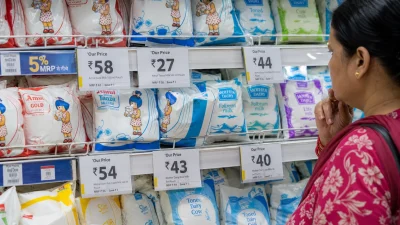
India’s nutrition establishment has increasingly focused attention on the health consequences of rising ultra-processed food consumption. Studies conducted by the Indian Council of Medical Research indicate that ultra-processed food consumption among urban Indian adults increased by approximately 40 percent between 2019 and 2025, driven by expanding retail distribution, aggressive marketing, and changing lifestyle patterns.
The evidence linking ultra-processed food consumption to adverse health outcomes — including obesity, cardiovascular disease, and certain cancers — has prompted calls for regulatory intervention. The Food Safety and Standards Authority of India has proposed mandatory front-of-package labelling that would clearly identify products with high sugar, salt, and fat content, a measure that the food industry has vigorously contested.
The policy debate mirrors similar discussions happening in India’s broader economic landscape, where consumer protection considerations increasingly intersect with commercial interests.
Technology-Enabled Personalised Nutrition
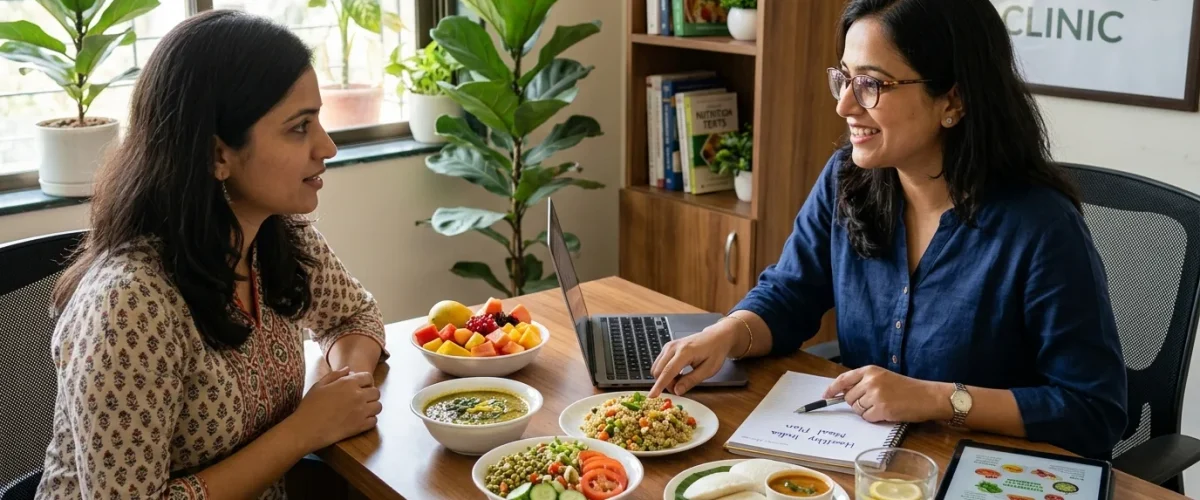
India’s health-tech sector has begun developing personalised nutrition platforms that use a combination of genetic data, metabolic markers, dietary pattern analysis, and activity monitoring to generate individualised dietary recommendations. Several Indian start-ups have launched services that provide tailored meal plans based on metabolic profiling — using continuous glucose monitors, blood lipid analyses, and gut microbiome testing to move beyond generic dietary advice.
While these services currently reach a relatively affluent consumer base, the underlying technology has potential applications in public health settings. Simplified versions of metabolic screening could help community health workers identify individuals at elevated risk for diabetes or cardiovascular disease and provide targeted dietary guidance — a more efficient approach than blanket recommendations.
The School Nutrition Imperative
Recognising that dietary patterns established in childhood shape lifelong health trajectories, India’s education system is implementing more comprehensive nutrition education programmes. The National Council of Educational Research and Training has developed new curriculum modules that go beyond basic food groups to teach children about food systems, traditional diets, and the health implications of processed food consumption.
Several states have overhauled their mid-day meal programmes, incorporating locally sourced ingredients, seasonal menus, and traditional preparations that connect children with their regional food heritage while delivering improved nutritional outcomes. These programmes serve as living laboratories for nutrition research, with several universities conducting longitudinal studies tracking the health impacts of improved school nutrition on student populations.
Navigating the Future of Indian Nutrition
India’s nutrition challenge demands a response that is as diverse and complex as the country itself. The most promising approaches share a common characteristic: they work with India’s existing food traditions rather than against them, leveraging centuries of accumulated dietary wisdom while applying modern scientific methods to understand, validate, and enhance traditional practices. In a country where food is inseparable from identity, culture, and community, this integration of old knowledge and new science offers the most sustainable path toward nutritional security.

- Fentanyl Vaccine Breakthrough: Scripps Research Develops Shot That Blocks Deadly Overdoses Before They Reach the Brain - June 13, 2026
- Nipah Virus Returns to Kerala — First Case of 2026 Confirmed, State Declares High Alert - June 12, 2026
- Jill Biden Reveals She Wanted to Keep PM Modi’s 7.5-Carat Diamond Gift but Returned It After State Department Valued It at $20,000 - June 8, 2026