Gaganyaan 2026: India’s Human Spaceflight Programme Enters Its Most Critical Phase

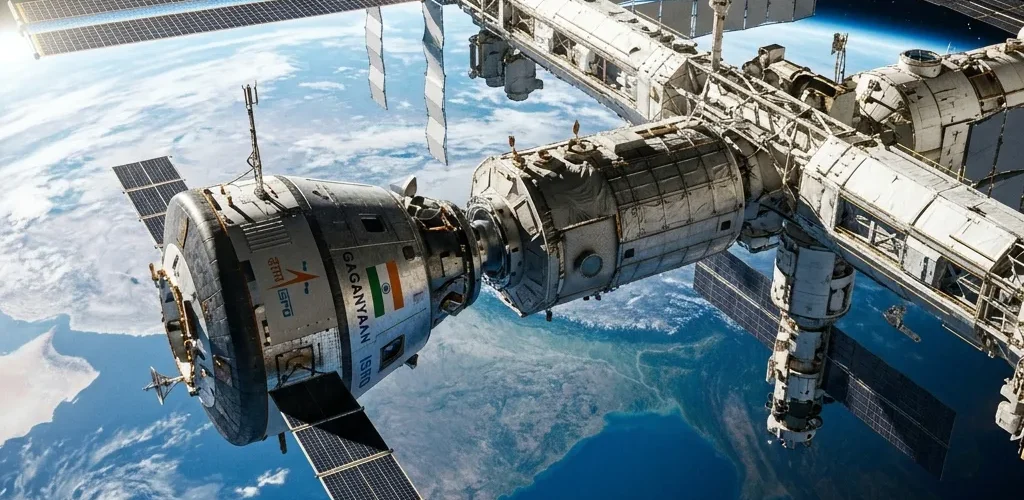
In the annals of India’s space exploration history, few programmes have carried as much national significance — or faced as many challenges — as Gaganyaan. As the calendar turns to March 2026, the Indian Space Research Organisation (ISRO) finds itself at a defining crossroads: the first uncrewed orbital test flight of the Gaganyaan capsule is imminent, and the stakes have never been higher. Success would position India as only the fourth nation, after Russia, the United States, and China, to independently send humans into orbit.
A Programme Decades in the Making
The idea of an Indian human spaceflight programme dates back to the early 2000s, but it was Prime Minister Narendra Modi’s Independence Day address in 2018 that set the clock ticking. Modi announced that India would send astronauts — or “Gaganauts” — to space by 2022, coinciding with the 75th anniversary of independence. The COVID-19 pandemic, technical complexities, and supply chain disruptions pushed that timeline significantly, but ISRO has remained steadfast in its commitment.
The programme is centred on the Orbital Module, a two-part spacecraft consisting of the Crew Module (CM) and the Service Module (SM). Designed to carry a crew of up to three astronauts to a low-Earth orbit of approximately 400 kilometres, the Gaganyaan capsule represents India’s most sophisticated engineering challenge to date. The Human Space Flight Centre (HSFC) in Bengaluru has been the nerve centre of this effort, coordinating with dozens of ISRO centres, academic institutions, and private sector partners across the country.
Key Milestones Achieved
The journey to this point has been methodical. In October 2023, ISRO successfully completed the first Test Vehicle Abort Mission (TV-D1), demonstrating the crew escape system — the critical safety mechanism that would pull astronauts away from a malfunctioning rocket. Subsequent tests validated the parachute deployment system, the crew module’s thermal protection, and the recovery protocols in the Bay of Bengal.
In January 2025, the successful demonstration of the Space Docking Experiment (SpaDeX) added another crucial capability to India’s space portfolio. As covered in our report on ISRO’s SpaDeX docking milestone, this technology is essential for future missions that may require rendezvous and docking operations in orbit — including potential crewed missions to a planned Indian space station.
The astronaut training programme, conducted in collaboration with Roscosmos in Russia, has been another significant achievement. Four Indian Air Force pilots — selected through a rigorous process from thousands of candidates — have undergone extensive training in Russia and at ISRO’s own facilities, including centrifuge tests, microgravity simulations, and survival training. While their identities remain officially classified, they represent the best of India’s military and scientific talent.
Technical Challenges and the Road Ahead
Despite the progress, Gaganyaan faces several technical hurdles in 2026. The CE20 cryogenic engine, which powers the upper stage of the LVM3 launch vehicle, has undergone multiple rounds of qualification testing. ISRO scientists have been working to enhance its reliability rating from 0.95 to the 0.99 standard required for human-rated flights — a seemingly small numerical improvement that demands exponential effort in engineering precision.
The Environmental Control and Life Support System (ECLSS), responsible for maintaining breathable air, temperature, and humidity inside the crew module, has been another area of intense focus. Indian engineers have developed indigenous solutions for carbon dioxide scrubbing and oxygen generation, reducing reliance on imported subsystems. The system must function flawlessly for up to seven days — the maximum planned mission duration.
Perhaps the most visible challenge is the development of the human-rated LVM3 rocket. While the standard LVM3 has a strong track record — including the successful Chandrayaan-3 lunar mission — human-rating demands additional redundancies, structural reinforcements, and abort trigger mechanisms that can detect and respond to anomalies within milliseconds. India’s growing private space sector, energised by the success of companies like Skyroot Aerospace and Agnikul Cosmos, is also contributing components and subsystems to the programme.
The Broader Strategic Context
Gaganyaan is not merely a scientific achievement in isolation. It sits at the intersection of India’s broader strategic ambitions in space. The programme directly feeds into plans for Bharatiya Antariksh Station (BAS), India’s proposed space station, which is targeted for initial deployment by 2035. The technologies developed for Gaganyaan — life support, docking, re-entry, and recovery — form the foundation upon which BAS will be built.
The programme also has significant implications for India’s standing in the global space economy, which is projected to exceed $1 trillion by 2040. As India positions itself as a hub for satellite launches, space tourism, and deep-space exploration, demonstrated human spaceflight capability would be a powerful differentiator. The technology development aligns closely with India’s broader push in deep tech innovation, a trend also visible in the country’s ambitious AI and technology programmes.
Internationally, Gaganyaan has attracted significant interest. NASA has expressed willingness to cooperate on future missions, and the Artemis Accords — which India signed in 2023 — provide a framework for potential collaboration on lunar exploration. France’s CNES has contributed expertise in space medicine, while the European Space Agency has provided ground station support.
Budget and Timeline Pressures
The financial investment in Gaganyaan has been substantial. The programme’s budget stands at approximately ₹12,960 crore (around $1.5 billion), making it ISRO’s most expensive undertaking. While modest by comparison to NASA’s Artemis programme or China’s Shenzhou missions, it represents a significant commitment for a developing nation. Critics have questioned whether the funds could be better spent on education, healthcare, or climate adaptation — a debate that intensifies with each timeline extension.
ISRO Chairman S. Somanath has repeatedly emphasised that Gaganyaan’s benefits extend far beyond the mission itself. The programme has generated thousands of high-skilled jobs, spurred technological innovation across multiple sectors, and created a new ecosystem of space-qualified Indian suppliers. Over 500 Indian companies have contributed to the programme, building everything from heat-resistant tiles to precision valves.
Looking Ahead
As of March 2026, ISRO is preparing for the G1 mission — the first uncrewed orbital flight of the complete Gaganyaan stack. If successful, it will be followed by G2, a mission carrying a humanoid robot named “Vyommitra” (Sanskrit for “friend in space”) that will test life support systems in actual orbital conditions. Only then will G3, the historic crewed mission, receive the green light.
The road to G3 is fraught with uncertainty, but the determination within ISRO’s corridors is unmistakable. Each test, each qualification, each review brings India closer to a moment that will define its place among the spacefaring nations. For a country that sent a mission to Mars in its first attempt and landed on the Moon’s south pole, the dream of seeing Indian astronauts in orbit feels less like ambition and more like destiny.
Gaganyaan is more than a spacecraft. It is a statement of intent — that India’s scientific ambitions know no ceiling, and that the nation’s 1.4 billion citizens are ready to claim their place among the stars.