India’s Street Food Gets a Hygiene Upgrade: FSSAI’s Clean Street Food Hub Initiative Expands in 2026

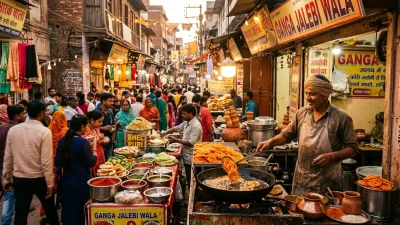
India’s street food culture — a dazzling, chaotic, and delicious ecosystem of pavement vendors, hand-cart operators, and roadside stalls that serves an estimated 250 million meals daily — is undergoing its most significant quality transformation in history. The Food Safety and Standards Authority of India’s Clean Street Food Hub initiative, launched as a pilot programme in 2018 and expanded steadily since, is achieving meaningful scale in 2026, with over 200 certified clean food hubs operational across 85 Indian cities. The initiative is proving that it is possible to preserve the soul and spontaneity of Indian street food while dramatically improving the hygiene, safety, and consistency standards that have long been the sector’s Achilles heel.
How the Clean Street Food Hub Programme Works
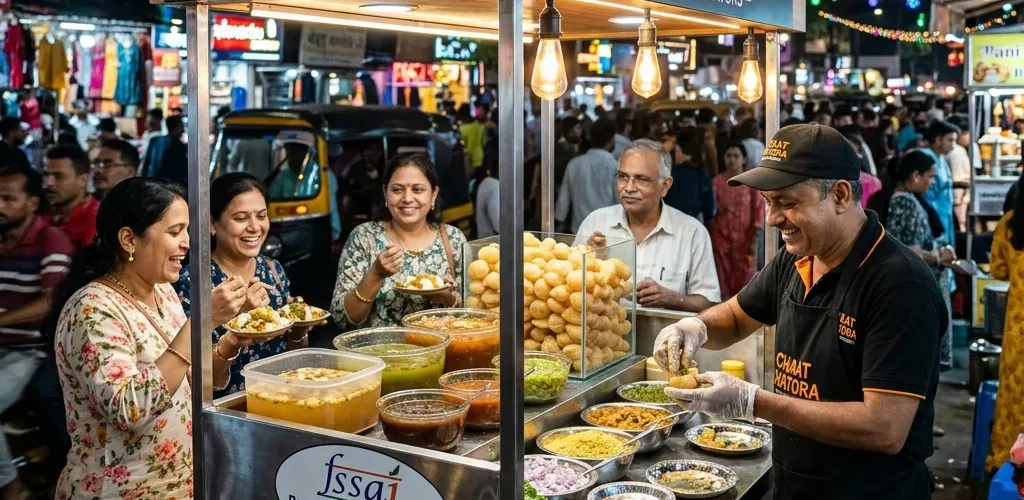
The FSSAI programme certifies clusters of street food vendors who collectively meet a defined set of hygiene and operational standards. Certification requirements include the use of clean drinking water from verified sources, proper hand-washing stations with soap, covered food display units that protect against dust and insects, food-grade serving utensils and packaging, waste segregation and disposal protocols, and vendor training in basic food safety principles.
Critically, the programme does not seek to corporatise or homogenise street food — it preserves the individual character of each vendor while establishing a baseline of cleanliness that protects consumer health. Vendors retain their traditional recipes, cooking methods, and pricing, but operate within a framework that ensures the food they serve meets basic safety standards. Certification is renewed annually following inspections by FSSAI-trained auditors, creating an ongoing accountability mechanism.
2026 Expansion: From Pilot to National Programme
The 2026 expansion of the programme is its most ambitious yet. FSSAI has set a target of 500 certified hubs by December 2026, with a particular focus on tier-2 and tier-3 cities that have historically received less attention from food safety regulators. New certifications in 2026 include hubs in Indore, Lucknow, Amritsar, Ahmedabad, Madurai, Varanasi, and Bhubaneswar — cities with rich street food traditions and high volumes of domestic tourism.
Indore, which has been crowned India’s cleanest city for multiple consecutive years in the Swachh Bharat rankings, has been designated as the model city for the programme, with 22 certified clean food hubs covering its legendary Sarafa Bazaar night market, 56 Dukan area, and Chappan Dukan food street. The Indore model — featuring community-led vendor cooperatives, municipal partnership for water and waste infrastructure, and tourist-friendly bilingual signage — is being replicated in other cities with adaptations for local conditions.
Impact on Consumer Confidence and Tourism
Consumer research conducted by FSSAI in February 2026 reveals that the certification programme is significantly influencing eating behaviours. Among surveyed consumers, 72 per cent said they were more likely to purchase street food from a certified clean hub than from an unertified vendor, and 65 per cent said the certification had increased their overall frequency of street food consumption. The findings suggest that hygiene concerns — rather than taste preferences — were the primary barrier preventing many urban Indians from enjoying street food, and that certification effectively removes that barrier.
The tourism impact is equally notable. International tourists, who have historically been cautioned against Indian street food by guidebooks and travel advisories, are increasingly seeking out certified clean hubs as part of their Indian culinary experience. Food walking tours operated by companies such as Delhi Food Walks, Bangalore Bites, and Mumbai Magic now prominently feature certified vendors, providing international visitors with the confidence to explore India’s street food traditions safely. This aligns with the growing international interest in Indian culinary heritage, as evidenced by India’s fine dining revolution attracting global attention.
Spotlight: India’s Most Celebrated Street Food Hubs in 2026
Several certified clean street food hubs have achieved national recognition in 2026. Delhi’s Chandni Chowk Heritage Food Walk — a curated trail through Asia’s largest spice market featuring certified vendors serving paranthe, jalebi, chaat, and kulfi — has become one of the capital’s most popular tourist experiences. Mumbai’s Girgaon Chowpatty, now a certified hub with 45 registered vendors, offers its legendary bhel puri, pav bhaji, and kulfi falooda under improved conditions that include centralized water filtration, shared cold-storage facilities, and evening LED lighting that enhances both safety and ambience.
Kolkata’s Park Street and New Market areas have achieved hub certification, bringing the city’s renowned phuchka (golgappa), kathi rolls, and mishti doi under the programme’s safety umbrella. Hyderabad’s Charminar area, famous for its Irani chai, lukhmi, and haleem, has been certified with the active participation of the Hyderabad Street Vendors’ Association, which has invested in shared infrastructure including water purifiers, stainless-steel cooking surfaces, and fire safety equipment.
The Vendor Perspective: Costs, Benefits, and Challenges
For street food vendors, the programme presents both opportunities and challenges. On the positive side, certified vendors report average revenue increases of 20-30 per cent following certification, driven by increased customer footfall, higher willingness to pay, and visibility through the FSSAI food hub listing on Google Maps and the Eat Right India mobile app. Several vendors have leveraged their certification to secure micro-loans from banks, which previously considered street food vending too informal for credit approval.
However, the costs of compliance — including infrastructure upgrades, training time, and annual certification fees — can be burdensome for the smallest vendors operating on razor-thin margins. FSSAI has addressed this by partnering with corporate social responsibility programmes from major FMCG companies, which fund infrastructure upgrades for vendors in exchange for branding rights at certified hubs. The programme also offers free training modules through its Food Safety Training and Certification platform, delivered in twelve regional languages via a mobile app that accommodates low-literacy users.
Digital Integration: QR Codes, Ratings, and Traceability
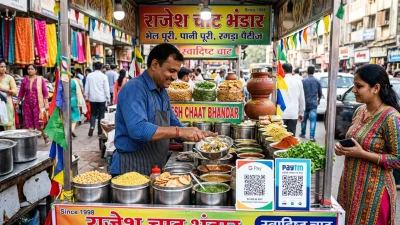
The 2026 iteration of the programme includes enhanced digital features. Every certified vendor displays a QR code that, when scanned, reveals the vendor’s FSSAI licence details, recent inspection results, menu with allergen information, and a customer rating system. This digital layer creates transparency and accountability that were previously impossible in the informal food sector, while also providing vendors with valuable customer feedback that helps them refine their offerings.
The data generated by the programme is also proving valuable for public health research. FSSAI analysts are using certification and inspection data to map the geographic distribution of food safety compliance, identify common violation patterns, and target awareness campaigns to areas with the greatest need for improvement. The data-driven approach to food safety reflects India’s broader embrace of technology-driven governance across public services.
A Cleaner Plate for a Billion Eaters
India’s street food is a national treasure — a living museum of culinary creativity that reflects the country’s staggering regional diversity and the ingenuity of millions of micro-entrepreneurs who feed a nation from handcarts and pavement stalls. The FSSAI Clean Street Food Hub initiative does not seek to sanitise this rich, messy, gloriously chaotic tradition into something clinical and corporate. Rather, it provides a framework within which the tradition can thrive — safely, sustainably, and with the dignity that India’s street food vendors and their customers deserve. In 2026, as the programme scales towards its 500-hub target, the promise is simple but powerful: that every Indian, and every visitor to India, can enjoy the country’s magnificent street food without a moment’s hesitation about what’s on their plate. For those seeking to trace the global journey of India’s street food traditions, the story of vada pav and momos going international provides a compelling companion read.

- Fentanyl Vaccine Breakthrough: Scripps Research Develops Shot That Blocks Deadly Overdoses Before They Reach the Brain - June 13, 2026
- Nipah Virus Returns to Kerala — First Case of 2026 Confirmed, State Declares High Alert - June 12, 2026
- Jill Biden Reveals She Wanted to Keep PM Modi’s 7.5-Carat Diamond Gift but Returned It After State Department Valued It at $20,000 - June 8, 2026