Healthtech Funding Shifts Toward Integrated Care Models as Investors Eye Sustainable Growth in India

India’s healthtech sector experienced a notable shift in investor sentiment in 2025-2026, as venture capital and private equity funding pivoted away from point-solution startups toward companies offering integrated care models. According to the Economic Times and Inc42 data, total healthtech funding in India reached $1.8 billion in 2025—down from the $2.3 billion peak in 2022 but with a significant change in the composition of funded companies. Investors are no longer chasing telemedicine-only or pharmacy-only platforms; they are backing companies that combine multiple healthcare services into cohesive patient journeys, betting that integration is the key to both clinical outcomes and financial sustainability.
The Integrated Care Thesis
The investment thesis is straightforward: India’s healthcare problems are interconnected, and solutions that address them in isolation are inherently limited. A patient with diabetes doesn’t just need a teleconsultation—they need continuous glucose monitoring, medication management, dietary guidance, periodic lab tests, and specialist referrals when complications arise. A platform that provides all of these services through a single interface captures more patient value, achieves higher retention, and generates superior unit economics compared to a platform that provides only one service and relies on third parties for the rest.
This thesis has driven several major funding rounds. MediBuddy, which offers a full-stack digital health platform combining teleconsultations, diagnostics, pharmacy, and corporate wellness, raised $125 million in a Series C round in early 2026. Pristyn Care, which coordinates elective surgeries from consultation through post-operative care, secured $90 million at a $1.5 billion valuation. PharmEasy, having weathered a difficult 2024 that included valuation markdowns and management changes, raised $100 million in a round that reflected renewed investor confidence in its integrated pharmacy-diagnostics-teleconsultation model.
Also read: IPL 2026 Season Preview: Key Transfers, Injuries, and Franchise Strategies
Also read: AI Summit 2026: India Showcases Ambitions but Structural Gaps Exposed
The Data Advantage of Integration
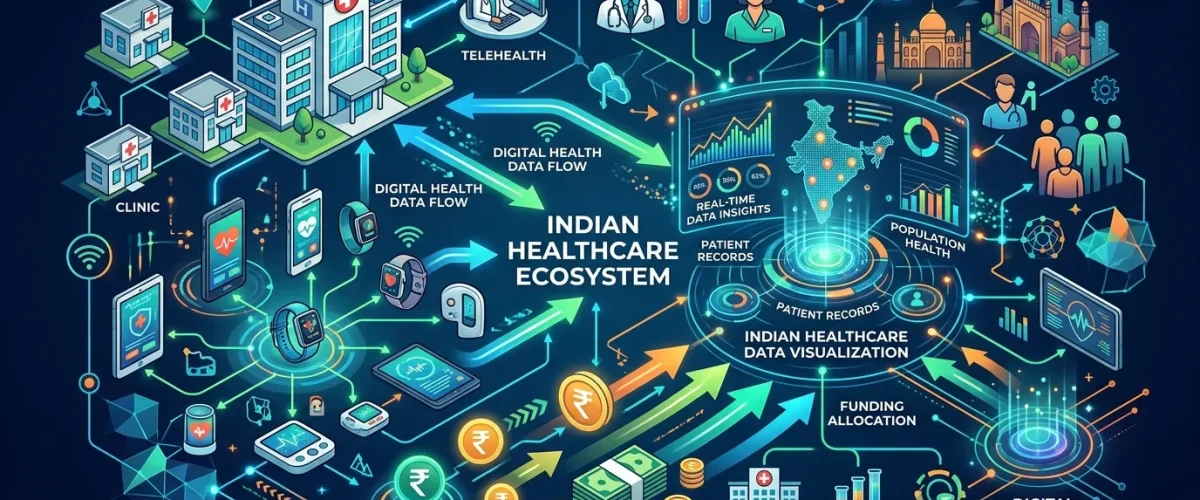
Integrated care platforms also possess a data advantage that enhances both clinical outcomes and business performance. When a single platform captures a patient’s consultation notes, lab results, prescription history, and wearable device data, it can build a comprehensive health profile that enables predictive analytics and personalised care recommendations.
Cult.fit, which has evolved from a fitness platform into a broader health and wellness company, exemplifies this data play. Its platform now integrates gym memberships, nutrition counselling, mental health therapy, and primary care teleconsultations, generating a rich dataset on user health behaviors. The company’s AI system uses this data to flag early warning signs—such as declining physical activity combined with weight gain and elevated stress scores—and proactively recommend interventions before clinical conditions develop.
For investors, the data moat is a key attraction. Integrated platforms that accumulate longitudinal patient data develop competitive advantages that are difficult for point-solution competitors to replicate, even if those competitors offer superior individual features.
Insurance Integration: The Missing Piece
One of the most significant developments in India’s healthtech funding landscape is the growing integration between digital health platforms and insurance companies. Niva Bupa, Star Health, and HDFC ERGO have all announced partnerships with healthtech startups to offer digitally-native health insurance products that use platform data for underwriting, claims processing, and wellness incentivisation.
The logic is compelling: if a digital health platform can demonstrate that its users are healthier (through data on medication adherence, fitness activity, and preventive screenings), insurance companies can offer lower premiums, creating a virtuous cycle that benefits patients, platforms, and insurers alike. This model, sometimes called “health-as-a-service,” has been successfully deployed in markets like the United States (through companies like Livongo and Omada Health) and is now being adapted for the Indian market.
The Correction in Point Solutions
The flip side of the integrated care trend is a marked decline in funding for single-function healthtech startups. Pure-play telemedicine apps, standalone medicine delivery services, and single-condition management platforms have seen investor interest wane. Several well-funded startups in these categories have either pivoted to integrated models, been acquired by larger platforms, or shut down entirely.
The consolidation has been particularly visible in the online pharmacy space, where intense competition and thin margins have forced smaller players to exit. The market is increasingly dominated by three major platforms—PharmEasy, Tata 1mg, and Apollo 24/7—all of which offer pharmacy services as part of broader health ecosystems rather than as standalone offerings.
What Investors Are Looking For
Conversations with health-focused investors reveal clear criteria for the current funding environment. “We want to see three things,” said Anand Daniel, Partner at Accel India. “First, multiple revenue streams—a company that makes money from consultations, diagnostics, and pharmacy is more resilient than one dependent on a single revenue line. Second, data integration—the ability to use patient data across services to improve outcomes and reduce costs. Third, a path to insurance integration, because that’s where the real scalability in healthcare lies.”
These criteria favour larger, well-capitalised companies and create high barriers to entry for new startups. The Indian healthtech market in 2026 is less hospitable to lean, single-feature startups than it was in 2020-2021, but it is more attractive to companies that have invested in building comprehensive health platforms with strong technology and clinical foundations.
The Sustainable Healthcare Promise
India’s healthtech funding shift toward integrated care models reflects a broader maturation of the sector. After a period of exuberance that funded every conceivable point solution, the market is converging on a model that aligns investor returns with patient outcomes—a convergence that, if sustained, could transform India’s fragmented and often inequitable healthcare system into one that is more accessible, more data-driven, and more patient-centred than anything that has come before.