CNG Prices Hiked by Rs 2 Per Kg in Delhi — Third Increase in Under Two Weeks as Iran War Drives Energy Costs Higher

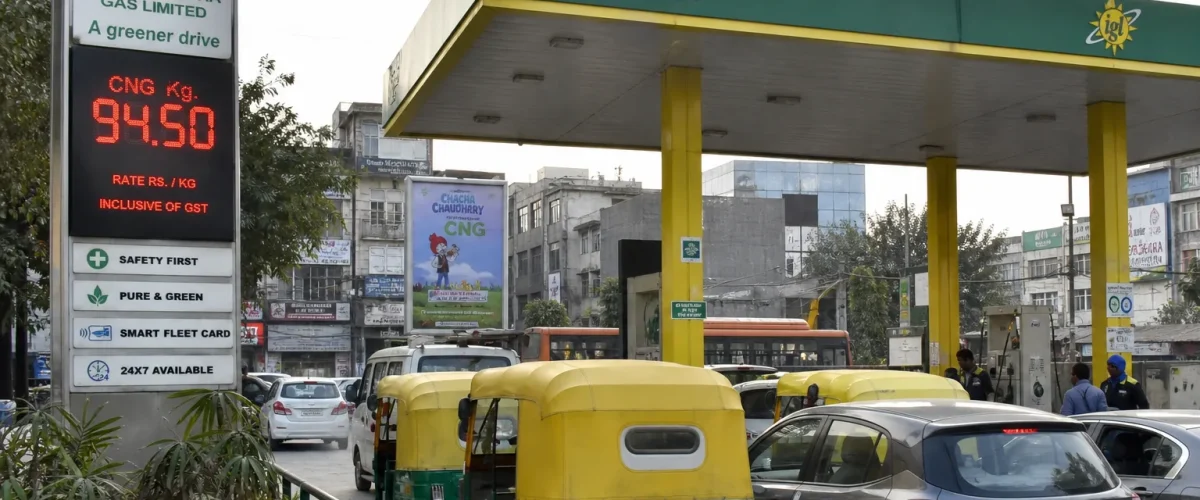
Compressed Natural Gas (CNG) prices in Delhi have been increased by Rs 2 per kilogram effective Monday morning, May 26, 2026, bringing the retail price to Rs 83.09 per kg. This is the third price hike in less than two weeks, as city gas distribution companies continue to pass on the impact of soaring global energy costs to consumers. The revision, implemented by Indraprastha Gas Limited (IGL), comes at a time when millions of auto-rickshaw drivers, taxi operators, and private vehicle owners in the National Capital Region are already reeling from a series of fuel price increases.
The cumulative impact of recent CNG revisions has been substantial. Following a Rs 2 per kg hike on May 15, a Rs 1 per kg increase on May 17, and another Rs 1 per kg rise on May 23, today’s Rs 2 per kg jump means CNG prices have risen by a total of Rs 6 per kg in just 11 days. For context, CNG in Delhi was priced at around Rs 77 per kg at the beginning of May — a nearly 8% increase in less than a month.
NCR Cities Hit Even Harder
While Delhi residents are feeling the pinch, CNG consumers in neighbouring NCR cities are paying even more. The latest revision has pushed prices in Noida, Greater Noida, and Ghaziabad to Rs 91.70 per kg — nearly Rs 9 higher than in Delhi. In Gurugram, CNG now costs Rs 86.12 per kg, while Faridabad consumers pay Rs 89.30 per kg. Mumbai, India’s other major CNG market, has seen prices rise to Rs 81 per kg, though the city has been somewhat insulated by its proximity to domestic gas supply infrastructure.
| City | Latest CNG Price (per kg) |
|---|---|
| Delhi | ₹83.09 |
| Noida / Ghaziabad | ₹91.70 |
| Gurugram | ₹86.12 |
| Faridabad | ₹89.30 |
| Mumbai | ₹81.00 |
Why Are CNG Prices Rising So Fast?
The primary driver behind the relentless CNG price increases is the ongoing US-Iran conflict, which began in February 2026 and has severely disrupted global energy supply chains. The closure of the Strait of Hormuz — through which approximately 20% of the world’s oil and a significant portion of liquefied natural gas (LNG) passes — has choked supply and sent international gas prices spiralling.
India imports approximately 50% of its natural gas requirements, and the LNG spot market has seen prices surge from around $10-12 per million British thermal units (mmBtu) at the start of the year to over $18-20 per mmBtu in recent weeks. This dramatic increase has forced city gas distributors like IGL, Mahanagar Gas Limited (MGL), and Adani Total Gas to raise retail prices to avoid mounting losses.
“The city gas distribution companies have been absorbing a significant portion of the cost increase, but the gap between procurement costs and retail prices has become unsustainable,” said K. Ravichandran, Senior Vice President at ICRA. “We expect further price adjustments in the coming weeks unless there is a material easing in international gas prices.”
Impact on Public Transport and Daily Commuters
The CNG price hikes are having a cascading effect on public transport costs in Delhi-NCR. Auto-rickshaws, which are the lifeline of short-distance commuting for millions, run almost exclusively on CNG. The Delhi government’s current auto fare structure was set when CNG prices were significantly lower, and drivers have been demanding a fare revision for months.
“Every rupee increase in CNG costs us Rs 400-500 extra per month,” said Rajendra Kumar, an auto-rickshaw driver in South Delhi who has been operating for 15 years. “With Rs 6 increase in just 11 days, our monthly fuel bill has gone up by Rs 2,500-3,000. We can’t keep absorbing this — passengers need to pay more or the government needs to step in.”
The Delhi Auto-Taxi Transport Congress Union has already submitted a memorandum to the Delhi government demanding an immediate revision of fare meters. Similar demands are being raised in Noida and Gurugram, where auto and cab operators say the current fares don’t cover their operating costs.
The situation is equally challenging for ride-hailing platforms like Ola and Uber, where many driver-partners operate CNG vehicles. Industry sources indicate that both platforms are considering implementing fuel surcharges to offset the increased costs, a move that would directly impact consumer fares.
Petrol and Diesel Also on the Rise
The CNG price hike comes alongside a broader increase in fuel costs across the board. Petrol prices in Delhi have crossed Rs 102 per litre after four hikes in 13 days, while diesel has seen similar increases. Telangana has emerged as the state with the costliest petrol, with BRS Deputy Floor Leader T. Harish Rao writing an open letter to Chief Minister Revanth Reddy demanding an immediate reduction in state VAT on fuel.
The cumulative impact of rising fuel prices — across petrol, diesel, and CNG — is contributing to broader inflationary pressures. Transporters have warned of potential freight rate increases, which would raise the cost of essential commodities including food, FMCG products, and construction materials.
Government Response and Outlook
The central government has so far refrained from direct intervention in CNG pricing, which is largely determined by market forces and the pricing formula set by the Petroleum and Natural Gas Regulatory Board (PNGRB). However, petroleum ministry officials have indicated that the government is “closely monitoring the situation” and could consider temporary excise duty relief if prices continue to rise sharply.
Looking ahead, analysts see limited scope for price relief in the near term. The Iran situation remains volatile, with the US renewing strikes over the weekend even as diplomatic channels remain open. Until there is a meaningful de-escalation and the Strait of Hormuz reopens to commercial shipping, international gas prices are likely to remain elevated.
“We’re in uncharted territory for Indian energy consumers,” said Debasish Mishra, Partner at Deloitte India. “The combination of a major geopolitical disruption, high import dependence, and the onset of peak summer demand has created a perfect storm. Consumers should brace for continued price volatility.”
For the millions of Delhi-NCR residents who switched to CNG as a cleaner and cheaper alternative to petrol and diesel, the rapid price escalation is eroding the economic advantage that made the fuel so popular. Whether the government intervenes to provide relief — or whether consumers simply absorb the higher costs — remains to be seen.
Related Articles
- Petrol Diesel Prices Hiked for Fourth Time in 13 Days — Petrol Crosses Rs 102 in Delhi as Cumulative Rise Tops Rs 7.50 per Litre
- RBI Approves Record ₹2.87 Lakh Crore Dividend to Government for FY26 — 7% Jump Over Last Year
- Petrol Diesel Prices Hiked for Third Time in 9 Days — Cumulative Rise Crosses ₹5 per Litre
Explore more: Business & Economy

- Fentanyl Vaccine Breakthrough: Scripps Research Develops Shot That Blocks Deadly Overdoses Before They Reach the Brain - June 13, 2026
- Nipah Virus Returns to Kerala — First Case of 2026 Confirmed, State Declares High Alert - June 12, 2026
- Jill Biden Reveals She Wanted to Keep PM Modi’s 7.5-Carat Diamond Gift but Returned It After State Department Valued It at $20,000 - June 8, 2026